Zichen Wang uncovers a chilling economic truth: the current debate on boosting Chinese consumption isn't just about fiscal stimulus, but about repaying a historical debt to the very workers who built the nation's modern economy. By excavating the brutal mechanics of the 1990s detention system, Wang forces readers to confront how institutionalized oppression was once a revenue stream for local governments, turning human liberty into a line item for departmental budgets.
The Architecture of Exclusion
Wang begins by reframing the narrative around China's "migrant-worker wave" not as a spontaneous economic phenomenon, but as a crisis of governance that triggered a draconian response. The article details how, following the 1989 surge of rural laborers seeking work in cities, the state did not merely regulate flow but actively criminalized movement. "The disadvantages faced by China's rural migrants are often discussed today in terms of the household-registration system... But they can obscure how much harsher the institutional divide was only a generation ago," Wang writes. This distinction is vital; it moves the discussion from bureaucratic inefficiency to active persecution.
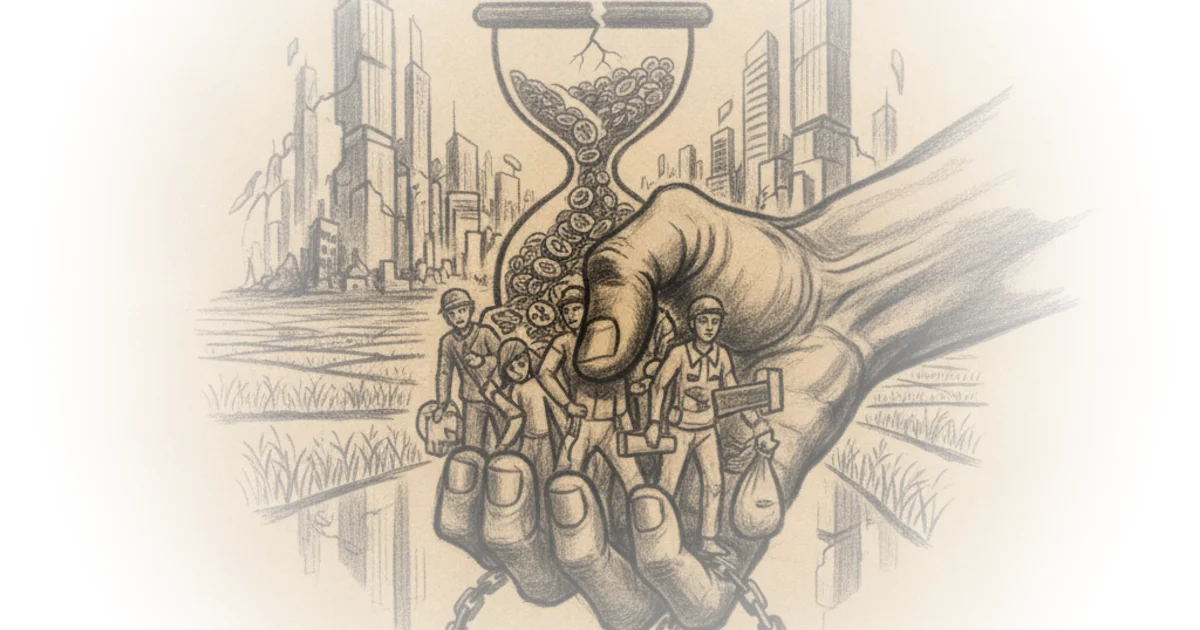
The piece meticulously documents the 1994 Ministry of Labour provisions that required employers to seek special approval to hire rural workers, effectively barring them from respectable professions. "Star-rated hotels, for example, were generally prohibited from hiring rural migrants, even as waiters or other service staff," Wang notes. This was not a market correction but a caste system enforced by law, reserving the "dirty, unpleasant, undesirable, or dangerous work" for those without urban status. The argument lands with particular force because it reveals how policy was weaponized to protect urban privilege rather than manage labor supply.
Rural people coming to the cities were confined to jobs that urban residents did not want, while urban businesses had to pay a special management fee for hiring them.
The Business of Detention
The most harrowing section of Wang's analysis exposes how administrative rules evolved into a coercive revenue model. The enforcement of these restrictions relied on the revival of the 1982 "Measures for Internment and Deportation of Urban Vagrants and Beggars," a policy originally intended for the destitute but expanded to cover any migrant lacking specific paperwork. Wang explains that "fees and fines supplied the main impetus behind this enforcement system," creating a perverse incentive where public security and civil affairs departments profited from the detention of citizens.
The scale of this operation was staggering. Wang cites internal research indicating that major cities like Shanghai and Beijing were each detaining over 100,000 people annually. The conditions were akin to penal labor: "Their money and belongings were often confiscated. They were then confined in deportation centres... and forced to work for two or three weeks... In return for this forced labour, they received a ticket back to their hometown." This detail underscores the systemic nature of the abuse; it was not a few rogue officers but a structured apparatus designed to extract value from the vulnerable.
Critics might argue that these policies were a desperate, albeit harsh, response to the sudden collapse of township enterprises and the need to maintain urban stability during a period of rapid economic transition. However, Wang's evidence suggests the system was less about stability and more about control, as even university graduates and technical professionals were swept up in the dragnet, proving that the threat was not economic competition but the mere presence of rural bodies in urban spaces.
The Turning Point
The narrative arc shifts dramatically with the 2003 death of Sun Zhigang, a university graduate beaten to death in a Guangzhou detention center. Wang uses this tragedy to illustrate the collision between administrative overreach and public conscience. "The case provoked a public outcry... Some legal scholars argued that the discriminatory restrictions imposed on migrant workers were not merely unjust but unconstitutional," Wang writes. The subsequent repeal of the deportation measures by Premier Wen Jiabao marked the end of the most abusive era, yet the legacy remains.
Wang connects this historical trauma to the present day, noting that the current economic discourse is an attempt to settle an outstanding account. "The essay... is a record of one particularly heavy chapter in China's treatment of its rural population — and part of the historical background to why some of the country's most prominent economists now speak, quite literally, of a debt that remains to be repaid." This framing transforms abstract economic data into a moral imperative. The "debt" is not just financial; it is the unremedied trauma of a generation stripped of their rights to build the country they now serve.
A system requiring every employer to seek government approval before hiring and every rural resident to obtain government documents before leaving home to work was simply too cumbersome to function in practice. The real danger was that the agencies responsible for enforcement revived the State Council's 1982 Measures for Internment and Deportation of Urban Vagrants and Beggars and applied them broadly to rural migrant workers.
Bottom Line
Wang's most compelling contribution is the revelation that the suppression of migrant labor was a self-financing enterprise, where the violation of civil liberties directly funded local government operations. The piece's greatest vulnerability is its reliance on the author's own fieldwork from the 1990s, which, while authoritative, lacks the granular statistical verification of a modern audit. Ultimately, this is a necessary reminder that China's economic rebalancing cannot succeed without addressing the historical costs exacted from its most mobile citizens.