Then & Now delivers a startling reframing of the internet's most beloved philanthropist, arguing that MrBeast is not merely an outlier of generosity but a perfect vessel for modern capitalist mythology. The piece's most provocative claim is that the affable YouTuber's stunts are not accidental byproducts of success, but calculated instruments of "philanthro-capitalism" that allow corporations to whitewash their own harmful legacies. For listeners navigating a landscape saturated with corporate messaging, this analysis offers a crucial lens to see how the line between charity and public relations has been deliberately blurred.
The Architecture of the American Myth
The commentary begins by dismantling the "self-made man" narrative, tracing it back to the 19th-century figure of Davy Crockett. Then & Now writes, "what we can see through mr beast is not speculation but a perfect postmodern example of how capitalist mythology is manufactured how it hangs together and shapes all of our lives." This historical parallel is the piece's strongest analytical move. By linking MrBeast to Crockett, the author suggests that the "ordinary guy doing extraordinary things" is a manufactured archetype, not a natural occurrence.
The text notes that Crockett's image was "carefully crafted by politicians and publishers who believed his image would be useful for their calls libertarianism on the frontier." Similarly, the author argues that MrBeast's persona is shaped by the economic incentives of the platform economy. The argument holds weight because it shifts the focus from individual character to systemic function. It forces the listener to ask: is the "nice guy" persona a genuine trait, or a necessary asset for a business model that relies on mass appeal?
Critics might note that comparing a digital content creator to a 19th-century political icon risks overstating the political intent behind MrBeast's content, which often feels more like entertainment than ideology. However, the author's insistence that "stories can be used and misused appropriated and twisted reimagined and re-written in calculative and disingenuous ways" provides a necessary caution against taking the surface-level narrative at face value.
Philanthro-Capitalism and the Gilded Age Parallel
The piece pivots to the mechanics of MrBeast's business model, introducing the concept of "philanthro-capitalism." Then & Now explains that this trend involves "treating philanthropy as a business using traditional business methods like a focus on efficiency for philanthropic projects or expecting a return on an investment in some way or another." The author points out that every giveaway is ultimately funded by sponsors, turning acts of charity into "for-profit philanthropy."
To contextualize this, the commentary draws a sharp parallel to the "robber barons" of the Gilded Age, specifically Andrew Carnegie. The text highlights the contradiction in Carnegie's legacy: "he was ruthlessly expanding paying politicians bribes and subjecting his employees to grim working conditions and paying them just above the poverty line" while simultaneously building libraries and donating to churches. Then & Now writes, "carnegie knew that there was more than one way to tip the balance of public opinion and he knew how important [acts of kindness] were."
This historical grounding is effective because it exposes the recurring pattern where extreme wealth accumulation is followed by high-profile charity to mitigate public backlash. The author argues that today, figures like MrBeast serve a similar function, allowing sponsors to "whitewash greenwash and conceal or draw attention away from their otherwise questionable business tactics." The implication is that the "good deeds" are not just benevolent acts, but strategic tools to maintain the status quo.
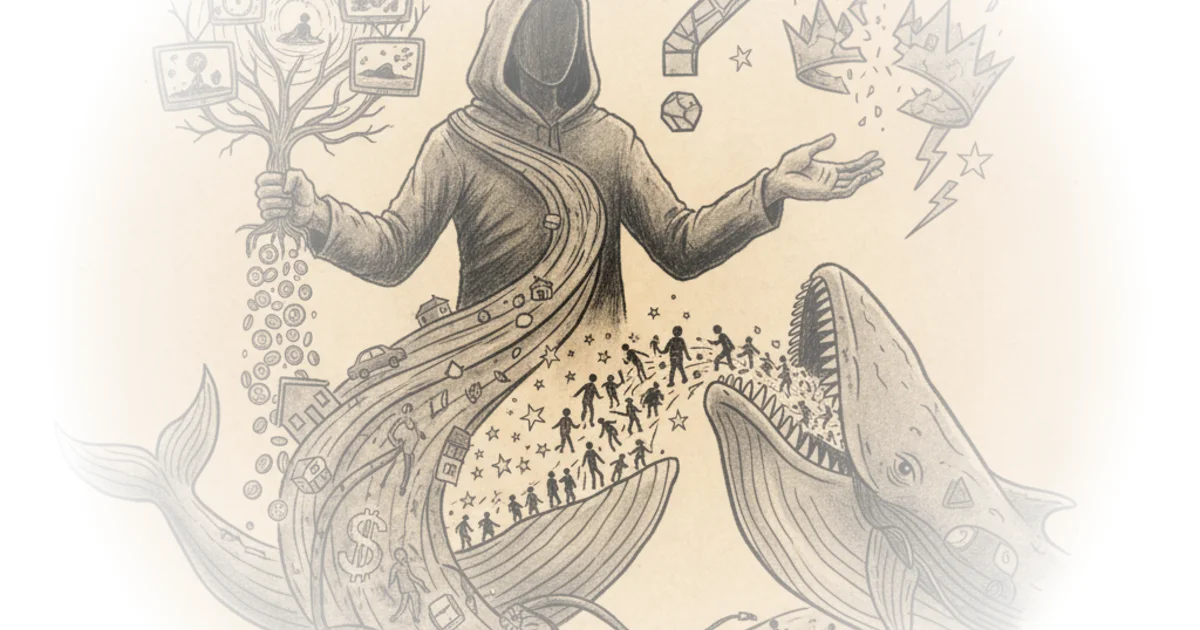
At its worst, philanthro-capitalism allows sponsors, donors, and big business to whitewash, greenwash, and conceal their otherwise questionable business tactics while propagandizing a positive spin.
A counterargument worth considering is that the immediate material benefit to recipients—homeless people receiving homes, workers receiving cash—cannot be dismissed simply because the funding source is corporate. The author acknowledges this, stating, "this is obviously commendable stuff... it's not a question of whether he's a good person or not." Yet, the piece maintains that the systemic impact of normalizing this model may outweigh the individual good, a tension that remains unresolved.
The Machinery of Spectacle
The commentary concludes by examining how the "spectacle" itself functions as a distraction. Then & Now observes that MrBeast has turned "homelessness into a kind of spectacle that pays." The author suggests that the sheer scale of the stunts—burying himself alive, recreating Squid Game—distracts from the underlying economic realities. The text notes that the media has been "complacent" in following the money, allowing corporations to "make perfect use out of an affable generous seemingly decent and well-meaning figure."
The piece argues that this dynamic is not unique to MrBeast but is a symptom of a broader cultural shift where "propaganda lobbying advertising public relations and the ideological weapons used by big business have become so expertly proficient in obfuscation." By framing the YouTuber as a symptom rather than a cause, the author avoids a simplistic attack on the individual while delivering a stinging critique of the ecosystem that elevates him.
Bottom Line
Then & Now's analysis is most powerful in its ability to connect the dots between historical labor exploitation and modern digital philanthropy, revealing a consistent strategy of using charity to sanitize corporate power. The piece's greatest vulnerability lies in its potential to discourage viewers from engaging with immediate, tangible acts of kindness, even when they are imperfectly funded. Ultimately, the reader is left with a critical imperative: to appreciate the spectacle while remaining skeptical of the machinery that powers it.