In an era where scientific inquiry often feels pressured by political winds, this episode from Big Biology cuts through the noise to ask a stark question: how does policy volatility reshape the very ability of researchers to do their work? The piece doesn't just list grievances; it anchors the discussion in hard data from a massive survey of ecologists and evolutionary biologists, revealing a chilling correlation between administrative uncertainty and the erosion of long-term field research.
The Human Cost of Policy Volatility
The editors of Big Biology frame the conversation not around partisan rhetoric, but around the tangible disruption of the scientific method. They introduce Dr. Katie Lotterhos, a marine scientist who helped coordinate a survey to quantify the impact of recent executive branch policies on the scientific community. "What impact has the Trump administration had on biology and the scientific community?" the piece asks, immediately setting a tone of urgent investigation rather than political commentary. This is a crucial distinction; the focus remains on the operational reality for researchers, not the personality of the leadership.
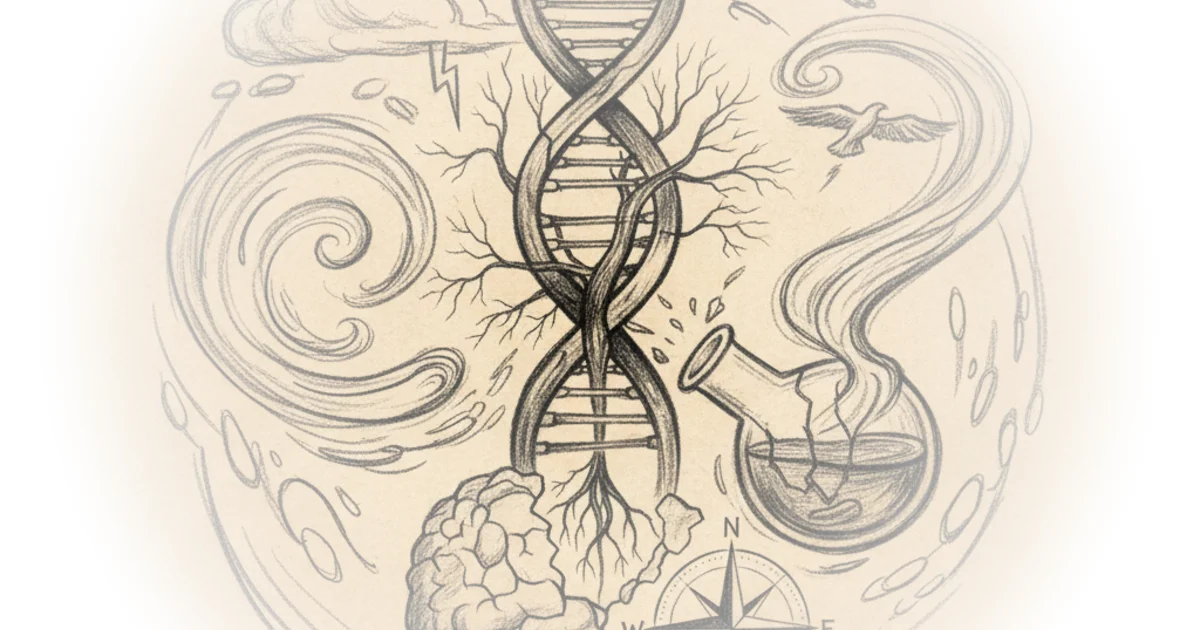
The survey results paint a picture of a field in retreat. The editors note that the data reveals a "survey of scientists to understand the impacts of the Trump administration's policies on ecology, evolution, marine science and environmental science." This phrasing is deliberate, shifting the burden of proof from anecdotal complaints to a systematic analysis of institutional strain. The core argument is that when funding streams dry up or regulatory frameworks become unpredictable, the most vulnerable populations—often the ecosystems themselves—suffer the most. The piece argues that "the results can be used in the future," suggesting that this data is a diagnostic tool for healing a fractured relationship between science and governance.
Critics might note that survey data can sometimes reflect perception rather than objective funding cuts, potentially overestimating the immediate material impact. However, the sheer scale of the survey and the specific focus on long-term ecological monitoring suggests the anxiety is rooted in real, structural threats to research continuity.
The survey reveals that policy volatility doesn't just change headlines; it changes the trajectory of decades-long studies.
Genomic Vulnerability as a Metaphor
The discussion then pivots from the sociology of science to the biology of vulnerability, using Dr. Lotterhos's work with oysters as a case study. This is where the piece shines, drawing a parallel between the fragility of scientific careers and the fragility of genomes under environmental stress. The editors explain that Lotterhos "uses oysters as a study system to understand the genomic basis of local adaptation and genomic vulnerability of populations to environmental change."
This metaphorical bridge is powerful. Just as a population of oysters may lack the genetic diversity to adapt to rapid temperature shifts, the scientific community may lack the institutional resilience to withstand rapid policy shifts. The piece highlights that "genomic vulnerability" is not just a biological term but a warning sign for any system facing rapid, unmanaged change. The argument lands because it treats the environment and the scientific enterprise as interconnected systems, both susceptible to the same pressures of instability.
The editors report that the conversation covers "how scientists study genomic adaptation and vulnerability," implying that the tools used to save oysters might also be relevant for saving the scientific enterprise. This is a sophisticated move, suggesting that the solution to political interference lies in the same rigorous, data-driven adaptation that scientists apply to their field work.
Bottom Line
The strongest part of this episode is its refusal to treat science as a passive victim; instead, it presents the scientific community as a system capable of adaptation, provided it has the data to guide it. Its biggest vulnerability is the inherent difficulty of translating academic survey results into immediate policy change. Readers should watch for how this data is weaponized in future legislative battles over research funding and environmental regulation.