This piece by Zichen Wang offers a startling glimpse into a moment when China's highest leadership explicitly championed investigative journalism as a tool for governance, not just propaganda. In a translation of remarks from 1998, the late Premier Zhu Rongji does not merely tolerate the state broadcaster's exposés on corruption; he demands them, arguing that "without programs like this, the voices of the people cannot be heard. What democracy is there? What oversight is there?" For modern readers navigating an era of tightening information controls, Wang's curation of this historical record serves as a powerful reminder of a different institutional logic that once existed within the party-state.
The Premier as Publicist
Wang frames the narrative around a singular, almost paradoxical event: the head of government visiting a news program known for embarrassing officials to thank them. The author highlights Zhu's candid admission that ministers would frantically watch the prime-time show, Focus Report, before meetings to avoid being questioned by the Premier. "Many ministers used to watch the program, but when they come to meetings that I chair, they worry that I might ask whether they watched Focus Report the night before," Wang writes, quoting Zhu's dry humor. This anecdote is not just a historical curiosity; it illustrates a top-down mechanism where media exposure was the primary lever for administrative accountability.
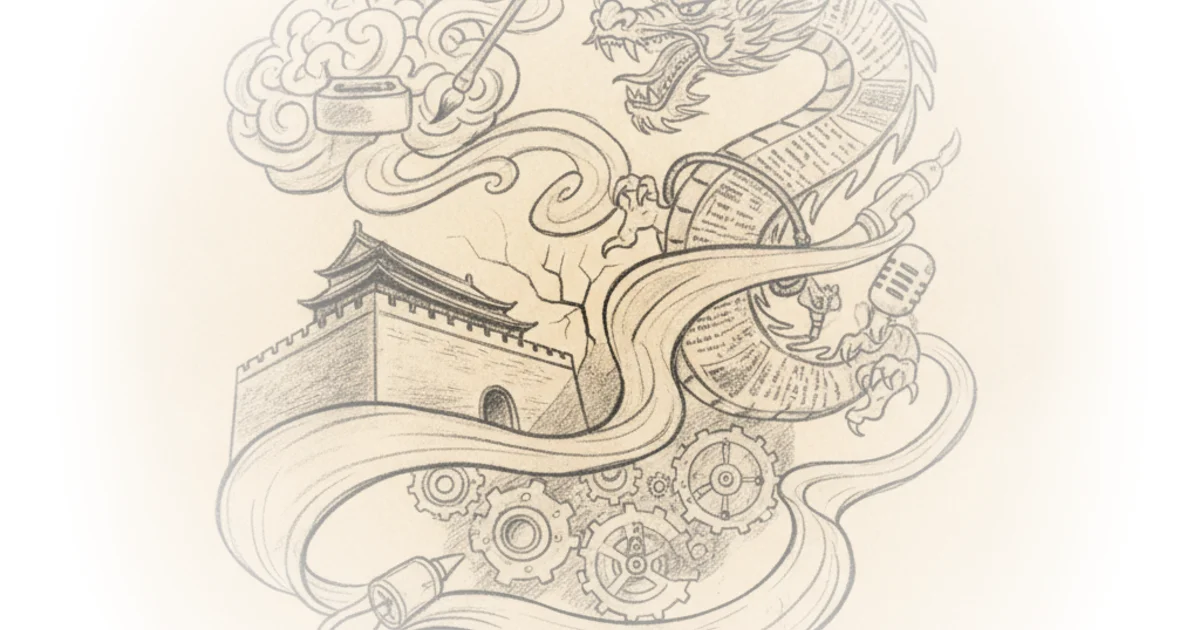
The commentary effectively uses Zhu's own words to dismantle the rigid dogma of "positive reporting" that often defines the state media landscape. Zhu challenges the idea that 99 percent of coverage must be celebratory, suggesting that even "51 percent" positive reporting is sufficient if the remainder exposes systemic failures. "If most programs focus on publicizing achievements, while one or two programs point out the problems we encounter in the course of moving forward and mobilize the strength of the entire Party to resolve them, the effect is much better than simply publicizing achievements," Wang notes. This framing is crucial because it positions criticism not as a threat to stability, but as a necessary ingredient for the Party's self-correction and survival.
"Correcting mistakes when mistakes are made—that is the attitude Communists should have. It is enormously encouraging to the people."
Wang's selection of this quote underscores the central thesis: that the legitimacy of the regime was, at least in this specific historical window, tied to its ability to demonstrate responsiveness to public grievance. The author connects this to the broader context of the 1998 floods, a catastrophic event that tested the state's capacity. Just as the flood relief efforts united the nation, the media's role in exposing the environmental negligence that exacerbated the disaster—such as illegal logging in Sichuan—was framed as a patriotic duty. The article notes that Zhu ordered an immediate halt to logging after a report, turning the "Focus Report phenomenon" into a tangible policy shift.
A Mirror for the Government
The second half of Wang's piece delves into the specific policy impacts of this media oversight, moving from the philosophical to the practical. The author details how Zhu used episodes of Focus Report as briefing materials for the State Council, effectively outsourcing the initial fact-finding to journalists. "I cannot say that all the reforms I am now working on were inspired by Focus Report, but I have certainly obtained many ideas from it," Zhu admits in the text Wang translates. This is a profound admission of the executive branch's reliance on the press to identify corruption in sectors like grain purchasing and rural electricity.
Wang highlights the case of grain subsidies, where billions in state funds were siphoned off by corrupt officials before reaching farmers. Zhu's reaction to a specific exposé was immediate and severe, forwarding the report to top leadership and demanding action. "Its impact was greater than that of one of my speeches," Zhu reflects, a statement that Wang uses to illustrate the unique power of visual journalism to cut through bureaucratic layers. The author also draws a parallel to the rural electricity crisis, where Focus Report exposed the absurdity of farmers unable to afford the very appliances they bought due to exorbitant grid prices. Zhu's response was a massive infrastructure investment to equalize prices, a move he explicitly credits to the program's "media oversight."
Critics might note that this narrative risks romanticizing a system where media freedom was entirely contingent on the whims of a single, powerful Premier. The "oversight" described was not independent; it was a sanctioned tool of the executive branch, designed to purge local corruption that threatened central authority. As Wang presents the text, the line between "voice of the people" and "instrument of the Party" remains blurred, suggesting that the democracy Zhu spoke of was a specific, limited form of feedback loop rather than broad political pluralism.
The Four Phrases
The article culminates in the inscription of Zhu's four famous phrases, which Wang presents as the definitive summary of the program's role: "media oversight, the voice of the people, a mirror for the government, and a vanguard of reform." Wang's decision to end with these phrases anchors the entire historical account in a legacy that feels both aspirational and lost. The author notes that Zhu was willing to be the subject of this scrutiny himself, stating, "If one day you discover something wrong with me and come to interview me, I will certainly accept the criticism and correct my mistakes."
This willingness to be held accountable by the very media he empowered is the piece's most striking element. It contrasts sharply with the current atmosphere of information control, making the 1998 remarks feel like a ghost from a parallel timeline. Wang's framing suggests that the decline of such programs was not inevitable but a result of shifting political priorities. The article implies that the "Focus Report phenomenon" was a unique convergence of a reformist Premier, a crisis-ridden state, and a media sector granted temporary license to dig deep.
"Without programs like this, the voices of the people cannot be heard. In that case, what democracy is there? What oversight is there?"
Bottom Line
Zichen Wang's curation of Zhu Rongji's 1998 remarks provides a compelling, if melancholic, case study in the potential of state-sanctioned investigative journalism to drive real policy reform. The piece's greatest strength is its reliance on Zhu's own unvarnished words to show a leader who viewed media criticism as essential to governance, not an embarrassment to be suppressed. However, the argument's vulnerability lies in its implicit assumption that this model could have survived without the specific personal authority of Zhu Rongji, leaving readers to wonder if the "mirror" was ever truly independent or just a reflection of the Premier's will.