Yascha Mounk delivers a provocative diagnosis for the current tax debate: the popular push for a wealth tax is not a serious policy proposal, but a form of 'slopulism' designed to soothe political anger rather than solve fiscal problems. In an era where complex solutions are often discarded for soundbites, Mounk argues that the United States is ignoring a menu of existing, effective tools to tax the ultra-wealthy in favor of a clumsy, redundant new levy. This piece is essential listening for anyone tired of the binary choice between doing nothing and implementing a tax that experts universally disdain.
The Stock vs. Flow Distinction
Mounk begins by dismantling the intuitive appeal of wealth taxes, which he argues stem from a fundamental misunderstanding of what is being taxed. He explains that while income is a 'flow'—like water coming out of a faucet—wealth is a 'stock,' or the water already accumulated in a bathtub. The core of his argument is that we already tax the flow of capital income, making a tax on the stock largely redundant. 'The reason that tax experts disdain wealth taxes is, unfortunately, a bit difficult to explain,' Mounk writes, noting that the primary issue is not that billionaires will flee, but that 'there is nothing that can be accomplished by taxing wealth that cannot also be accomplished by taxing capital income.'
This framing is effective because it shifts the debate from moral outrage to administrative mechanics. Mounk suggests that the current system already penalizes savings twice—once when earned and again when the savings generate income—and that a wealth tax would simply add a 'third round of taxation.' He argues that the solution isn't to pile on complexity, but to adjust the rates of the existing rounds. 'It's the same goose being plucked at each stage, so it doesn't really matter how much gets taken in any particular round,' he observes. Critics might note that this assumes the current income tax system is perfectly efficient at capturing capital gains, which many economists argue it is not due to loopholes and valuation issues. However, Mounk's point stands that adding a new layer is a blunt instrument when the existing hammer is broken.
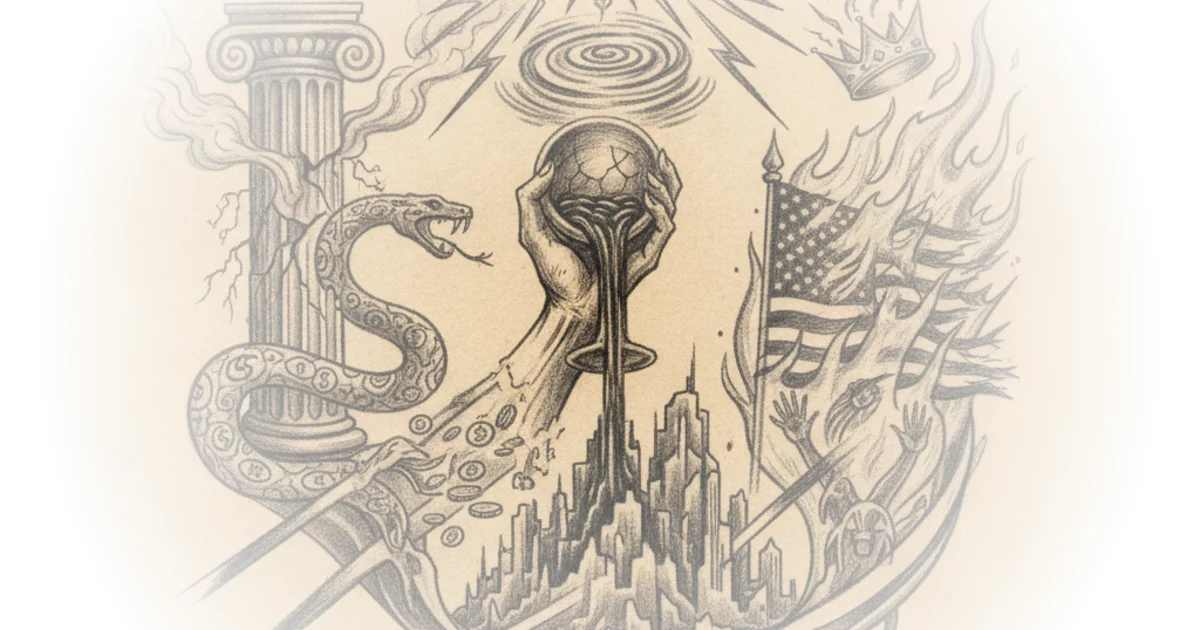
Wealth taxes are in fact a perfect example of slopulism —policy ideas that make for quick, effective sound-bites, but that are almost universally rejected by experts.
The "Buy-Borrow-Die" Loophole
The article then tackles the most sophisticated argument for wealth taxes: the 'buy-borrow-die' strategy. Mounk acknowledges that the wealthy can indeed use unrealized capital gains to borrow against their assets, consuming without triggering a tax event, and then pass those assets to heirs with a 'stepped-up' basis that erases the tax liability. He admits this is a massive loophole, but he rejects the wealth tax as the cure. 'The most important objection to wealth taxes is that they impose very complex reporting requirements involving often difficult-to-value assets... while not accomplishing anything that is not already being done by the income tax.'
Instead of a new tax, Mounk points to three specific, targeted reforms that would close this gap without the administrative nightmare of valuing private companies or art collections annually. First, he suggests moving to an 'accrual-based' taxation system, similar to some European models, where gains are taxed as they happen, not just when sold. Second, he highlights the potential of a Value-Added Tax (VAT), which taxes consumption and debt, effectively neutralizing the benefit of borrowing against assets. Finally, he addresses the 'die' component directly, referencing the concept of 'stepped-up basis' where heirs pay no tax on the appreciation during the decedent's life. 'You don't need to implement complex, accrual-based taxation of capital to avoid the "die" component of the strategy; all you need to do is treat death as a realization event,' Mounk argues, citing Canada as a successful example.
This section is particularly strong because it leverages specific historical and structural context. By invoking the mechanics of stepped-up basis and the reality of mark-to-market accounting, Mounk demonstrates that the 'loophole' is a feature of specific code sections, not an inherent flaw in the concept of income taxation. He notes that the United States is the 'only Western country in which people can get away with this strategy,' implying that the fix is political will, not technical impossibility. The argument that 'any of these changes would be superior to a direct tax on wealth' is a call for precision over populism.
The Politics of Punishment
Ultimately, Mounk concludes that the wealth tax movement is driven by emotion rather than efficacy. He suggests that for those angry at figures like Elon Musk or Peter Thiel, the wealth tax offers a way to 'channel that anger,' but warns that 'the desire to punish one's enemies is not a sound basis for tax policy.' He envisions a future where historians chronicle the decline of the American empire, noting the role of 'radicalized multi-billionaires' and a 'corrupt president,' but he insists that the solution lies in 'sensible reforms' that are currently being ignored because they take too long to explain.
The piece closes with a challenge to the political establishment: 'A serious nation, or at least a serious political party, would focus on this.' Mounk's critique is that the current political environment rewards simplicity over substance. 'Unfortunately, these sensible reforms require at least five minutes to explain, as a result of which they have no chance of being adopted in the current political environment.' This is a sobering assessment of the modern policy landscape, where the path of least resistance is often the path of greatest damage.
The desire to punish one's enemies is not a sound basis for tax policy.
Critics might argue that Mounk underestimates the political impossibility of passing a VAT or closing the estate tax loopholes, suggesting that a wealth tax, while imperfect, is the only vehicle with enough political momentum to actually pass. However, his insistence on fixing the existing system rather than building a new, fragile one remains a compelling, if difficult, path forward.
Bottom Line
Yascha Mounk's strongest contribution is his refusal to treat the wealth tax as a legitimate policy alternative, instead categorizing it as a political symptom of a broken discourse. His biggest vulnerability is the assumption that the political will exists to implement the complex, targeted reforms he proposes, which may be just as politically toxic as the wealth tax he opposes. Readers should watch for whether the administration or Congress attempts to close the 'buy-borrow-die' loophole through targeted legislation, as that will be the true test of whether the U.S. can move beyond slopulism.