Asianometry delivers a masterclass in urban pathology by tracing how Mexico City’s existential crisis—sinking up to 50 centimeters yearly—wasn’t fate but a cascade of human choices. The most chilling revelation? That 30,000 people drowned in a single 1629 flood because colonial engineers ignored indigenous flood infrastructure, setting a pattern of hubris that still cracks streets today. For leaders reshaping climate-vulnerable megacities, this isn’t history—it’s a blueprint of avoidable collapse.
The Basin’s Fatal Flaw
Asianometry roots the crisis in geology with surgical precision: "Simply speaking, it’s a big natural bowl up in the sky." The author explains how volcanic activity 600,000 years ago—detailed in the Sierra Chichinautzin deep dive—dammed the valley, creating five lakes where water could only escape through evaporation. This made Lake Texcoco increasingly saline, forcing the Aztecs to engineer solutions like aqueducts and the Nezahualcoyotl dike, built by the famed tlatoani in the 1440s. Asianometry’s strength here is connecting environmental constraints to cultural innovation: "The city was notable for its extensive water engineering... floods were often devastating." Yet the analysis wisely avoids romanticizing—this was survival, not sustainability.
Colonial Engineering as Self-Sabotage
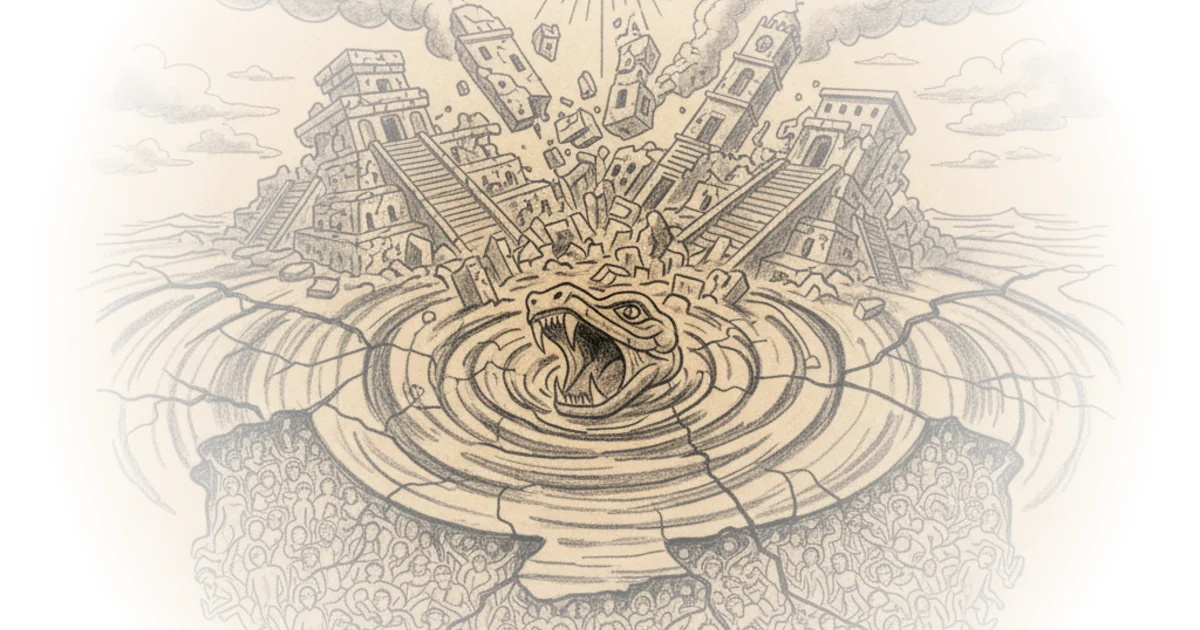
The pivot to Spanish conquest reveals the article’s sharpest critique. Asianometry writes, "Cortez destroyed the Nezahualcoyotl dyke so his ships can pass," then details how colonizers dismantled flood infrastructure to build European-style streets. This wasn’t mere ignorance: "Cortez’s lieutenants urged him to move the city to higher ground... But Cortez insisted on staying for political, cultural, and institutional reasons." The author argues this decision weaponized geography against the city’s inhabitants—a point underscored by the 1629 flood where "gates to the cut were closed," drowning 30,000. Critics might note the piece underplays Indigenous resistance to drainage projects, but Asianometry’s focus on institutional arrogance lands powerfully.
For 300 years, authorities spent huge resources to drain the basin’s lakes—and succeeded so completely they now must import water.
The Thirst Trap
Asianometry’s most urgent section dissects the groundwater paradox. As the author puts it: "Removing the water surrounding those soil and clay grains will cause them to compress... up to 25 to 30% of their original volume." Paraphrasing the evidence, he shows how shallow wells drilled in 1847 escalated to industrial pumping by the 1930s, ignoring early subsidence warnings. This lands because it frames modern inequality through infrastructure: "Neighborhoods built on softer ground experience broken pipes... many worst affected tend to be less economically advanced." Yet the analysis overlooks how Mexico’s 1947 pump restrictions failed partly due to U.S. pressure during the Bracero program—a missed nuance in the migrant labor narrative.
Bottom Line
Asianometry’s strongest contribution is exposing how Mexico City’s sinking stems from repeated choices to prioritize political control over ecological reality—from Cortez to Diaz. Its vulnerability lies in under-scrutinizing modern engineering alternatives. Watch whether subsidence accelerates beyond repair as climate change intensifies droughts, making this historical case study terrifyingly current.