More Perfect Union doesn't just ask if the gig economy is broken; they prove it with a controlled experiment that exposes the hidden mechanics of algorithmic wage discrimination. By gathering seven drivers in a single room in Los Angeles, the publication moves beyond theoretical concerns to reveal a system where identical work yields vastly different paychecks based on opaque, secret algorithms. This is not a story about individual corporate malice, but about a structural shift where technology allows firms to extract maximum value from workers while evading the legal frameworks designed to protect them.
The Experiment That Shattered Transparency
The core of the coverage is a deliberate, methodical test designed to strip away the variables companies usually blame for pay disparities. More Perfect Union writes, "We called seven experienced drivers to a high-traffic area in Los Angeles with the sole purpose of testing if ride share companies are paying different rates for the same rides." The setup was rigorous: phones placed inches apart, screen capture software active, and drivers waiting for the exact same ride requests. The results were immediate and damning. As the authors note, "We found that Uber offered the same rides 46 times to multiple drivers 63% of the time," yet one driver was consistently offered less money for the exact same trip.
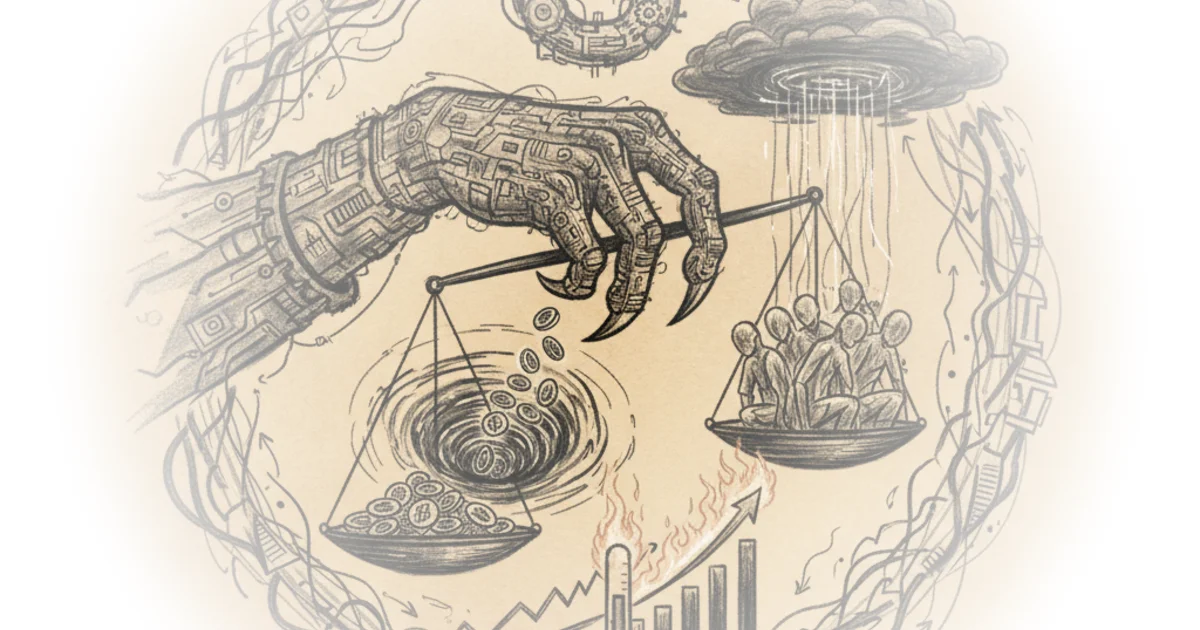
This evidence challenges the narrative that pricing is a neutral function of supply and demand. Instead, the data suggests a deliberate strategy to maximize rider prices while minimizing driver payouts. More Perfect Union observes, "The algorithms are set up in a way to charge the rider as much as it's possible and to pay the driver as little as possible." The scale of this discrepancy is staggering; even a few pennies difference per trip, when multiplied by billions of rides, translates to hundreds of millions of dollars siphoned from the workforce. Critics might argue that algorithmic pricing is simply dynamic market efficiency, but the authors counter that true market efficiency requires transparency, which these platforms have systematically removed.
"They have broken every single local state federal law when it comes to labor when it comes to Transportation."
The Legal Contradiction of the Gig Model
The piece pivots from the data to the legal paradox at the heart of the ride-share business model. These companies classify drivers as independent contractors to avoid providing benefits and protections, yet they exert total control over the drivers' economic reality. More Perfect Union highlights this cognitive dissonance through the perspective of legal experts, noting, "From our perspective Uber's and Lyft's business model is based on control without responsibility." If drivers are truly independent business owners, they should have the power to set their own prices. Instead, the platforms dictate every rate, effectively engaging in price-fixing while claiming the drivers are free agents.
The authors point out that this legal gymnastics is not just a loophole but a shield. "Uber and Lyft are saying we're not one company... we're just a platform and all of our drivers are Independent Business people," yet they simultaneously use their dominance to suppress wages. This duality allows them to bypass antitrust laws and labor protections. The coverage suggests that the current classification is a fiction maintained to protect profits. As the text puts it, "If these drivers are as you say independent then they need to have true economic independence," a condition the platforms actively deny by controlling the pricing mechanism.
Beyond Ride-Share: The Algorithmic Threat
The implications of this investigation extend far beyond the ride-share industry. The authors argue that the technology used to discriminate against drivers is the same tool being deployed to manipulate consumer prices and wages across the broader economy. More Perfect Union warns, "Once that technology is in there they can raise prices on a hot summer day... the price of milk even your paycheck." The fear is a future where algorithms, unaccountable to anyone, dictate the cost of essential goods and the value of labor based on a user's desperation or data profile.
The Federal Trade Commission has begun investigating "surveillance pricing" in retail, but the authors contend that similar scrutiny is urgently needed for wages. The power of these giants lies in their ability to keep regulators, consumers, and workers blindfolded. "The power of these Giants lies in their ability to keep everyone consumer drivers Regulators blindfolded," the piece states. Without transparency, the legal system cannot function, and the balance of power tilts entirely toward the platform. The article concludes that the only way to resolve this is for the government to shine a light on these secret algorithms, forcing a reckoning with a business model that thrives in the dark.
Bottom Line
More Perfect Union's strongest argument is the empirical proof that algorithmic wage discrimination is not a theoretical risk but a current, measurable reality. The piece's greatest vulnerability is the difficulty of translating this evidence into legal action, given the companies' reliance on arbitration clauses and the lack of specific federal statutes against algorithmic wage discrimination. Readers should watch for whether state attorneys general, particularly in California, will use antitrust laws to challenge these pricing practices before federal intervention occurs.