In a landscape often dominated by the noise of current political theater, Warren Throckmorton offers a startlingly quiet but potent correction: the Founders didn't just prefer a separation of church and state; they actively feared the coercive power of a president telling citizens when to pray. While recent debates have focused on whether public officials can express personal faith, Throckmorton pivots to a more dangerous, often overlooked distinction—the line between a politician speaking as a private citizen and a president speaking as the state. This is not a history lesson for nostalgia's sake; it is a constitutional warning that the administration's current blending of civic religion and executive power may be repeating the exact errors James Madison spent his retirement trying to correct.
The Conflation of Faith and Office
The piece begins by addressing a recent argument by theology professor Lucas Stamps, who suggested that George Washington's religious proclamations were a model to emulate and that Thomas Jefferson's refusal to issue one was a mistake. Throckmorton dismantles this premise by highlighting a crucial omission in Stamps' analysis: the later regrets of the very presidents Stamps praises. Throckmorton writes, "Stamps correctly noted that second president John Adams expressed some remorse for issuing a proclamation. However, Stamps did not disclose that James Madison also regretted his 1815 Thanksgiving proclamation." This omission is not merely a gap in the record; it is a failure to see the evolution of the Founders' own understanding of their power.
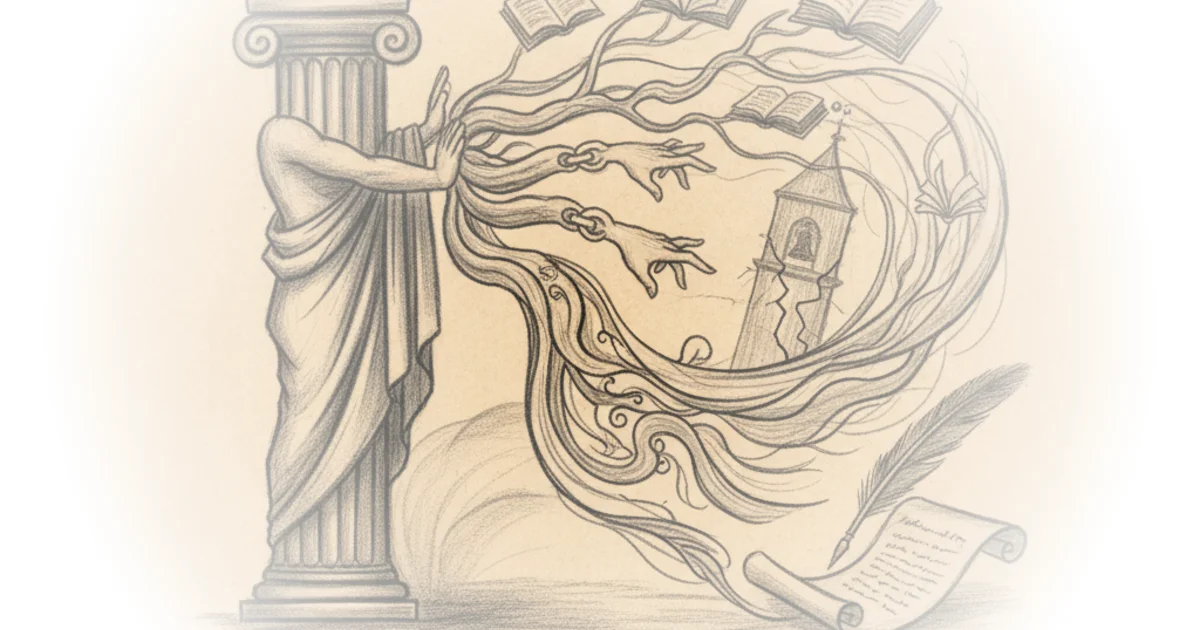
Throckmorton argues that Stamps conflates two distinct types of speech: the personal and the official. "Politicians are people too, and they have beliefs and feelings," Throckmorton notes, adding, "Whatever these descriptions of God meant religiously, they don't set national policy or have the force of law." This distinction is vital for the modern listener. When a Vice President or Secretary of State speaks informally, they are exercising free speech. But when the White House issues a proclamation, it is an act of the state. Throckmorton points out that Stamps fails to see that "a proclamation or executive order is a statement by an elected official made while speaking for the government."
The argument gains weight when Throckmorton examines the specific historical context of the Establishment Clause. He reminds readers that the tension between church and state was not a theoretical abstraction for the Founders but a lived reality. "The tension over church and state separation is apparent in Miller's letter," Throckmorton observes, referring to a 1808 request from a clergyman asking Jefferson to mandate a day of fasting. Even then, citizens were wrestling with the constitutionality of such requests. Throckmorton's analysis is effective because it forces the reader to confront the uncomfortable reality that "civil powers alone have been given to the President of the US. and no authority to direct the religious exercises of his constituents."
"Jefferson understood that the presidential power even to recommend a certain kind of religious exercise gives it a social authority that can be coercive."
The Coercive Nature of Recommendations
The core of Throckmorton's commentary lies in his interpretation of Thomas Jefferson's 1808 letter to Reverend Samuel Miller. Jefferson did not simply refuse the request; he articulated a profound fear of the subtle power of government endorsement. Throckmorton paraphrases Jefferson's logic: even if a proclamation carries no legal penalty like a fine or imprisonment, it creates a "degree of proscription perhaps in public opinion." This is a critical insight for modern readers. The threat is not always a jail cell; it is often social stigma.
Throckmorton writes, "Although subtle, a presidential proclamation is a form of meddling, and the civil magistrate has no business recommending one religious view over another." He argues that Jefferson's refusal was a protective measure for nonconformists. "History shows that nonconformists often face persecution," Throckmorton notes, reminding us that the "penalty" for ignoring a presidential prayer recommendation is often the loss of social standing or political favor. This framing challenges the modern assumption that a government recommendation is harmless. As Throckmorton puts it, "Modern Christians who think a little government can't hurt anything are not as wise as the sage of Monticello."
Critics might argue that a presidential call to prayer is a benign tradition that fosters national unity rather than division. However, Throckmorton counters that this unity is illusory and comes at the cost of religious liberty for minorities. He emphasizes that "it is only proposed that I should recommend, not prescribe a day of fasting & prayer. that is that I should indirectly assume to the US. an authority over religious exercises which the constitution has directly precluded them from." The distinction between recommending and prescribing is a legal fiction when the recommendation comes from the highest office in the land.
Madison's Retrospective Reckoning
Perhaps the most compelling section of the piece is Throckmorton's deep dive into James Madison's "Detached Memoranda," written after he left office. Throckmorton reveals that Madison's support for a Thanksgiving proclamation in 1815 was a momentary lapse that he later forcefully rejected. Throckmorton writes, "Madison distinguished between people speaking 'in their individual capacities as distinct from their official station.' This is what Stamps fails to do." This distinction is the linchpin of the entire argument: the moment a president speaks for the government, they cease to be a private citizen.
Throckmorton lists Madison's five objections, focusing on the danger of creating a "national religion." He quotes Madison's warning that such proclamations "imply and certainly nourish the erronious idea of a national religion." Throckmorton connects this historical warning to the present, noting that "the practice if not strictly guarded, naturally terminates in a conformity to the creed of the majority and of a single sect, if amounting to a majority." This is a direct challenge to the idea that a generic, non-denominational prayer is harmless. Madison argued that even general terms for God are insufficient because they inevitably favor the dominant sect.
Furthermore, Throckmorton highlights Madison's concern about the politicization of faith. "The last & not the least Objection is the liability of the practice, to subserviency to political views; to the scandal of religion, as well as the increase of party animosities," Throckmorton writes. He points out that Washington's own proclamation was issued in the wake of the Whiskey Rebellion, leading observers to construe it as a political tool to quiet controversy. Throckmorton's commentary here is sharp: "Politics mixed with religion? Say it ain't so, Mr. Madison!" He argues that when the executive branch mixes faith with policy, it risks turning religion into a "cosmetic" for political gain.
"Politicians use religion like Trump uses hairspray and makeup. It is a cosmetic. When applied properly, it can make the politicians look better than they are."
While Throckmorton's reference to the current administration's use of religious rhetoric is pointed, it serves to illustrate Madison's broader point about the "scandal of religion." The argument is that the integrity of faith is compromised when it is used to legitimize political power. Throckmorton notes that Madison's objection was not just to the political manipulation of faith, but to the "scandal of religion" itself. This is a powerful reminder that the separation of church and state is as much about protecting religion from the state as it is the other way around.
The Irony of the Baptist Connection
Throckmorton concludes by highlighting a historical irony: the very arguments Stamps makes against Jefferson's separationist stance were championed by the Baptists, who were Jefferson's and Madison's most fervent supporters. Throckmorton writes, "It also seems ironic to me since Stamps leads the Center for Baptist Renewal and Baptists of the day were some of Jefferson's and Madison's most fervent supporters." He reminds readers that the Danbury Baptists' letter to Jefferson was the catalyst for the famous "wall of separation" metaphor. This historical context adds depth to the argument, showing that the separation of church and state was not an anti-religious stance, but a pro-religious one designed to protect the purity of faith from government corruption.
Throckmorton's final verdict is clear: "They understood that government should be for all people, not just those in the dominant majority. And since government is for all people, it should not give the appearance of favoring only a powerful few." He argues that "Their official position in the government isn't one of them" when it comes to expressing personal faith. This is a call for the executive branch to recognize the limits of its authority and to respect the diverse religious landscape of the nation.
Bottom Line
Warren Throckmorton's commentary is a masterful recovery of the Founders' original intent, stripping away the modern gloss that equates presidential prayer with harmless patriotism. The strongest part of the argument is the rigorous distinction between personal faith and official state action, a line that the current administration frequently blurs. However, the piece's biggest vulnerability is its reliance on historical texts that may feel distant to a modern audience accustomed to the immediacy of political theater. Readers should watch for how the executive branch continues to navigate this boundary, particularly as the line between civic religion and state policy becomes increasingly porous. The lesson from Jefferson and Madison remains clear: when the government speaks for God, it speaks for no one.