Jordan Schneider exposes a startling paradox at the heart of China's latest educational pivot: the state is deploying invasive surveillance and artificial intelligence not to liberate students, but to manage the inevitable failure of a zero-sum college admissions system. While Western observers often fixate on the technology itself, Schneider reveals that the true driver is political legitimacy, as the administration seeks to placate a populace that spends a staggering portion of its income on education while facing a shrinking job market.
The Illusion of Equity
Schneider's most compelling insight is that Beijing has declared a "post-equity era," shifting focus from merely providing access to schooling to "improving the quality" of that education through digital means. He writes, "Infrastructure is pretty much the perfect tool for this. It makes schools feel luxurious on the ground without changing the fundamentals that make the system so unfair." This observation cuts through the techno-optimism of the Ministry of Education's white papers. The administration is betting that shiny new AI tools will serve as a distraction, offering parents the feeling of progress even as the structural barriers to social mobility remain rigid.
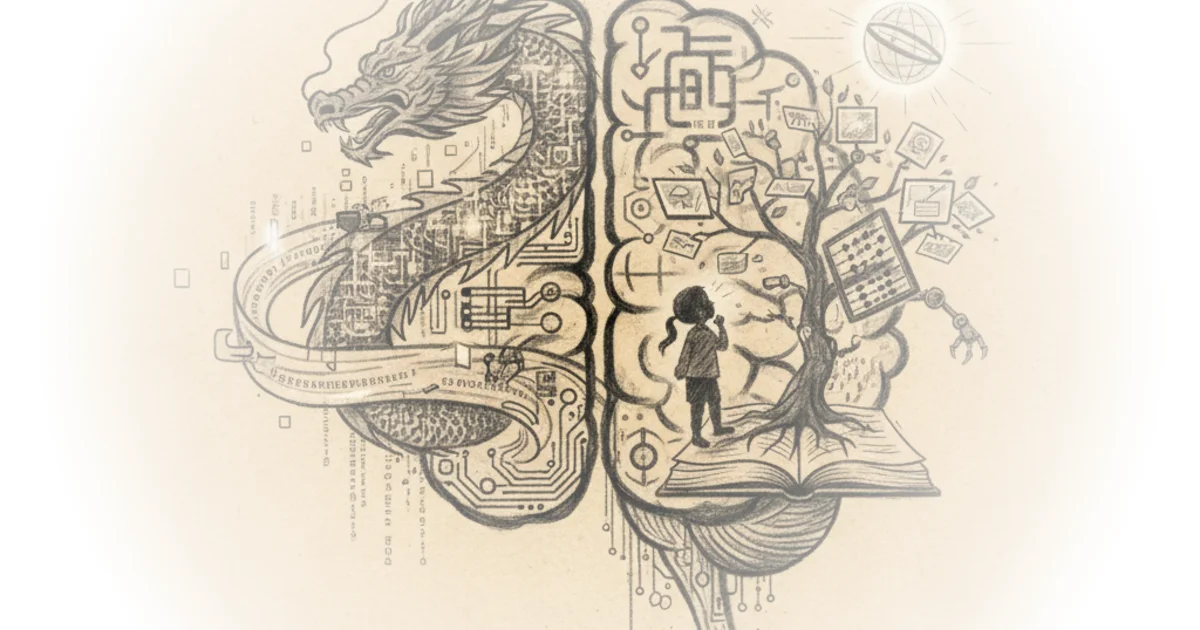
The scale of this ambition is unmatched globally, yet the context is grim. Schneider notes that while the government aims to "universalize basic AI access in primary and secondary schools by 2030," the reality on the ground is a system where "educational resources are systematically sucked up to the center from the periphery." This dynamic mirrors the historical pressures seen in the Gaokao system, where the pressure to perform has long been a defining feature of Chinese society. Now, the state is attempting to use algorithms to simulate the conditions of elite education in rural areas, hoping to satisfy the 95% of rural mothers who told researchers they want their children to attend college.
"Infrastructure is pretty much the perfect tool for this. It makes schools feel luxurious on the ground without changing the fundamentals that make the system so unfair."
Critics might argue that this approach is merely a stopgap that delays necessary structural reforms in the labor market. If the economy cannot absorb the record number of graduates, better AI grading tools will not solve the fundamental mismatch between education and employment.
The Biometric Classroom
Perhaps the most disturbing aspect of Schneider's reporting is the normalization of biometric monitoring under the guise of "personalized instruction." The Ministry of Education's guidance explicitly encourages the use of AI to "comprehensively monitor students' learning, practical activities, and daily lives." Schneider highlights how pilot schools are already using these tools to "grade children's artwork, monitor their facial expressions during lectures, and screen them for psychological problems."
This is not a future scenario; it is a current policy priority. As Schneider puts it, "The MOE document proclaims that 2025 marks the dawn of an era... the beginning of a system-wide effort to 'intelligentize' education using AI tools." The goal is to create user profiles for every student, effectively turning the classroom into a data mine. The administration frames this as a way to help students with disabilities and reduce teacher workloads, but the implication is a level of behavioral control previously unseen in mass education.
The contrast with other nations is stark. While South Korea's national AI textbook initiative collapsed after four months and India's private-sector-led approach led to predatory practices, China's state-led rollout faces no such market checks. Schneider notes that "China stands out globally for the sheer scale of its AI education ambitions." This centralized control allows the government to push through controversial measures, such as the "County-managed, school-hired" system, which forces teachers into three-year contracts and transfers, often to rural hardship posts where they are resented by the local staff.
The Human Cost of Automation
The human element of this experiment is where Schneider's analysis becomes most poignant. He details how the system is designed to manage a "zero-sum" environment where "anyone who receives an advantage is inherently disadvantaging someone else." In this context, AI becomes a mechanism for sorting and filtering rather than genuine empowerment. The author cites anthropologist Andrew Kipnis, who explains that the party prioritizes educational reform "because it's a way of keeping people happy. If they think there's some hope their child will attend university, that gives them some investment in the system."
However, the gap between the digital promise and the rural reality is immense. Schneider points out that rural areas lag behind developed regions by more than a decade in pedagogy, with teachers still praising students for being "obedient" while urban educators have moved on. He writes, "How will children raised using the old model cope with a rapidly changing society in the future? Twenty years is unpredictable, and the impact of a single lesson is negligible." The reliance on AI to bridge this gap risks automating outdated teaching methods rather than modernizing them.
"It's a way of keeping people happy. If they think there's some hope their child will attend university, that gives them some investment in the system."
The financial burden on families further complicates this picture. Schneider reveals that the poorest quartile of Chinese families devotes a "staggering 56.8% of income to education," a figure that dwarfs spending in the US or Japan. This inelastic demand means families will continue to pour resources into a system that may not deliver the promised returns, driven by the belief that a degree unlocks not just jobs, but healthcare and social prestige via the hukou system.
Bottom Line
Schneider's report is a vital corrective to the narrative of AI as a purely liberating force in education, exposing how it is being weaponized to maintain social stability in a high-pressure, zero-sum system. The strongest part of the argument is the link between the administration's techno-optimism and its desperate need to manage public expectations in the face of economic stagnation. The biggest vulnerability, however, lies in the assumption that digital infrastructure can substitute for the deep structural reforms needed in China's labor market and social safety net. Readers should watch closely to see if the "intelligentization" of schools leads to genuine pedagogical shifts or simply a more efficient mechanism for sorting students into their predetermined fates.