Robin James uncovers a startling cultural lineage: the modern alt-right's rhetoric of "wounded entitlement" didn't emerge from thin air, but evolved directly from the same legal and musical shifts that defined the 1990s. By tracing a thread from 1990s affirmative action lawsuits to the lyrics of Nine Inch Nails and Creed, James reveals how a systemic critique of inequality was quietly rebranded as a private, personal injury claim—a shift that continues to dominate today's political discourse.
From Systemic Injustice to Personal Injury
The core of James's argument rests on a legal concept that most listeners have never heard applied to pop culture: "whiteness as property." Drawing on critical race theorist Cheryl Harris, James explains how the law began treating white privilege not just as a social status, but as an asset that could be "injured" by policies like affirmative action. "The property interest in whiteness has skewed the concept of affirmative action by focusing on the sin or innocence of individual white claimants with vested rights, rather than on the broader questions of distribution of benefits and burdens," James writes. This reframing is crucial because it turns a public debate about fairness into a private lawsuit about loss.
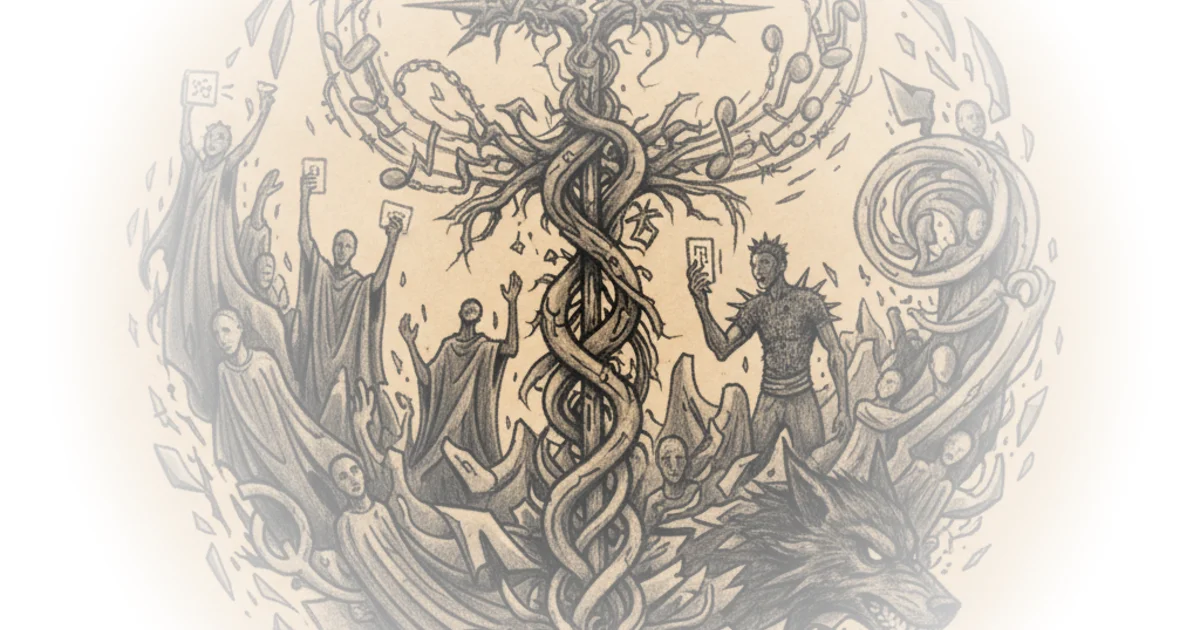
James argues that this legal maneuvering created a new emotional template: the idea that white people are the victims of a personal wrong when their unearned advantages are challenged. As James puts it, "By disavowing the essential jurisprudential nature of affirmative action to be both corrective and distributive... conflict that is both private and public in nature becomes wholly privatized." This is a powerful insight. It explains why modern political grievances often feel so intensely personal, even when they are about broad policy changes. The shift from "we need to fix society" to "you hurt me" is the engine of the current backlash.
Critics might argue that linking legal theory to rock lyrics is a stretch, but James provides compelling evidence that the feeling of being wronged permeated both spheres simultaneously. The argument holds up because it doesn't claim direct causation, but rather a shared cultural atmosphere where systemic issues were increasingly interpreted through the lens of individual grievance.
By disavowing the essential jurisprudential nature of affirmative action to be both corrective and distributive, conflict that is both private and public in nature becomes wholly privatized.
The Soundtrack of Wounded Entitlement
James then takes this legal framework into the music of the 1990s, specifically the industrial and alternative rock scenes. The author suggests that bands like Nine Inch Nails, often seen as rebellious, were actually channeling a specific type of "wounded entitlement" that resonated with white male listeners. James notes that while earlier industrial bands raged against the system, artists like Trent Reznor reframed that anger as "an expression of private individual aggrievement." This distinction is vital. It's not about overthrowing the machine; it's about the machine failing you.
The lyrics of "Head Like a Hole" serve as a prime example. James points out that the repeated line "No you can't take it/No you can't take that away from me" is not just a rock anthem; it's a defense of property rights. "The 'it' or 'that' under threat is the narrator's self-'control' or self-ownership," James writes. This interpretation transforms a song about spiritual emptiness into a manifesto for protecting one's status. It's a subtle but profound shift in how power is understood.
This trend becomes even more explicit in bands like Creed, whose hit "One" is described by James as an "'All lives matter' take on affirmative action." The song's lyrics about feeling "violent" and "alone" due to "discrimination now on both sides" perfectly capture the sentiment of white men who felt their "settled expectations" were being violated. James observes that "the more '90s alt' sounds accompany the more aggrieved sentiments," creating a sonic landscape where anger is the default response to social change. This connection between the sound of the music and the politics of the lyrics is the piece's most distinctive contribution.
However, one might question whether James attributes too much intentionality to these artists. It is possible that these musicians were simply expressing personal angst without a conscious political agenda. Yet, James's point remains valid: regardless of intent, the effect of this music was to normalize the idea that white masculinity is a form of property under siege.
The Financialization of Grievance
The final layer of James's analysis connects this cultural shift to the financialization of media. In a market driven by investors rather than consumers, "wounded entitlement" becomes a valuable commodity. James argues that "the performance of wounded entitlement is a way for people with otherwise privileged identities... to tap into resilience discourse and perform damage that can then be overcome in the sort of spectacular and exponential enclosure of value expected in a financialized market." Essentially, playing the victim became a scalable business model.
This explains why the narrative of "white men as victims" has proven so durable and profitable. It's not just a political strategy; it's a market strategy. As James puts it, "Financialized media industries... encourage the performance of wounded entitlement... because that's how men, especially white cishetero men, can exhibit the kind of 'scalable' value financialized markets prize." This insight reframes the entire alt-right phenomenon not as a sudden explosion of hatred, but as the logical outcome of a media ecosystem that rewards personal injury narratives.
In a financialized media industry, the main audience a company addresses is not consumers but investors, who want to believe their investments are capable of exponential growth.
Bottom Line
Robin James's piece offers a masterful synthesis of legal theory, music criticism, and media analysis, revealing how the language of "personal injury" became the primary vehicle for white backlash. The strongest part of the argument is its ability to connect the dry mechanics of 1990s affirmative action lawsuits to the visceral emotional power of grunge and alt-rock. The biggest vulnerability lies in the difficulty of proving that listeners consciously understood these lyrics as political property claims, though the cultural resonance is undeniable. Readers should watch for how this same "wounded entitlement" narrative continues to be monetized in today's algorithm-driven media landscape, proving that the 1990s shift is far from over.