Should We All Be Realists Now?
An economist steps into political philosophy to make a case that has become harder to ignore: the liberal international order is crumbling, institutions are fracturing, and the tidy moral blueprints of academic philosophy no longer map onto the world we actually inhabit. Cyril Hédoin's essay asks whether political realism — the tradition that treats politics as something separate from morality, grounded in conflict and order rather than justice and ideal design — is no longer one school among many but the only sensible default.
The Realist Playbook
Hédoin outlines what realism demands in practice. Politics, for realists, is its own domain — not a branch of ethics dressed up in policy language. Realists criticize ideal theory for building castles in the sky and then wondering why nobody lives in them. They emphasize conflict over consensus, order over justice, and the dangers of wishful thinking.
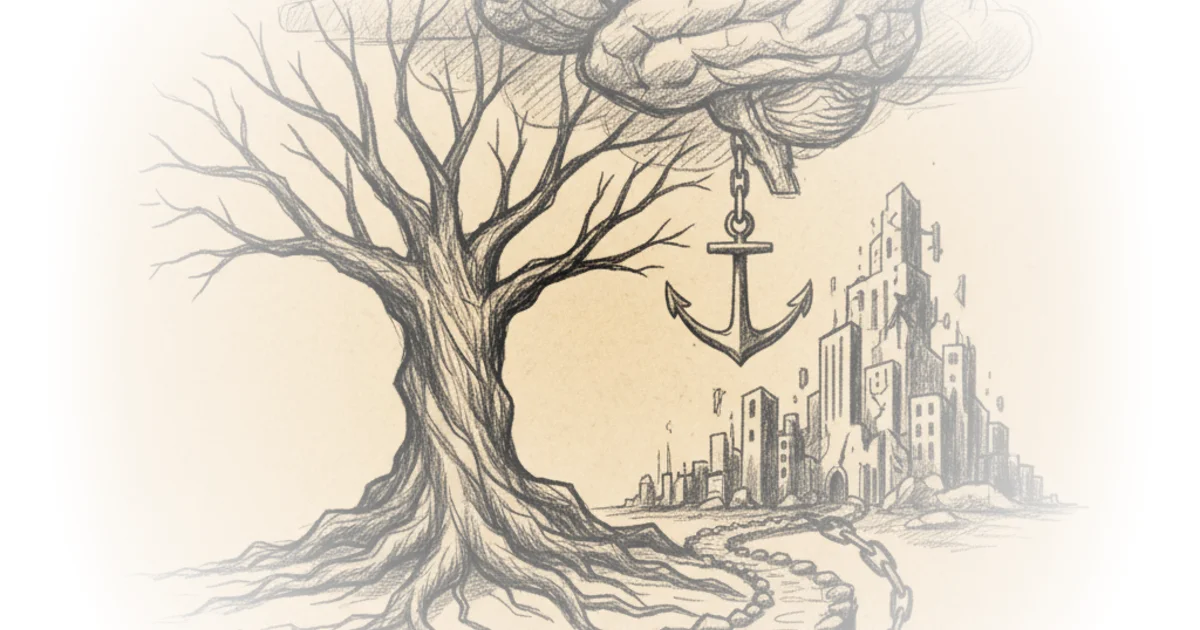
Hédoin writes, "The proper approach is to start with society and people 'as they really are,' to identify the core problems of human social life from this reality, and only then to think of normative principles and institutions that can adequately respond to these problems."
That is the realist reversal. Instead of asking what a perfectly just society would look like and working backward, realists begin with the messy, resistant, stubborn facts of how people actually behave — and build from there.
"It's precisely the idealistic nature of Rawls's political philosophy that hid the contingency of its relevance, because it was constructed so that it identifies principles of justice and legitimacy in abstraction from actual political and socioeconomic conditions."
The Rawls Problem
John Rawls, the towering figure of twentieth-century political philosophy, built his theory of justice on the assumption of a "well-ordered society" — one where most citizens are reasonable, accept fair terms of cooperation, and share an overlapping consensus on fundamental principles. As Hédoin puts it, "Rawls's theory of justice and of political legitimacy might have been relevant in the 1970s, 1980s, and even in the early 2000s. Relative compliance may have been reasonably assumed because political conflicts were largely tamed."
The 2020s look nothing like that world. Hédoin notes that "our societies are not even close to being 'well-ordered,' a significant minority if not a majority is 'unreasonable' in the Rawlsian sense, and the conditions ensuring political legitimacy from Rawls's perspective are gone."
This is a sharper indictment than it first appears. The point is not that Rawls was wrong about justice. The point is that his framework assumed conditions — social trust, institutional legitimacy, political stability — that have evaporated in many Western democracies. A theory of justice for a world that no longer exists is, practically speaking, no theory at all.
Critics might note that abandoning ideal theory entirely risks surrendering to cynicism. Rawls's project was never meant to describe the present. It was meant to orient it — a compass, not a photograph. Ditching the compass because you are lost does not get you home.
The Schmittian Turn
Where Hédoin's argument grows darker is his invocation of Carl Schmitt, the controversial German jurist whose concept of the political centered on the friend-enemy distinction and the ever-present possibility of violence. Hédoin is careful not to endorse Schmitt: "It's not that Schmitt correctly conceptualized the nature of the political as one of the spheres of human activities; it's rather that in a world where an increasing number of individuals perceive politics through Schmittian lenses, we should expect the violence inherent in politics to resurface."
This is a genuinely unsettling observation. Whether one is thinking about economic coercion, cultural polarization, or the return of conventional war to Europe, the pattern holds: actors increasingly treat opponents not as competitors within a shared framework but as existential threats to be defeated. In the tradition of international relations realism, this mirrors the classic security dilemma — where each side's attempt to increase its own safety makes everyone less safe. Hédoin extends that logic inward, into the domestic sphere.
As Hédoin observes, "Taming violence and striking compromises that cannot be fully rationally justified are inherent to politics. Going to war to make one's views prevail is not. Only a realist perspective can account for this."
Nationalism as the Test Case
One of the essay's strongest passages deals with national identity. Ideal theorists, Hédoin notes, either ignore nationalism as morally irrelevant — a cosmopolitan luxury — or bracket it, assuming it applies only within bounded communities. Both moves fail from a realist standpoint. "Even if it is agreed that justice is an important normative consideration, it can be argued that appropriately dealing with nationalist sentiments is a necessary condition for a stable social order, which itself is a requirement of justice."
Nationalism cannot be theorized away. It must be confronted, negotiated, and managed — not because it is good, but because it is powerful. This is the realist temperament in miniature: acknowledge the force you are up against before you decide what to do about it.
The Naturalism Connection
Hédoin grounds his argument in a broader philosophical shift toward naturalism — the view that philosophy and science are continuous enterprises, not separate kingdoms. As an economist, he is drawn to approaches that treat human behavior as something observable, modelable, and testable rather than something to be intuited from behind a veil of ignorance. The ghost of Milton Friedman lingers in the background here: just as Friedman argued that the assumptions of economic models matter less than their predictive power, Hédoin suggests that political philosophy must be judged by how well it fits the world it claims to guide.
"Science is, after all, one of the main ways to learn about our reality," Hédoin writes. The implication is clear: a political philosophy that ignores empirical knowledge about how societies function — how they fracture, how they cohere, how they collapse — is not political philosophy at all. It is theology.
Critics might argue that naturalism itself carries hidden normative commitments. Choosing to study "what is" always privileges certain questions over others — often the questions that existing power structures prefer to have asked. The naturalist pose of neutrality can become its own kind of ideological camouflage.
The Limits of Realism
Hédoin is candid about what realism cannot deliver. "Having left the world of ideal theory, firm conclusions about what is right and good or about what to do are harder to establish." Realism offers guidelines, not commands. It tells you what to avoid — wishful thinking, moral grandstanding divorced from material conditions, the assumption that institutions will hold because they ought to. It does not tell you where to march.
This is both realism's strength and its liability. In a moment when people want direction, realism offers only diagnosis. A framework that can explain why the liberal order is fracturing is not the same as a framework that can rebuild it.
Bottom Line
Hédoin's essay does not prove that everyone should be a realist. It proves something more uncomfortable: the conditions that made idealistic political philosophy seem plausible have dissolved, and clinging to frameworks designed for a more stable era is a form of intellectual denial. Realism is not a cure. It is the recognition that the patient is sicker than the old treatment assumed.