This piece cuts through the sterile diplomatic language of sanctions to reveal a visceral human reality: the psychological toll on a refugee forced to serve the citizens of the nation destroying her home. Tim Mak does not merely report on visa policy; he anchors the debate in the trembling hands of Diana Kondratiuk, a Ukrainian hotel worker who must swallow her rage while hearing guests casually justify the siege of her hometown. The reporting forces a confrontation between the abstract concept of "security risk" and the immediate, grinding trauma of a war that has followed refugees into their places of employment.
The Human Cost of Policy
Mak opens with a scene that is as infuriating as it is revealing. He describes Kondratiuk storming out of a restaurant in Italy after overhearing Russian tourists discuss the war in Mariupol with chilling detachment. As Mak writes, "The woman was telling her husband about Mariupol, and how Russia 'was doing everything correctly, but could've been more gentle, because there were children there.'" This specific detail is crucial. It strips away the veneer of "tourism" to expose the ideological machinery at work. The tourists are not just sightseers; they are carriers of a state-sanctioned narrative that minimizes atrocities.
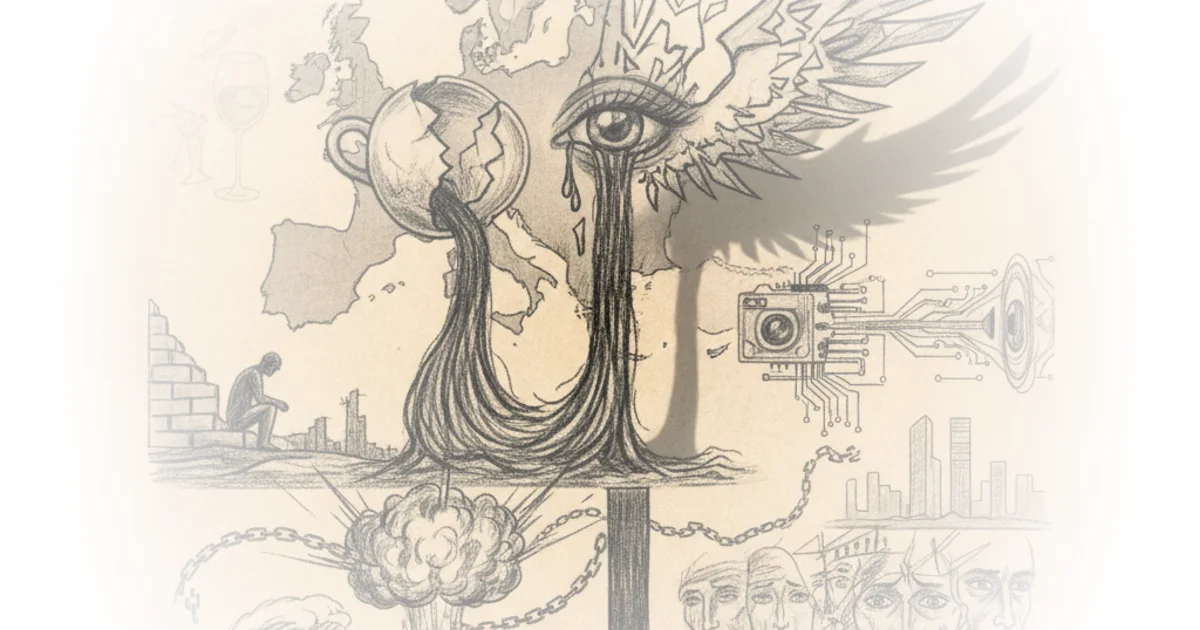
The author effectively uses Kondratiuk's internal monologue to highlight the impossible position of refugees. She is trapped by her employment status, forced to maintain professionalism while her own family is displaced. "If it were some restaurant where I was a guest, I wouldn't be able to hold back, to be honest," Mak quotes her saying. "But when you're at work and you have to act professionally, all you can do is either pretend you don't understand anything or leave." This framing is powerful because it shifts the burden from the state to the individual. The policy debate about visas often ignores the daily humiliation refugees face when the aggressor state's citizens walk freely through their host countries.
"You always feel like responding when you hear such nonsense, heresy, or rubbish... But when you're at work and you have to act professionally, all you can do is either pretend you don't understand anything or leave."
The Diplomatic Gridlock
Mak pivots from the personal to the political, detailing the EU's struggle to implement a ban on Russian tourists. He notes that while eleven nations pushed for a broad restriction, France and Italy successfully argued for a narrowed approach, limiting bans only to those who actually fought in Ukraine. The author explains that the administration's hesitation stems from the difficulty of verifying combat status and the fear that a broad ban would punish all Russians indiscriminately.
However, Mak points out the stark reality of the current visa landscape. Despite stricter rules adopted in late 2025, Italy remains a primary gateway. In 2025 alone, it issued 160,000 visas to Russian citizens. The author highlights the irony of the situation: "In Russian narratives, it is a 'decaying Europe' here. Why go here then?" Diana asks. The answer, Mak suggests, lies in the economic and social ties that persist despite the war. The article implicitly critiques the EU's inability to fully sever these ties, noting that the current compromise leaves the door open for those who may be complicit in the conflict.
Critics might argue that a blanket ban on all Russian tourists is a disproportionate collective punishment that violates international norms of free movement. They could contend that distinguishing between a soldier and a civilian is a necessary legal safeguard. Yet, Mak's reporting suggests that the current system fails to account for the psychological safety of those who fled the violence. The exemption for "humanitarian reasons" or "national interest" creates a loophole that feels particularly galling to a refugee like Kondratiuk, who sees her own survival as the ultimate humanitarian crisis.
Security vs. Symbolism
The piece concludes by weaving in the broader security context, referencing the siege of Mariupol to ground the tourists' casual comments in the reality of urban destruction. Mak notes that the failure to completely restrict entry could pose a tangible security risk, not just an emotional one. The article draws a parallel to the broader hybrid warfare landscape, mentioning how Russian actors have hacked civilian infrastructure to track weapons deliveries, blurring the lines between tourism, espionage, and war.
The author's choice to end with Kondratiuk's perspective is a masterstroke. It refuses to let the reader retreat into the comfort of bureaucratic analysis. "It's a business, and it's not mine, so I [feel like I] have absolutely no... right to tell local management what to do," she says. This resignation underscores the failure of the current policy framework. The EU's hesitation to ban Russian tourists entirely is framed not just as a diplomatic compromise, but as a betrayal of the very people Europe claimed to protect.
Bottom Line
Tim Mak's strongest contribution is his refusal to let the visa debate remain an abstract policy discussion; he forces the reader to sit at the table with the victims of the war. The argument's vulnerability lies in the practical impossibility of enforcing a total ban without creating new humanitarian crises, but the piece successfully argues that the current half-measures are morally insufficient. The reader must now watch to see if the EU can find the political will to prioritize the psychological safety of refugees over the diplomatic comfort of maintaining open borders.