This piece cuts through the noise of modern spiritual seeking by arguing that the current return to faith is not a revival of doctrine, but a desperate, pragmatic search for psychological survival. Michael Ledger-Lomas reframes the contemporary religious landscape not as a theological correction to secularism, but as a direct response to the crushing weight of climate dread, economic precarity, and the collapse of the future. It is a vital read because it exposes the raw, unvarnished utility of belief for a generation that feels the ground slipping away.
The Ledge of Existence
Michael Ledger-Lomas anchors his analysis in a haunting thought experiment by William James, describing a person trapped on a mountain ledge where the only escape is a terrifying leap. James argued that if you hesitate to calculate the odds, you will fall; if you simply believe you can jump, you might survive. Ledger-Lomas writes, "The argument that only a religious faith in life's meaning makes it worth living has a very specific and now dated context." Yet, he insists, we are still living in "Jamesian times," where the collapse of natural theology has left many staring into an abyss of "speculative melancholy." The author effectively connects the 1895 address to the modern "funk" afflicting educated elites, suggesting that the fear of a meaningless universe is as potent today as it was after Darwin.
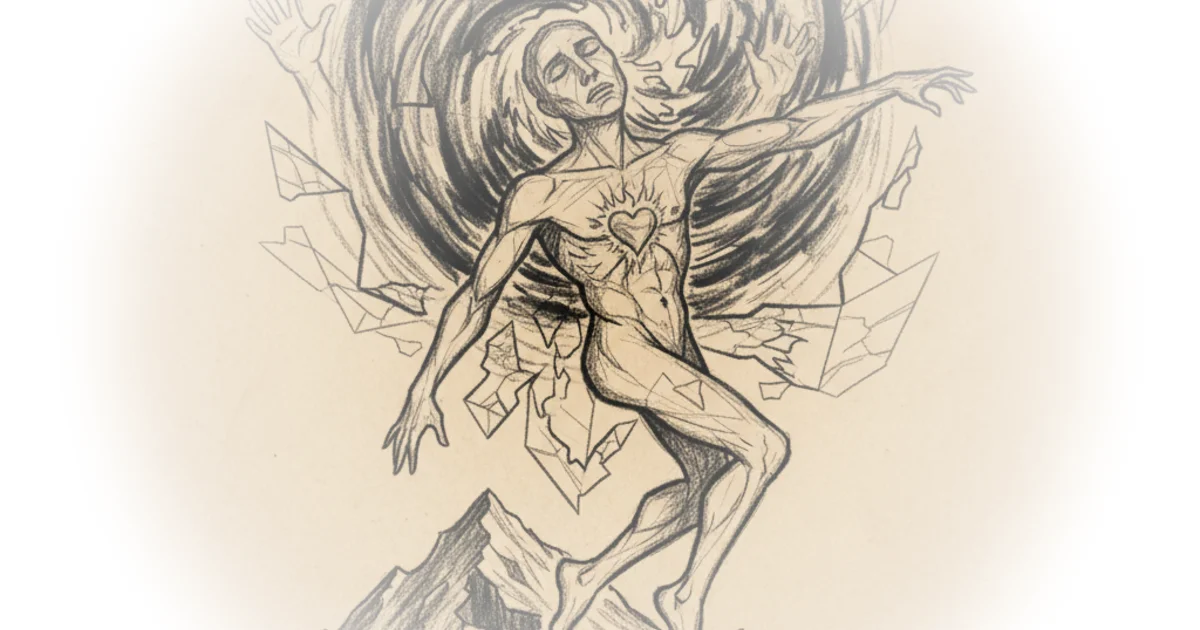
The commentary here is sharp: it suggests that the drive to believe is less about truth and more about the biological imperative to survive. As Michael Ledger-Lomas puts it, "what drove us to formulate theorems or to cling to faith was alike the drive to thrive or at least to survive." This reductionist view strips away the mystique of faith, revealing it as a coping mechanism. Critics might argue that this psychologization of religion ignores the genuine metaphysical claims believers make, reducing profound spiritual experiences to mere anxiety management. However, the author's point holds weight when observing how modern seekers prioritize the feeling of stability over doctrinal purity.
"If you succumb to pessimism about the worth or meaning of our world, then your despair may become so self-fulfilling that it even ends in suicide."
The Marketplace of Belief
The piece then pivots to a critique of how this survival instinct manifests in the West today. Michael Ledger-Lomas contrasts the American optimism of Ross Douthat with the British melancholy of Lamorna Ash. Douthat's approach is described as a "permission slip" to enter any religion, treating faith as a consumer product in a "Bookstore of all Religions." Ledger-Lomas notes that Douthat's argument "betrays a winsome faith in the algorithmic fertility of American consumerism," suggesting that simply choosing a belief system is enough to cure existential deficit. This framing is effective because it highlights the superficiality of much modern religious marketing, where the act of commitment is valued over the content of the faith.
In contrast, Ash's journey in Don't Forget We are Here Forever is portrayed as a more somber, authentic search. Ledger-Lomas writes, "Ash's people are a lively and diverse bunch but it is hard to tell how representative of their country they are or if this matters much." He observes that these seekers are not a sociological cohort but a "self-selecting sample" of the atomized and anxious. The author captures the specific texture of their dread: "Climate change terrifies them. They expect little from the British state... Their economic prospects are slim." This section is crucial because it grounds the abstract concept of "faith" in the concrete realities of a generation facing a bleak future, including the complicity of the state in ongoing conflicts and the loss of the promise of sexual emancipation.
The Pull of Ritual and the Soft Landing
The most compelling part of the analysis is the exploration of why rigid, ancient rituals are attracting the young. Michael Ledger-Lomas observes that "Christianities that demand ritual actions and utterances seem to work much better for her than strident calls to sexual purity or dogmatic rigor." He points to the phenomenon of the "orthobro" and the fascination with the Latin Mass, noting that "the repetitious inculcation of thoughts and feelings in a faith such as Catholicism can bend what its adherents consider to be reality." This insight is powerful: it suggests that the brain craves the structure of ritual to impose order on chaos, even if the believer intellectually rejects the dogma. The author cites Blaise Pascal's advice to "Faire la machine"—to keep doing the rites even if the rationale is forgotten—as a key to understanding this dynamic.
However, the piece also acknowledges the limitations of this approach. Ash's final choice of a "toothless" Anglicanism is described as a "soft landing" that offers comfort without demanding a shattering change of self. Ledger-Lomas writes, "Her conversion is not the kind that St Augustine or Martin Luther would have understood. It works no shattering change in her: instead, it is an analgesic for her dreads." This is a sobering conclusion. It suggests that the current religious trend is not a return to the transformative power of the past, but a therapeutic adjustment to the present. The author notes that prayer helps Ash deal with her mother's dementia not by changing reality, but by producing a "radical, active, and quite literal acceptance."
"The important thing is she has gained 'acceptance of what is to come' and 'have never felt so different to the way I do now.'"
Bottom Line
Michael Ledger-Lomas delivers a piercing critique of the modern religious revival, correctly identifying it as a pragmatic response to existential terror rather than a theological awakening. The strongest part of the argument is the connection between the collapse of the future—driven by climate and economic failure—and the desperate need for the "bare assurance" of an unseen order. Its biggest vulnerability lies in the risk of reducing all religious experience to a coping mechanism, potentially overlooking the genuine, non-utilitarian encounters with the divine that have always existed. Readers should watch for how this "therapeutic faith" evolves as the underlying crises deepen; if the world continues to unravel, will the soft landing of Anglicanism be enough, or will the demand for more radical, transformative answers grow louder?