引1��_��_�
A newspaper mix-up one morning in 1888 revealed how the world would remember Alfred Nobel: not as an inventor, but as a man who found ways to kill more people faster than ever before. The obituary belonged to his brother LW, but the mistake haDEXPOSED something deeper—a lifetime of innovation built on one substance that would transform both industry and warfare.
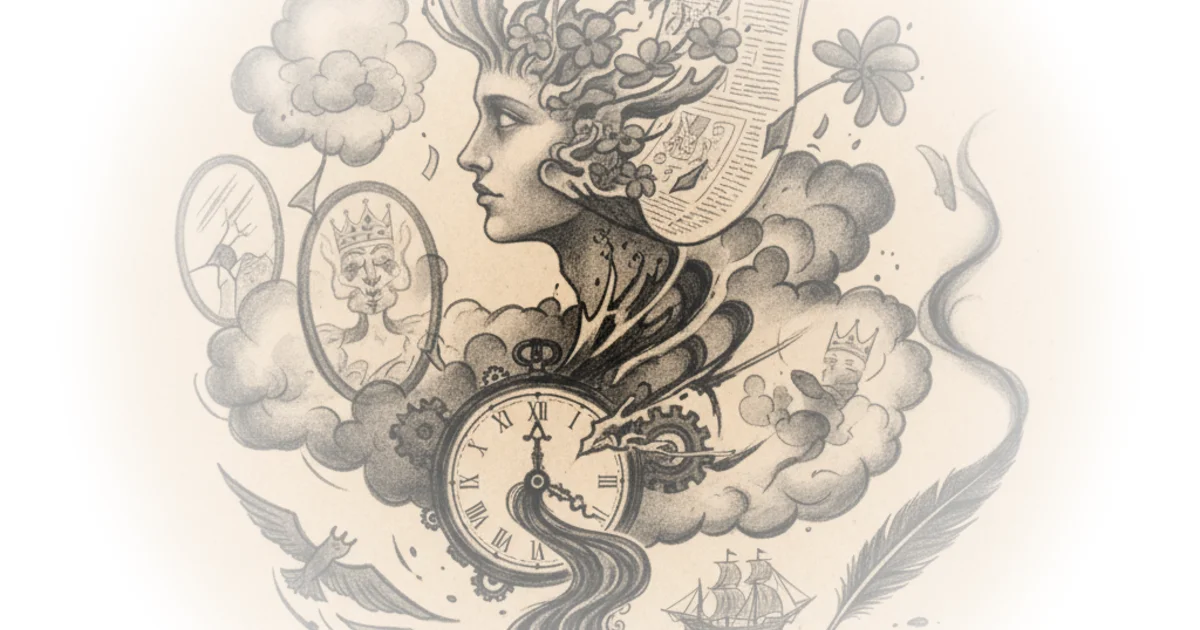
The Merchant of Death
Alfred Nobel's father, Emanuel, was an inventor who opened Sweden's first rubber factory and invented the rotary lathe that made modern plywood possible. But Emanuel struggled with business and went bankrupt shortly after Alfred was born. Some of Alfred's earliest memories were of watching his brothers sell matches on street corners of Stockholm just to afford food.
He was often sick—bedridden with colds, stomach problems, and bouts of depression. He would later write that his life was "a pitiful half-life which ought to have been extinguished by some compassionate doctor."
But when Alfred turned nine, everything changed. A letter arrived from his father asking the family to join him in St. Petersburg.
The Opportunity
In the early 1850s, the great powers of Europe were gearing up for war. Emanuel spotted an opportunity: Russia's capital was vulnerable to attack from the sea. He approached Tsar Nicholas I with plans for a new kind of explosive device—a sea mine that would float in the harbor and detonate on contact with enemy ships.
Within months, off the Black Sea, the Russian Navy sank an Ottoman fleet and the Crimean War began. Emanuel's invention was suddenly in high demand. The newly established Nobel Armaments factory grew from a few dozen employees to over a thousand, producing mines, torpedoes, and other explosives for the Russian military.
With money now pouring in, Emanuel invested in Alfred's education.
A Molecule That Changed Everything
At seventeen, Alfred found himself in a Paris laboratory studying under the world's greatest chemists. There he met an Italian doctor named Escanio Sabrero who had a peculiar demonstration.
Sabrero would take an ordinary-looking piece of cotton and lay it on an anvil. He would raise his hammer—and soaked into that cotton was a new explosive material: nitroglycerin.
Until then, the most commonly used explosive was gunpowder. But it had a major drawback. All the ingredients—carbon for fuel, potassium nitrate for oxygen, and sulfur to speed up the reaction—are all in separate grains. If they're spread far apart, the reaction is just too slow.
Nitroglycerin solved this problem by putting everything in the same molecule. It's one of the most powerful explosives in the world. Its blast pressure is over 100 times greater than gunpowder.
But that power came at a price. Nitroglycerin is so sensitive that if it's dropped, shaken, or even just bumped, it can detonate. And as a result, hundreds of workers died trying to handle it.
The Discovery
Sabrero never set out to discover an explosive. He was searching for medicine to improve blood flow. During one test, he mixed glycerol with nitric and sulfuric acid when suddenly it exploded. Sabrero survived but shards of glass left permanent scars on his face.
Deeply shaken, he concluded this new substance was just too dangerous. He later wrote: "I am almost ashamed to admit to be its discoverer."
But Alfred disagreed. To him, the hammer strike was like a pistol shot—someone had kicked open a door to his mind. It was a real shift in his character. He'd been this frail, sickly boy who kind of has trouble with people. But when he's working with explosives and chemistry, he finally isn't depressed.
Far from fearing its power, he believed he'd be the one to unlock it and solve one of nitroglycerin's greatest problems: reliable detonation.
The Breakthrough
In 1862, after returning to Sweden from Russia—where his father's factory was forced to shut down when the Crimean War ended—Alfred gathered his brothers by the banks of Lake Melerin behind his workshop in Stockholm. He pulled out a metal tube with a fuse extending from the top, ignited it, and tossed it into the water.
He'd finally found a way to reliably detonate nitroglycerin. In its finished form, Alfred took a container of nitroglycerin and inserted a wooden plug packed with gunpowder. When the fuse was lit, the gunpowder inside would explode, blasting down into the container. And it was that sudden impact that delivered the shock needed to detonate the nitroglycerin—just like a hammer striking an anvil.
The Legacy
Within months of his breakthrough in 1862, Alfred Nobel patented dynamite in England. He made it his mission to tame this beast. In doing so, he created powerful new explosives used in everything from blasting tunnels to making bombs—tools that transformed the modern world but also contributed to deaths of tens of thousands of people.
Critics might note that the wording in that original newspaper obituary—the "merchant of death" and all that—has likely been exaggerated over the years. We could only find an obituary that described him as a man who can hardly be passed off as a benefactor of humanity. But reading this allowed Alfred to see what others truly thought of him, and it wasn't good.
He had earned his reputation building an empire on one substance—nitroglycerin—and in taming it, he unleashed a level of destruction that would come to define him.
Bottom Line
The real story of Alfred Nobel reveals how one moment of accidental notoriety shaped the trajectory of modern chemistry. His biggest vulnerability: the man who tamed nitroglycerin also enabled its most devastating applications. The tension between innovation and consequence remains unresolved—and it's exactly what makes his story worth telling.