Nachman Oz tackles a paradox that haunts modern governance: the terrifying efficiency of the unaccountable strongman. In a world paralyzed by bureaucratic gridlock, Oz argues that Robert Caro's monumental biography of Robert Moses forces us to confront an uncomfortable truth—that the very mechanisms we despise in autocrats are often the only ones capable of delivering tangible public works at scale.
The Architecture of Unchecked Power
Oz frames Moses not merely as a builder, but as a sovereign who operated outside the democratic compact. The author writes, "Without ever being elected to office, Moses cudgelled the city's machinery into an empire at the heart of the greatest city in the greatest nation in history." This empire was so distinct it possessed its own flag, seal, and even a private police force. Oz's analysis suggests that Moses didn't just navigate the system; he bypassed it entirely, creating a parallel state where the only law was his own will.
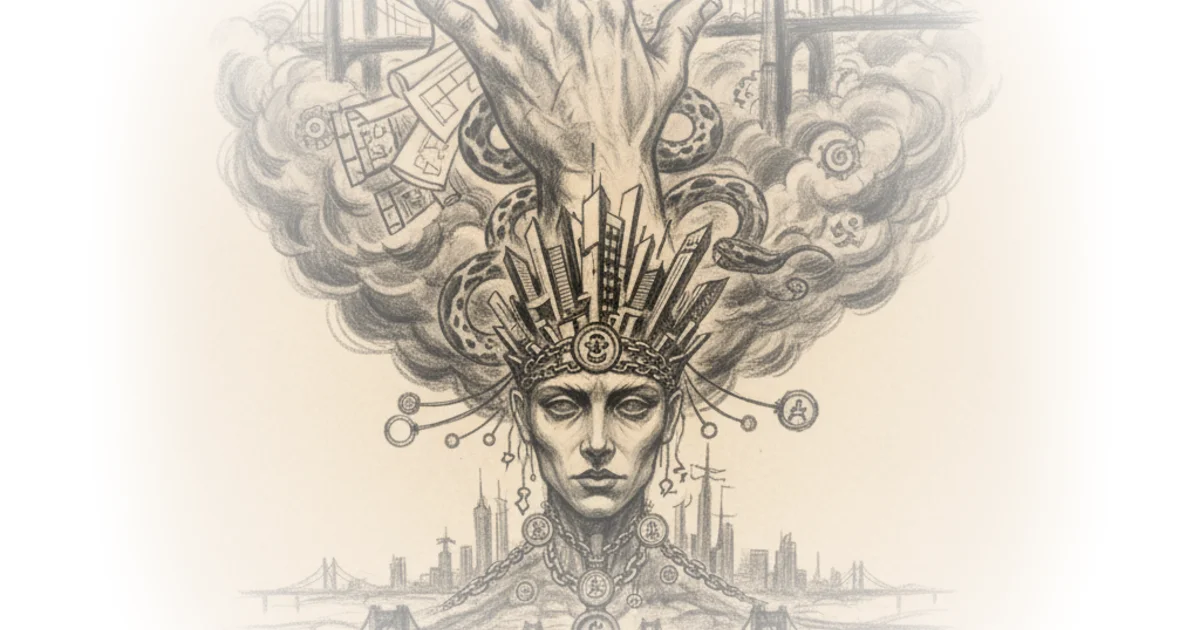
The commentary highlights the sheer scale of this ambition. Oz notes that Moses "evicted 250,000 people to build his monuments," crushing the livelihoods of countless individuals to serve a grand vision. This is where the piece becomes most unsettling. Oz observes that "King of the parks, to the public and the press he stood on the side of angels," yet his methods were "savagely vindictive." The author forces the reader to weigh the physical legacy of bridges and beaches against the human cost of displacement, a calculation that remains painfully relevant in an era of stalled infrastructure projects.
Legacy is fake. Contra The Gladiator, what we do in life does not, in fact, echo in eternity. We are all Ozymandias.
Oz argues that the tragedy of Moses was not his fall from power, but the hollowness of his victory. The author points out that despite his achievements, "there was no bottom to Moses' ferocious appetites." He was trapped by his own character, a man who built an empire but could not build a family legacy, noting that his only doting relationship was with a grandson who died young. This personal void underscores the author's central thesis: power is a self-consuming fire that leaves nothing but ash.
The Seduction of Efficiency
The piece takes a sharp turn when Oz considers why we might still admire Moses today. In an age of "total Californian and New York public administrative scleroticism," the author suggests we yearn for the speed of the dictator. Oz illustrates this with a stunning anecdote: a bridge project that would normally take a year was completed in less than 24 hours under Moses's direction. "The legislation authorizing construction... was signed at 1 p.m.," Oz writes, "and at 5:55 a.m. the last rivet securing them in place over Broadway was set."
This efficiency, Oz argues, is the dangerous allure of the strongman. He draws a chilling parallel between Moses and historical dictators, noting that "it took a great Khan to build the great roads of Asia, a Darius to build the Royal Road... that it took a Hitler and a Mussolini to build the Autobahnen." The author posits a provocative question: "Maybe we'll take one great man over countless needling interest groups vetoing action." This framing challenges the reader to consider if the democratic process is simply too slow to meet the demands of modern civilization.
Critics might note that equating Moses's municipal power with totalitarian regimes glosses over the fundamental difference in accountability; Moses operated within a legal framework he manipulated, whereas dictators operate outside it entirely. However, Oz's point stands that the result—the rapid imposition of will over the populace—feels remarkably similar to the observer.
The Human Cost of the Grand Design
Oz does not shy away from the collateral damage of Moses's reign. The author details the grim reality of the pre-Moses city, describing a zoo where "rats... had become so bold that they were stealing food from the lions' feeding pans" and beaches where lifeguard shacks were havens for prostitution. These vivid descriptions serve to justify Moses's intervention, yet Oz immediately pivots to the cost. He writes that Moses "defeated the great barons of upstate New York as well as crushed underfoot countless hard-working men and women who lost their homes and livelihoods to his schemes."
The author emphasizes that Moses's power was rooted in a specific philosophy of the elite. Oz quotes the era's tycoons to illustrate this mindset: Commodore Vanderbilt's "Law? What do I care for law? Hain't I got the power?" and J.P. Morgan's "I owe the public nothing." Oz argues that Moses embodied this creed, viewing the public not as constituents to serve, but as obstacles to be moved. The author notes that even a dictator like Rafael Trujillo recognized the danger in Moses, telling him, "You'd want my job," after a single afternoon of conversation.
The action is the juice.
In a moment of philosophical reflection, Oz suggests that for men like Moses, the pursuit of power was the only source of meaning. The author writes, "Maybe the best you can hope for in this life is the brush of fear, the wrangle with a rival... the action is the juice." This interpretation strips away the moral justification of public service, revealing a man driven by an insatiable need to dominate his environment. It is a sobering reminder that the drive to build can be indistinguishable from the drive to destroy.
Bottom Line
Nachman Oz delivers a searing critique of the trade-off between democratic deliberation and executive efficiency, using Robert Moses as the ultimate case study. The piece's greatest strength is its refusal to offer a clean moral verdict, instead forcing the reader to sit with the uncomfortable reality that some of history's greatest public works were built on a foundation of human suffering and unchecked authority. The argument's vulnerability lies in its potential to romanticize the strongman, yet Oz ultimately undercuts this by showing the profound emptiness that awaits the man who wins the game but loses his soul.