In an era where digital preservation feels increasingly fragile, sound designer Dane Davis reveals how a forgotten piece of software from 1998 defined the auditory landscape of a cultural phenomenon. Benn Jordan's interview with Davis uncovers a startling truth: the iconic "code" of a blockbuster film wasn't created with high-end tools, but through a glitchy, graphical experiment that nearly vanished from history. For anyone who assumes modern media is built on stable foundations, this account of technical improvisation and data decay offers a necessary reality check.
The Aesthetic of the Virtual
Benn Jordan guides the conversation toward the specific challenge of defining the "texture of the virtual world" in the original film. Davis explains that in the late 90s, digital sound was synonymous with poor quality. "Digital sound meant crappy sound," Davis recalls, noting that the grainy, quantized nature of early simulations made it difficult to create something that felt both artificial and beautiful. The core of his argument is that the limitation of the technology became the aesthetic itself. He needed a tool that could output sound with a "very beautiful, very natural organic feel" even while deliberately constructing something unreal.
"I knew the Matrix was gonna require a lot of definitions... once I started doing that, those recordings then I imported them on the Pro Tools and started layering stuff up and I could feel it was like I was looking at a code screen right and I could see the Matrix movie through that sound."
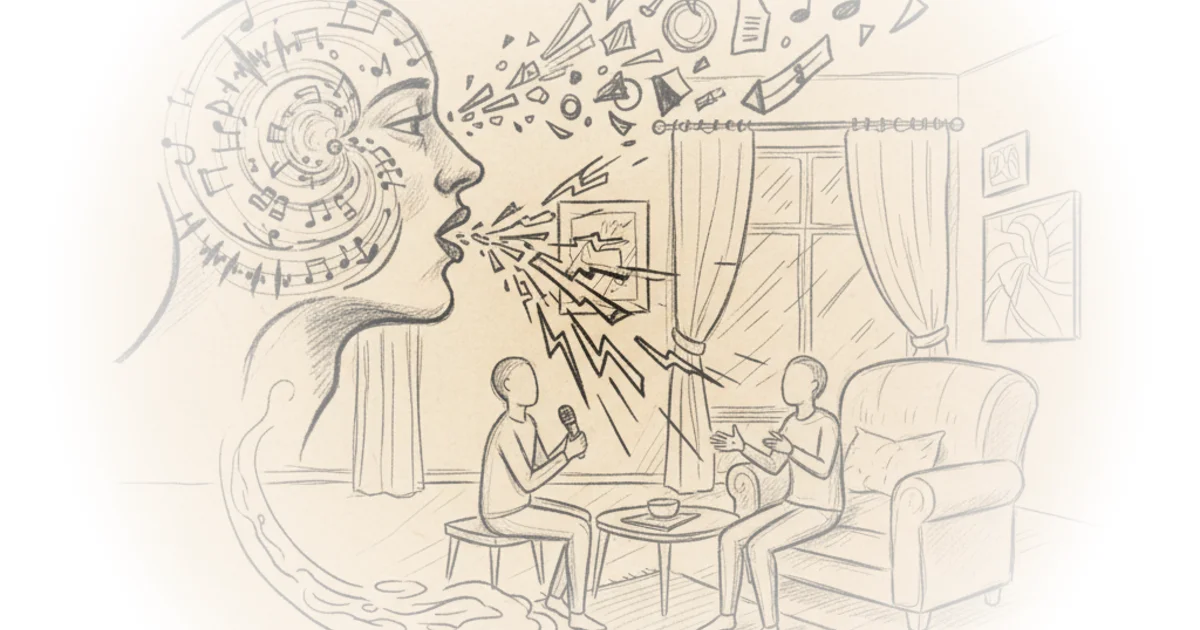
This framing is compelling because it shifts the focus from the visual spectacle to the sonic architecture. Davis describes using a program called "Medicine" to manipulate raindrop recordings, reversing and stretching them until they revealed the "code" the directors requested. He notes that the directors provided only two words: "wet and electricity." By processing these sounds through multiple generations of noise reduction and granular synthesis, he created a texture that felt alive. The argument holds up well here; it illustrates how constraints often force the most creative breakthroughs in film history. Critics might note that this reliance on a specific, obscure tool makes the sound design seem less reproducible today, but that is precisely the point of the story.
The Green Screen Paradox
The interview takes a poetic turn when Davis compares his creative process to the narrative of the film itself. He describes working on green screens, imagining the "sentinel" machines and the digital code that would eventually be composited into the final shot. "My creative world is a lot like a cipher," Davis observes, drawing a parallel between his need to visualize the invisible and the characters in the film staring at monitors filled with dripping code.
"For me, i'm looking at these green screens all day long imagining what a sentinel is going to look like and what it's going to sound like that that's what movie post evolves right and we get drawings and sometimes we get up pre-visits now you get these pre-visions but back then you didn't get many previouses."
This section highlights the immense mental load required of sound designers in the pre-visualization era. Davis argues that the lack of visual reference forced a deeper imaginative engagement with the audio. He had to project the sound of a non-existent object onto a blank canvas. This is a powerful insight into the psychology of filmmaking: the sound often precedes the image in the creator's mind, acting as the blueprint for the visual effects team. The parallel between the sound designer's imagination and the film's themes of simulated reality is a sophisticated touch that elevates the interview beyond a simple technical retrospective.
The Digital Temporary Rate
Perhaps the most urgent part of the discussion concerns the fragility of digital archives. Davis introduces a cynical but accurate mantra: "if it is digital it is temporary." He details the nightmare of trying to recover sounds from 1998 for a new game and a sequel film. The original backups were on DDS tapes, which degrade after a decade, and the software required to read them no longer runs on modern operating systems.
"We tried to go back and we'd gone through six generations of backup technology in that time right yeah the original movie was backed up on dds that tapes right and then ait and then vxa and then something else and then lto1 i think was the first so none of those first of all the tapes degrade right after 10 years right yeah."
Davis explains that the real loss wasn't just the hardware, but the entire ecosystem: the operating system, the software, and the specific computer architecture. He mentions a documentary that needed screenshots of the very software he used, only to find that no one could run the program anymore. This evidence is terrifyingly strong. It challenges the common assumption that digital files are eternal. The argument that we are currently losing vast amounts of cultural history due to format obsolescence is undeniable. A counterargument worth considering is that modern cloud storage and emulation might solve this, but Davis's experience suggests the problem is cyclical and relentless. The sheer effort required to migrate data every few years is a burden that few institutions can sustain.
"If it is digital it is temporary."
Bottom Line
Benn Jordan's interview with Dane Davis is a masterclass in the hidden labor of filmmaking and a stark warning about the impermanence of our digital age. The strongest part of the piece is its revelation that the most iconic sounds of a generation were born from technical limitations and near-misses with data loss. Its biggest vulnerability is the lack of a concrete solution to the preservation crisis it exposes, leaving the reader with a sense of urgency but no clear path forward. As we consume more digital media, we must remember that without active, continuous migration, our cultural history is just one generation of hardware away from silence.