Stephen West of Philosophize This! delivers a startling diagnosis of the modern condition: the very rationality we champion to solve our problems is often the cage that traps us in misery. While most guides to Fyodor Dostoevsky focus on plot or religious allegory, West argues that the Russian author's true target was the dangerous illusion that human beings can be engineered like machines. This is not a literary review; it is a psychological autopsy of the person who thinks too much and acts too little, a state that feels increasingly relevant in an era obsessed with data-driven optimization of human life.
The Myth of the Rational Utopia
West begins by dismantling the 19th-century belief that society could be perfected through pure reason, a concept Dostoevsky fiercely opposed. He notes that thinkers like Nikolay Chernyshevsky and Charles Fourier envisioned a "crystal palace" where rational systems would resolve all human disputes. "If only we rationally understand human beings at a deep enough level, and if only we can come up with a rational system of ordering all these people politically, then what we'll have on the other side of it is a kind of 'crystal palace,'" West explains. The argument here is that this utopian vision treats people as static variables rather than chaotic, evolving entities.
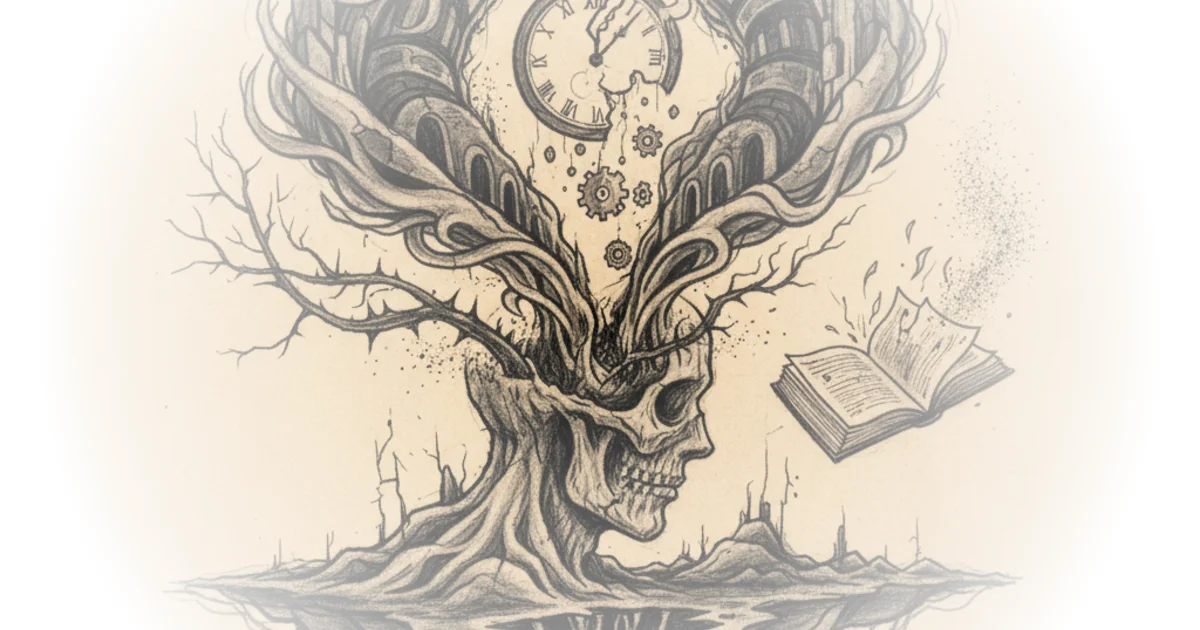
This framing is crucial because it connects Dostoevsky's fiction to a timeless political error: the assumption that if we just educate people enough or design the perfect algorithm, we will eliminate suffering. West draws a parallel to Socrates, noting that Western thought has historically "massively over-indexed on the idea that rationality can lead us to the good." The core of the argument is that this view ignores the messy reality of human psychology. As West puts it, "People often do things that they know are not the right thing to do. People will sabotage themselves and others for essentially zero gain in their actual life." This observation holds up under scrutiny; behavioral economics and modern psychology confirm that humans frequently act against their own best interests, driven by emotion, spite, or confusion rather than cold calculation.
Critics might argue that dismissing rational planning entirely throws the baby out with the bathwater, ignoring the genuine progress made through scientific and social reform. However, West's point is not that reason is useless, but that it is insufficient to capture the full spectrum of human experience.
The Prison of Contemplative Inertia
The commentary then shifts to the character of the Underground Man, the embodiment of this rationalist failure. West describes him as a "shining example of a deeply miserable person—someone that has made a prison for himself inside his own life and mind." What makes this character terrifying is not stupidity, but hyper-awareness. He sees through social customs, religious comforts, and political ideologies, yet this clarity offers no freedom, only paralysis.
West highlights the character's daily existence: "He sits in a small, cramped apartment and he reads novels all day long... he will argue with people up in his head, creating elaborate scenarios that never even existed, just so he can feel a kind of spiteful connection to someone else for a moment." This description of "contemplative inertia" is the piece's most potent insight. The Underground Man is trapped because he cannot deny objective facts—"two times two just equals four"—yet he refuses to let those facts dictate his life. He is stuck in a limbo where he acknowledges the "stone wall" of reality but rebels against its constraints.
"He is stuck in a place that Dostoevsky calls contemplative inertia. Because when you both can't deny rationality, but can't accept it either—well, for one thing, as you can imagine, this is a pretty good recipe for becoming miserable."
West invokes the philosopher Keiji Nishitani to deepen this analysis, suggesting the Underground Man has "effectively negated the self and then withdrawn into a totally reactionary place of inactivity." The argument is that this state is a form of madness where the self is alive enough to suffer but dead enough to do nothing. This is a powerful reframing of nihilism; it is not just the absence of belief, but an active, paralyzing engagement with the void. The coverage effectively captures the tragedy of a mind that has dissected every illusion until nothing remains to hold onto, yet cannot find the courage to build something new.
The Danger of Over-Analysis
The piece concludes by suggesting that this "contemplative nihilism" is a uniquely modern danger, one that resonates with anyone who has ever been too afraid to act because the path wasn't perfectly clear. West notes that for the Underground Man, "to change something about yourself would require at least some form of action. And when you think and doubt as much as the Underground Man does, you never end up being able to take action on anything." This is a sharp critique of the paralysis that comes from endless optimization and doubt.
The strength of West's commentary lies in his ability to translate dense philosophical concepts into a relatable psychological portrait. He avoids the trap of treating Dostoevsky as a mere historical figure, instead presenting the Underground Man as a mirror for anyone who feels trapped by their own intellect. The argument is that we must accept the irrational, chaotic parts of ourselves to truly live, rather than trying to engineer them away.
"The actual internal experience of a person is something that is enormously chaotic, filled with tensions, where we hold opposite positions at the exact same time."
Bottom Line
Philosophize This! offers a compelling case that Dostoevsky's greatest warning was against the hubris of believing human beings can be fully understood or controlled by rational systems. The strongest part of this argument is its diagnosis of "contemplative inertia" as a distinct form of suffering that is particularly acute in our data-obsessed age. The biggest vulnerability, however, is that while the critique of rationalism is powerful, the piece offers little guidance on how to escape the Underground Man's prison other than an implicit call to embrace action, leaving the practical steps of that liberation somewhat vague.