Most viewers see Top Gun as a high-octane celebration of aerial prowess, but LegalEagle's Devin Stone reframes the film as a catalog of court-martial offenses that would end a real pilot's career in days. By bringing in a former Marine judge advocate with direct experience at the film's setting, Stone moves beyond Hollywood fantasy to dissect the specific Uniform Code of Military Justice violations that define the movie's climax. This isn't just a trivia deep-dive; it's a stark reminder that the rules of engagement and military discipline exist for reasons far more serious than plot convenience.
The Cost of Recklessness
Stone's central thesis is that the film's most iconic moments are actually career-ending crimes. He opens the analysis by addressing the opening dogfight, where Maverick and Goose face an unidentified adversary. Stone notes, "we have to understand this film as we are not at war with this other country... the problem is the second that anyone shoots the other person gets to shoot back." He argues that the commander's decision to withhold fire was legally correct, as initiating a conflict without being fired upon could spark an international incident.
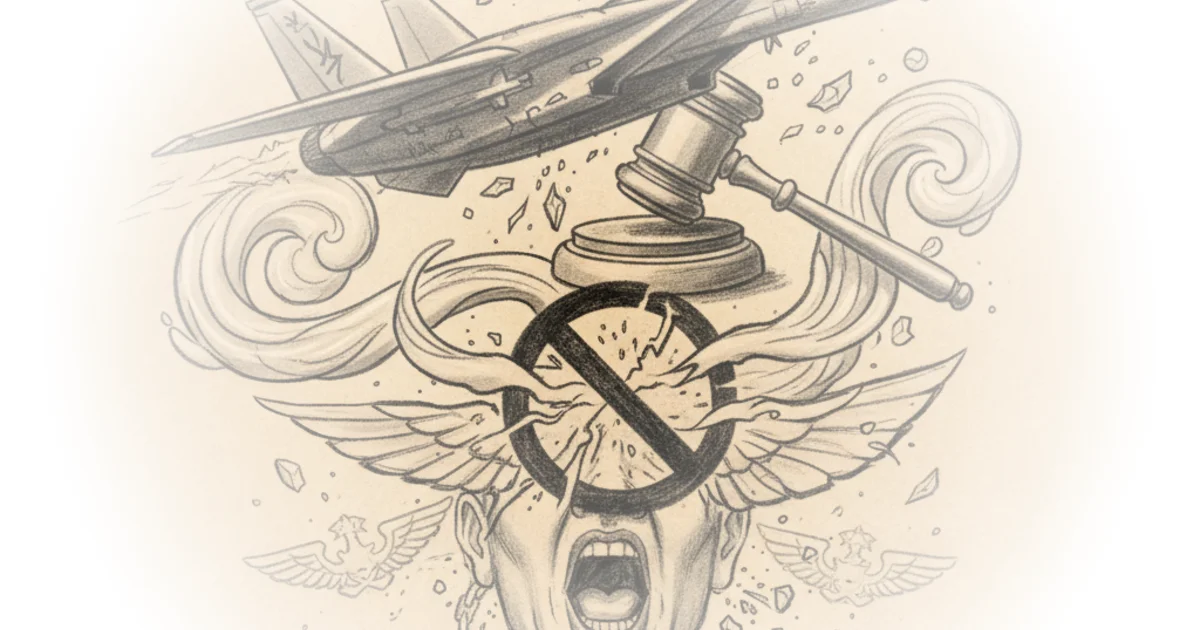
The commentary then shifts to the infamous "buzzing the tower" scene, which Stone identifies as the point of no return. He explains that while it looks cool on screen, the act constitutes "improperly hazarding an aircraft," a crime that in wartime could carry the death penalty. Stone writes, "Rule number one in the military is look cool... but they're committing a crime right now." This juxtaposition of cinematic style and legal reality is the piece's most effective device. It forces the reader to reconsider the protagonist not as a hero, but as a liability.
"The reality of that crime is that in time of war you could get the death penalty for that."
Stone also highlights Maverick's decision to ignore a direct order to land due to low fuel in order to provide "moral support" to his wingman. He paraphrases the legal standard clearly: "He's willfully disobeying an order from a superior commissioned officer... and he's also improperly hazarding an aircraft." The analysis suggests that in a real-world scenario, Maverick wouldn't just be grounded; he would likely lose his wings entirely and face menial duty. Critics might argue that the film operates on a "necessity" defense where saving a life supersedes protocol, but Stone correctly points out that military law rarely accepts such unilateral deviations from orders without catastrophic consequences.
Conduct Unbecoming and Civilian Interactions
The legal scrutiny extends beyond the cockpit to Maverick's off-duty behavior. Stone dissects the scene where Maverick follows a civilian contractor into a women's restroom, labeling it a violation of "conduct unbecoming an officer or a gentleman." He explains that this statute requires only that the behavior be "indecent, immoral, something wrong," and notes that such actions are "prejudicial to good order and discipline." Stone adds a layer of realism regarding the civilian character, Charlie, noting that while civilian contractors with PhDs are common, her specific field of astrophysics offers little practical help to fighter pilots, suggesting the film's writers prioritized romance over technical accuracy.
Stone also addresses the handling of classified information. When Maverick claims to have top-secret clearance to impress Charlie, Stone warns, "if you have a little bit of classified information that you're not allowed to tell anyone and a civilian just tells you oh it's okay... do not do not give them that classified information." He emphasizes that security clearances are expensive and valuable, and sharing them improperly is a severe breach of trust. This segment grounds the film's romantic tension in the very real legal dangers of security violations, a nuance often lost in the genre.
The Reality of Military Justice
Perhaps the most sobering part of the commentary is the discussion on adultery. Stone reveals that while adultery is not a crime for civilians, it is a punishable offense for service members if it is "prejudicial to good order and discipline." He shares a personal anecdote from his time as a prosecutor: "I actually was a military prosecutor... and I watched at least one pilot get prosecuted... he was a test pilot for an F-35 and it was for adultery he he got kicked out for adultery." This real-world example underscores the military's strict moral code, which prioritizes unit cohesion over individual relationships.
Stone also tackles the fan theory regarding a potential romance between Maverick and Iceman. He clarifies that while such a relationship isn't inherently illegal, regulations prohibit intimate relationships between members of the same command. "Once they're outside of top gun as long as they're not in the same unit they can have the most wonderful relationship that they could want," Stone notes, highlighting the rigid structure that governs personal lives in the armed forces.
"We follow orders or people die."
Bottom Line
Devin Stone's analysis succeeds because it treats the film's fictional universe with the seriousness of a real legal brief, exposing the dangerous gap between Hollywood heroics and military reality. The strongest element is the use of a qualified expert to validate that the "cool" moments are actually felonies, while the weakest point is the occasional dismissal of the film's narrative need for rule-breaking as purely legal ignorance. Readers should watch for how real-world military dramas are beginning to incorporate these legal constraints, moving away from the reckless individualism that defined the 1980s classic.