Public Notice delivers a scathing indictment of the current administration's narrative strategy, arguing that the executive branch has pivoted from policy delivery to a desperate campaign of deception to mask a collapsing political standing. The piece's most arresting claim is not merely that the administration is lying, but that these fabrications—ranging from the physical condition of the president to the state of the economy—are now failing to resonate even with the base, signaling a profound disconnect between the White House and the reality facing voters. This is a crucial read for anyone tracking the fragility of the MAGA movement as it enters a critical pre-midterm cycle.
The Theater of Deception
Public Notice opens by dissecting the administration's bizarre defense regarding the president's hand injuries, framing it as a microcosm of a broader strategy to obscure truth. "Of all the obvious lies the Trump administration tells on a daily basis, there's one that stands out as particularly ridiculous: that the president shakes so many hands he has sustained significant injuries," the author writes. This specific focus on the physical bandages serves as a metaphor for the administration's attempt to cover up a "significant health issue" while projecting an image of vigor. The argument suggests that when a leader's most basic physical interactions require a cover story, the entire political operation is built on sand.
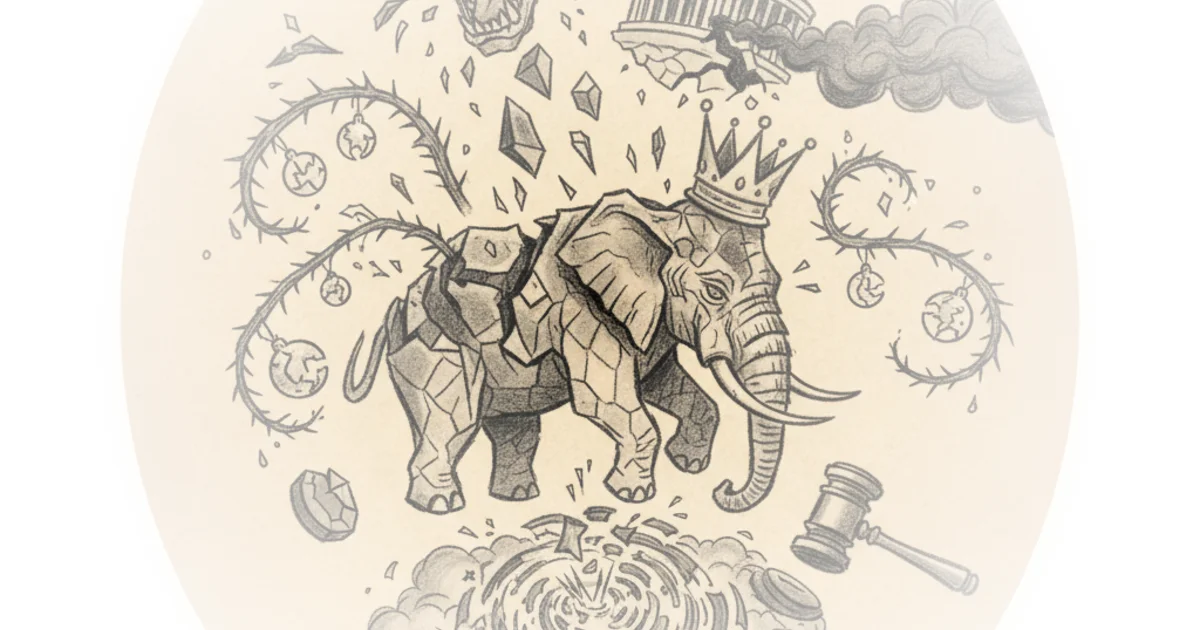
The commentary notes that this isn't an isolated incident but part of a "desperate battle against the truth" covering everything from the Epstein files to military actions. The author points out that the administration is engaged in a "multifront political war" that it is actively losing. "Led by an erratic president who is failing at his only real skill — messaging — the Trump administration is losing a multifront political war, and things are likely to get worse for them before they get better," Public Notice asserts. This framing is effective because it shifts the focus from the personality of the leader to the structural failure of the messaging apparatus. When the primary tool of a political movement is its ability to communicate, and that tool is breaking, the movement itself is in existential danger.
"Instead of actually doing something to combat stubborn inflation and stagnant job growth, the president and his surrogates are just trying to lie their way out of it."
The Economic Disconnect
The piece pivots to the economy, arguing that the administration's refusal to acknowledge the pain of inflation and stagnant wages is a fatal strategic error. Public Notice highlights the absurdity of the president's response to a reporter asking about families choosing between holiday gifts and healthcare: "don't be dramatic." This dismissal is presented not just as a gaffe, but as a fundamental inability to connect with the lived experience of the electorate. The author contrasts the administration's rosy rhetoric with the data: "Consumer spending is down this holiday season and consumer confidence is near an all-time low."
The commentary draws a sharp line between the administration's self-congratulation and the public's reality. "Trump's absurd claim comes as the White House is doing its best to distort economic statistics and create a narrative that the 'golden age' is just around the corner," Public Notice writes. The author notes that despite the administration's insistence on a "No Inflation" reality, 68 percent of American adults believe the economy is "poor." This gap between perception and reality is widening. The article references the concept of consumer confidence, noting that it is a leading indicator of economic health, and its collapse here suggests the administration's narrative is not just unpopular, but factually unmoored. Critics might argue that stock market highs should be a counter-indicator, but the piece rightly points out that everyday Americans do not feel the benefits of asset inflation when grocery bills and healthcare premiums are rising.
Institutional Fractures and the Healthcare Crisis
The coverage then explores the fractures within the Republican coalition, particularly regarding healthcare. The author highlights a significant moment where GOP Rep. Marjorie Taylor Greene broke with the president to support extending enhanced Affordable Care Act subsidies, recognizing that her constituents rely on them. "Recognizing that many of her own supporters rely on the ACA, Greene actually did something that — gasp! — would help her constituents by supporting an extension of the subsidies," Public Notice notes. However, the piece laments that House leadership has blocked this, leaving 21 million Americans facing rising costs.
This section underscores the administration's paralysis. "Right now, they're doing nothing to prevent healthcare premiums from rising for 21 million Americans when enhanced Obamacare subsidies expire at the end of this month," the author writes. The commentary suggests that this inaction is a direct result of the administration's refusal to engage with the complexity of the issue, preferring instead to promise a "healthcare plan" that has been "two weeks away" for a decade. The author also touches on the legal and political pushback, noting that courts are ruling against immigration policies and that Democratic governors are gaining ground. "Combined with almost daily losses in court on a variety of administration policies... chinks in Trump's armor have been widening for months now," Public Notice observes. This institutional resistance is presented as a key factor in the administration's declining power.
The Erosion of the Base
Perhaps the most damning evidence presented is the erosion of support within the president's own coalition. The piece points out that the percentage of supporters who "strongly approve" of the president has dropped significantly. "The percentage of his supporters who 'strongly approve' of him is at 50 percent — down from 66 percent in March," Public Notice writes. This decline suggests that the administration's strategy of constant agitation and deception is no longer sufficient to maintain loyalty.
The author also highlights the internal dissent, noting that Republican Rep. Don Bacon is publicly criticizing the administration's tariff policies for hurting the economy. "On affordability, tariffs are an issue and I believe Congress should take back that authority," Bacon said. This internal criticism is framed as a sign of a movement losing its way. The piece also mentions the Indiana redistricting controversy, where the administration's heavy-handed tactics led to threats of violence against Republican lawmakers. "The more Trump is cornered by effective opposition from members of both parties, the more erratic he'll become," Public Notice concludes. This escalation of tactics in the face of political failure is a dangerous trend that the author warns could lead to further instability.
"It's clear that Trump's economic plan consists of little more than trying to blame Biden for everything and telling people that good times are just beyond the horizon. Ultimately, an attempt to convince Americans that what they're experiencing isn't real."
Bottom Line
Public Notice's strongest argument lies in its relentless documentation of the gap between the administration's self-mythologizing and the tangible struggles of the American public, from healthcare costs to inflation. The piece's biggest vulnerability is its reliance on the assumption that the administration's base will eventually turn away from the leader due to economic pain, a dynamic that has historically proven more resilient than the data suggests. However, the convergence of legal defeats, internal party rebellion, and collapsing approval numbers presents a compelling case that the current political trajectory is unsustainable. Readers should watch closely for how the administration attempts to pivot its messaging in the coming months, as the current strategy of denial appears to be reaching its breaking point.