Nachman Oz does not merely review a book; he dissects a national trauma, arguing that Aleksandr Solzhenitsyn's The Gulag Archipelago remains the definitive account of a state that turned its own citizens into enemies. While many treat the text as a historical artifact of the Soviet Union, Oz frames it as a living testament to a unique "fratricidal derangement" where the logic of terror was not just efficient, but absurdly inverted. In an era where authoritarianism often hides behind bureaucratic efficiency, Oz's insistence on the chaotic, comedic horror of the Soviet system offers a chillingly relevant lens for understanding how regimes consume their own people.
The Architecture of Inversion
Oz begins by challenging the common perception of totalitarianism, suggesting that while Nazi Germany operated on a perverse but linear logic of extermination, the Soviet Union functioned on a "state of total inversion." He writes, "Hannah Arendt wrote that Nazi Germany's supreme commandment was Thou Shalt Kill and the Soviet Union's was Thou Shalt Bear False Witness." This distinction is crucial; it shifts the focus from the physical act of murder to the psychological dismantling of truth. Oz argues that the true horror lay in the constant vigilance required to survive a system where "every friend a potential foe, prepared to bear false witness against you."
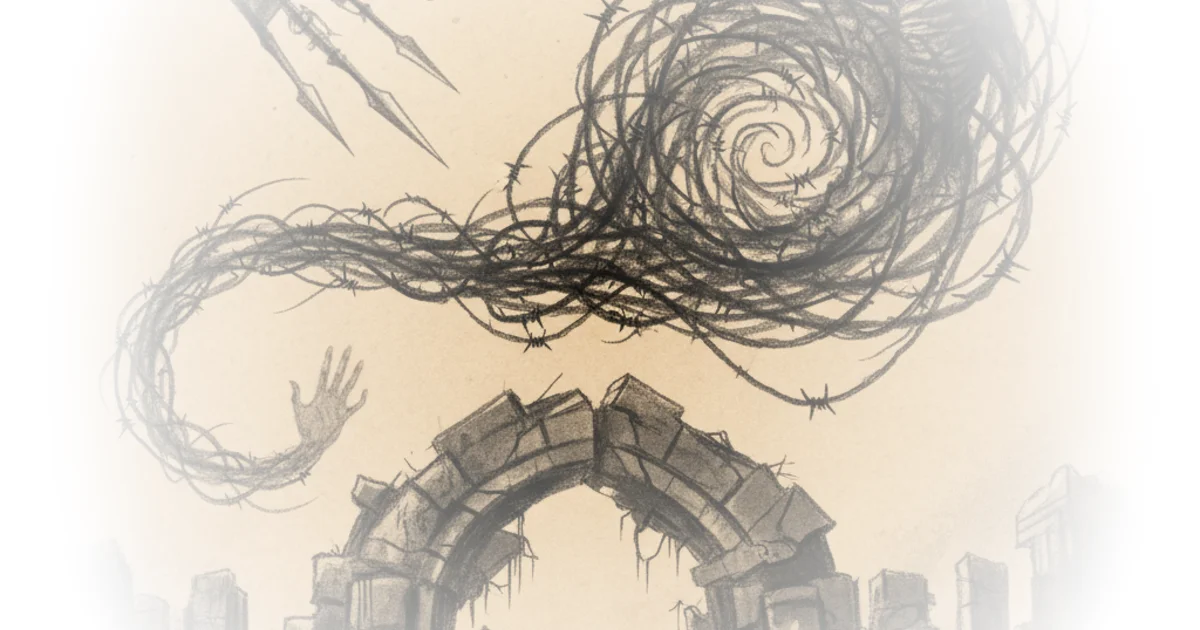
The author highlights the sheer physical and physiological feat required to produce such a work, noting that Solzhenitsyn wrote in a trance-like state to "disgorge the burdens of the Russian people crushed underfoot." Oz draws a powerful parallel to Milton, suggesting that just as the blind poet dictated Paradise Lost, Solzhenitsyn channeled the collective suffering of a nation. This framing elevates the text from a memoir to a prophetic act, one that required the author to survive the loss of his own manuscript and the execution of its keeper, Elizaveta Voronyanskaya, who was found hanged after KGB interrogation.
"The monstrous leviathan spat out its prophet."
Critics might argue that focusing on the "prophetic" nature of Solzhenitsyn risks mythologizing a flawed human being, but Oz anticipates this by emphasizing the author's humility. He notes that Solzhenitsyn was "no Joan of Arc, blazing in righteousness," but rather a "zek, broken and filthy, who knows he might have been a guard himself." This admission of shared capacity for evil is what gives the work its enduring moral weight, forcing the reader to confront the darkness within rather than projecting it solely onto a distant "other."
The Comedy of the Absurd
One of Oz's most striking observations is how Solzhenitsyn employs a "comedic charge" that never allows the reader to laugh, but instead forces a recoil. He describes the Soviet experience as a "grand, hilarious, monstrous joke," where the absurdity of the regime's logic becomes the only way to process the horror. Oz illustrates this with a vignette about construction workers stealing bathtubs, only to have them moved floor-by-floor to fool an inspection committee. He writes, "This ought to be shown in a film comedy, but they wouldn't allow it: there is nothing funny in our life; everything funny takes place in the West!"
This section of Oz's commentary is particularly effective because it exposes the surreal nature of life under a lie. The regime's demand for perfection in the face of systemic theft created a reality so detached from truth that it became a dark farce. Oz suggests that this "hellish comedy" stems from centuries of pain, noting that "the tragic fate of his people was the source of its humor, the mother-of-vinegar for its wit." The argument here is that the absurdity was not a bug of the Soviet system, but a feature—a mechanism that kept the population off-balance and unable to organize.
"The tragic fate of his people was the source of its humor, the mother-of-vinegar for its wit."
However, Oz also warns against underestimating the brutality masked by this humor. He points out that the "Soviet derangement" involved the "criminal guards and innocent prisoners" being swapped, and loyal party members fed into the state's own "maw." The comedy does not soften the blow; it sharpens the tragedy by highlighting the complete collapse of rationality.
The Betrayal of the Motherland
Perhaps the most emotionally resonant part of Oz's analysis is his exploration of Solzhenitsyn's "deep, heartfelt, bitter sense of betrayal." The author argues that Solzhenitsyn was a patriot who loved a country that had "sold us to the gypsies" and "thrown us to the dogs." Oz writes, "A Motherland that betrays its soldiers—is that really a Motherland?" This question reframes the conflict not as a simple struggle between good and evil, but as a family tragedy where the parent has become the abuser.
Oz delves into the controversial topic of Soviet soldiers who defected to fight alongside the Germans, a phenomenon he describes as "totally unheard of in all world history." He quotes Solzhenitsyn's empathy for these men: "Who was more to blame, those youths or the gray Fatherland?" This perspective challenges the traditional narrative of the "Great Patriotic War," suggesting that the Soviet state's internal purges were so severe that they drove its own sons to ally with its most hated enemy. Oz notes that the West failed to understand this dynamic, viewing these defectors simply as traitors rather than victims of a "unique monstrosity."
"In World War II the West kept defending its own freedom and defended it for itself. As for us and as for Eastern Europe, it buried us in an even more absolute and hopeless slavery."
Oz acknowledges that this view might seem heretical to some, but he insists it is necessary to understand the full scope of the Soviet tragedy. He points out that the West's complicity in extraditing Soviet dissidents to their deaths further underscores the moral ambiguity of the era. The argument here is that the "democratic West" was often blind to the specific nature of Soviet terror, prioritizing diplomatic relations over the lives of those who had been crushed by the regime.
The Human Cost of Silence
The commentary concludes with a reflection on the silence that allowed the system to persist. Oz writes, "Solzhenitsyn postulates that should civilians have cried out as innocents among them were snatched off the street instead of looking away, the whole system would have collapsed." This is a haunting reminder that the survival of such regimes often depends on the passivity of the populace. Oz connects this to the present day, asking, "What are you afraid to utter? Are you embarrassed? To even contemplate cowardice in our age of liberties and hedonism?"
The author's voice here is one of "shame and awe," recognizing that the capacity for evil is not external but internal. He argues that Solzhenitsyn's power comes from his ability to speak for the "discarded brothers and sisters across the land" while admitting his own potential for complicity. This refusal to claim moral purity is what makes the work so dangerous to authoritarian regimes and so vital for free societies.
"The capacity for evil is not out there, but in here, in us all."
Critics might argue that this focus on individual moral failure risks letting the state off the hook for its systemic crimes. However, Oz's point is precisely that the system relies on the individual's willingness to look away. By exposing the internal mechanisms of fear and silence, Solzhenitsyn provides a roadmap for resistance that is as relevant today as it was in the 1970s.
Bottom Line
Nachman Oz's commentary succeeds by stripping away the academic distance often applied to The Gulag Archipelago, revealing it instead as a visceral, living document of human betrayal and resilience. The strongest part of the argument is its refusal to simplify the Soviet experience into a binary of victim and perpetrator, instead exposing the absurd, comedic horror that sustained the regime. The biggest vulnerability lies in the sheer emotional weight of the text, which can be overwhelming for the modern reader, yet it is this very intensity that makes Oz's call to vigilance so urgent. As the world faces new forms of authoritarianism, the lesson remains clear: the most dangerous lies are those we tell ourselves to survive.