This piece by Doomberg reframes the current political turbulence not as a battle of personalities, but as the inevitable climax of an 80-year legal experiment that began with a single Ohio farmer. While mainstream coverage fixates on the immediate policy shifts regarding climate regulations, Doomberg argues that the real story is a constitutional crisis rooted in the Supreme Court's 1942 decision in Wickard v. Filburn. For the busy reader, this is a crucial distinction: the current administration's actions are merely symptoms of a much deeper, systemic overreach that the judiciary is only now beginning to address.
The Farmer Who Changed Everything
Doomberg anchors the entire argument in the story of Roscoe Curtiss Filburn, a man who planted wheat for his own family and animals, only to be fined by the federal government. The author notes that "nothing about the 95-acre plot of land he worked was particularly remarkable," yet the legal fallout was catastrophic. The core of Doomberg's analysis is that the Supreme Court's ruling—that the "aggregate impact" of such small, non-commercial actions justified federal intervention—effectively dismantled the concept of limited government. As Doomberg puts it, "Wickard v. Filburn had sweeping implications. In light of that decision—which has never been reversed—Congress may, without interference from the courts, use the Commerce Clause to regulate any activity that, when measured in the aggregate, substantially affects interstate commerce."
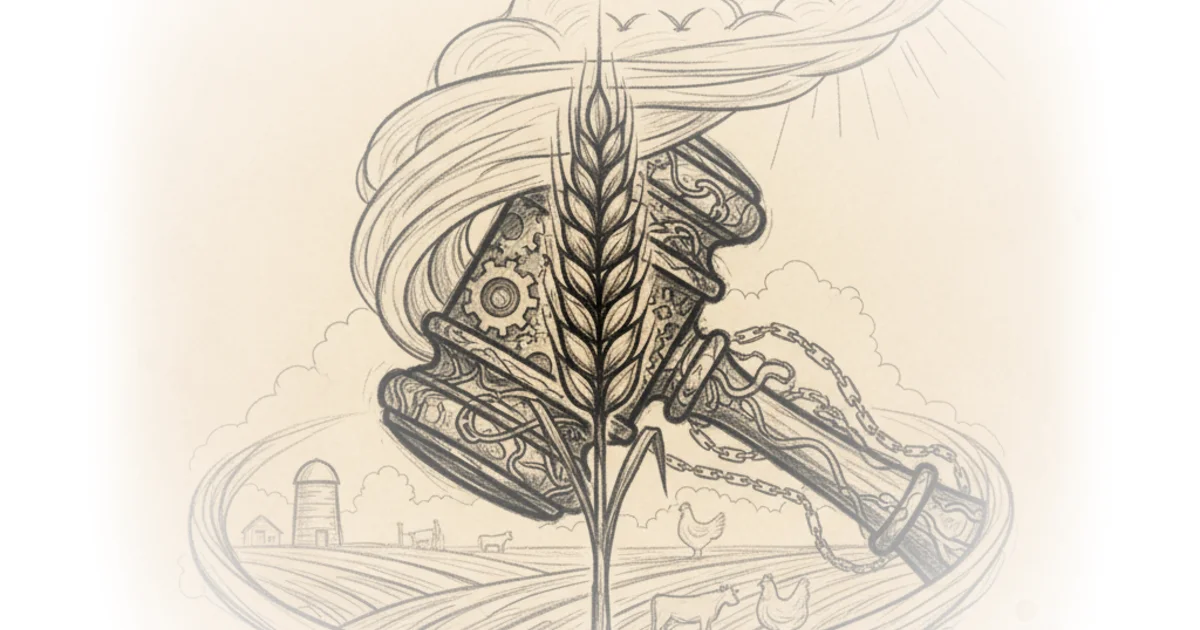
This framing is powerful because it connects a dry legal precedent to the tangible reality of modern bureaucracy. Doomberg illustrates the scale of this shift by noting that the Code of Federal Regulations has ballooned from 15,000 pages in 1940 to over 190,000 today. The author argues that this expansion wasn't accidental but a direct result of Congress stopping the question of "whether they could" regulate something, replacing it with the assumption that the answer is always "yes." Critics might note that the Wickard decision was originally intended to stabilize the economy during the Great Depression, a context Doomberg minimizes to focus on the long-term constitutional erosion. However, the point remains that the precedent was never reversed, leaving a legal foundation that allows for near-total federal oversight of private life.
Under that standard, almost every human endeavor, even non-economic activity, is potentially subject to federal regulation under the Commerce Clause.
The Rise of the Administrative State
The commentary then pivots to how this legal loophole empowered federal agencies to become the true lawmakers. Doomberg writes that "Congress' confidence that it could pass virtually any law so long as it met the aggregation principle was compounded by its willingness to outsource much of the interpretation and implementation of such laws to the so-called experts employed by federal agencies." This outsourcing created a system where agencies like the Environmental Protection Agency (EPA) could redefine statutes without clear congressional direction, such as declaring carbon dioxide a pollutant under the Clean Air Act. The author suggests this was a "constitutionally dubious" practice that became standard, effectively bypassing the legislative branch's duty to define the law.
The piece highlights a recent shift in the Supreme Court's approach, specifically the "major questions doctrine" established in West Virginia v. EPA and the overturning of the Chevron doctrine in 2024. Doomberg argues these rulings are the first real cracks in the edifice built by Wickard. The author observes that while the media focuses on the scientific debate over climate change, the more significant legal battle is whether the EPA needs specific congressional authority to issue such sweeping regulations. This distinction is vital for the reader to understand: the fight is not just about carbon, but about who holds the power to make rules.
The Path to Overturning Precedent
Finally, Doomberg looks toward the future, identifying a new legal challenge, John Ream v. U.S. Department of the Treasury, which seeks to overturn Wickard by challenging the federal ban on home distilling. The plaintiff, like Filburn, intends to produce alcohol for personal use, not for sale. Doomberg writes, "One of the worst decisions in Supreme Court history might finally be overturned," suggesting that this case could end the "rampant abuse of the Constitution's Commerce Clause." The author notes that a coalition of conservative legal organizations is backing this effort, viewing it as the necessary step to restore the constitutional balance intended by the framers.
While the current administration's push to open federal lands for coal development is described as a "flesh wound" to the climate agenda, Doomberg insists that true change requires the judicial dismantling of Wickard. The author warns that if the Supreme Court hears the Ream case, it will be a "winner-take-all legal brawl." A counterargument worth considering is that overturning Wickard could create legal chaos by invalidating decades of federal regulations on everything from civil rights to labor standards, a risk the author acknowledges but seems willing to accept for the sake of constitutional purity.
Bottom Line
Doomberg's strongest contribution is the historical linkage between a 1942 farm dispute and today's regulatory state, proving that current political battles are rooted in a century-old legal error. The argument's vulnerability lies in the assumption that the Supreme Court is willing to upend 80 years of established precedent, which could have unpredictable consequences for the entire federal regulatory framework. Readers should watch the John Ream case closely, as its trajectory will determine whether the US returns to a system of limited federal power or continues down the path of administrative overreach.