In a geopolitical landscape often defined by borders and conflict, this profile of Bishop Clemens Pickel offers a startling counter-narrative: a spiritual leader shepherding a flock across a territory larger than Texas and California combined, yet numbering only 20,000 souls. The Pillar does not merely recount the biography of a German-born bishop in Russia; it exposes the fragile, human architecture of faith surviving within the vast, often hostile machinery of state atheism and modern political instability.
The Weight of a Vast Diocese
The piece immediately grounds the reader in the sheer scale of Pickel's responsibility. He leads the Diocese of St. Clement at Saratov, an expanse stretching from the Caucasus to the Ural Mountains. The Pillar reports that this jurisdiction covers "1,342,807 square kilometers... roughly the size of Portugal, Spain, France, and Germany combined." Yet, within this colossal geography, the Catholic population is a statistical ghost: "20,000 Catholics among 52 million inhabitants — a minority of less than 0.05%."
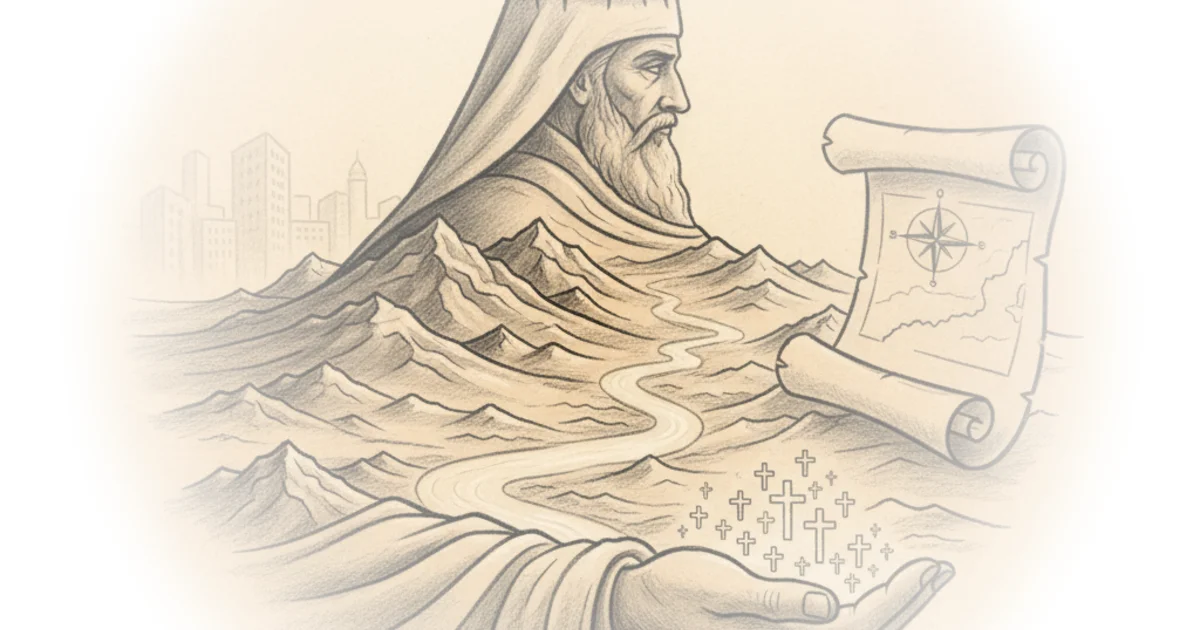
This disparity creates a unique pastoral reality where administrative efficiency is secondary to sheer endurance. Pickel describes the isolation not as a bureaucratic failure but as a spiritual condition. He notes that his priests live in locations "far apart, like oases in the desert," necessitating annual five-day conferences just to prevent overwhelming loneliness among the clergy. The article argues effectively that the lack of a formal curia is not a deficit but a blessing in disguise, forcing a direct, unmediated connection between the bishop and his scattered flock.
"I believe my diocese is the most beautiful in the world, and not just because of the people... The North Caucasus with the 5,642 meter Mount Elbrus and Astrakhan on the Caspian Sea, 28 meters below sea level..."
The narrative strength here lies in how it reframes "missionary work." Pickel rejects the label. He insists he was not sent as a missionary but as a pastor for people who had been waiting decades for a priest. This distinction is crucial; it shifts the focus from expansion to restoration, echoing the resilience seen in other marginalized Catholic communities, such as the Personal Apostolic Administration of Saint John Mary Vianney in Brazil, where small, persecuted groups maintain distinct liturgical identities against overwhelming odds.
Echoes of the Iron Curtain
The commentary delves deeply into Pickel's origins in the German Democratic Republic (GDR), drawing a parallel between his upbringing and the Soviet experience. Born just days after the Berlin Wall rose in 1961, Pickel grew up in a culture where religious belief was discouraged but not violently persecuted. The Pillar highlights his observation that while East Germans felt they were suffering, they "knew almost nothing about the real Way of the Cross our brothers and sisters further east were going through."
This historical lens is vital for understanding the current Russian Catholic landscape. Pickel recounts a pen-pal friendship with deported Volga Germans—a community whose history mirrors the displacement faced by many in Eastern Europe, including the complex diaspora dynamics seen among East German refugees after 1989. He recalls a grandmother from the USSR asking him with grave seriousness: "The Holy Father in Rome — does he still exist?"
This question encapsulates the total isolation of Soviet-era believers. The piece argues that this generation, who gathered for prayer in cemeteries and scattered at the sight of strangers, taught Pickel more about faith than any seminary could. They were not converts to be won but survivors to be joined. As Pickel admits, "these believers helped me more than I could help them." In their lives, faith was not a hobby; it was a lifeline.
Critics might note that the article's focus on German heritage risks overshadowing the growing number of ethnic Russian Catholics in the region. However, the piece anticipates this by noting how the demographics have shifted from an ethnic German stronghold to a "multinational" community as post-Soviet migration patterns changed. The connection between the Church in Germany and Russia remains strong, with three German bishops currently serving in Russia, a legacy of the shared trauma under Soviet influence.
A Fragile Future
The interview concludes by addressing the current fragility of the Church in Russia, particularly following the resignation of Moscow's Archbishop Paolo Pezzi. The Pillar reports that the numbers are "slightly declining" and that there are "very few local priests," with almost all clergy being foreigners willing to make significant sacrifices.
Pickel acknowledges the precariousness of their position. He notes that accusations of proselytism have been leveled against them, a common charge in regions where religious minorities operate under suspicion. Yet, the tone remains one of quiet resilience rather than victimhood. The piece suggests that the strength of this Church lies precisely in its small size and lack of institutional bloat. It is a community bound not by power but by necessity and shared survival.
"Whoever is Catholic is not so by chance... When I arrive, I am received as one who belongs to the family, without any reservations."
This sentiment underscores the article's central thesis: in an era of massive institutions and digital noise, the most enduring faith communities are often the smallest, those where every member is known by name.
Bottom Line
The Pillar succeeds in humanizing a geopolitical abstract, transforming statistics about a 520,000-square-mile diocese into a story of profound personal commitment. Its strongest argument is that the decline in numbers and resources has not weakened the faith but refined its essence, stripping away bureaucracy to reveal a raw, essential connection between believer and community. The piece's biggest vulnerability is its reliance on the perspective of one bishop, which may obscure the internal tensions or diverse experiences within such a vast territory, yet it offers a rare, grounded glimpse into a world where faith persists against the odds.