Michael Ruhlman transforms a mundane Saturday into a profound meditation on how we process memory, culture, and the quiet resilience of daily rituals against a backdrop of global chaos. While the piece begins as a casual newsletter update, it quickly pivots to a piercing question about the utility of a life spent consuming art: if we forget what we read, did it ever truly matter? This is not merely a reflection on aging; it is a defense of the subconscious architecture we build through our leisure.
The Architecture of Forgetting
Ruhlman anchors his exploration in the anxiety of memory loss, triggered by Melissa Kirsch's inquiry into whether forgotten experiences still hold value. He channels James Collins's worry that serious reading might be futile if its content "passes through us like light through glass." The author confronts this fear directly, staring at his own bookshelf and wondering if titles like "Perjury" or "Kavalier & Clay" would have made any difference if he had spent those hours watching golf instead. This internal monologue resonates because it touches on a universal modern dread: the fear that our intellectual lives are ephemeral.
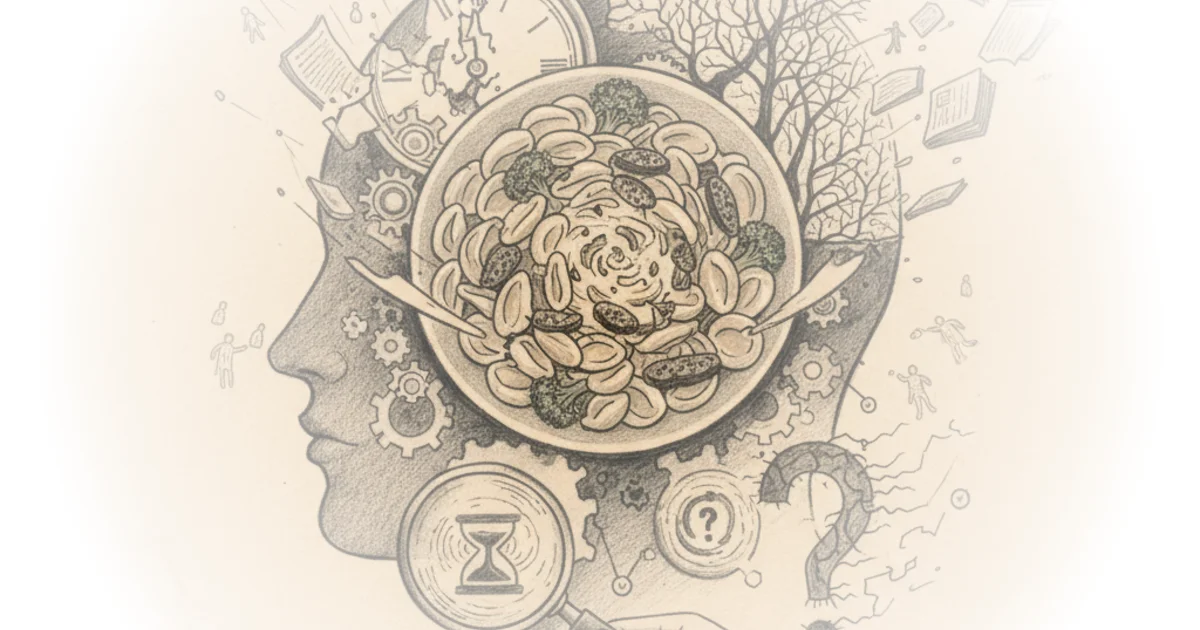
However, Ruhlman reframes this anxiety not as a failure of retention, but as a feature of a rich life. He notes that the world's tawdriness and tragedy—referencing the Middle East and Hurricane Helene—become a "faint backdrop" when the mind is fed a "Thanksgiving feast of ideas." The argument suggests that the value of reading lies not in the hard drive of our memory, but in the immediate, transformative experience of engagement. As he writes, "How I love the leisure of letting the mind go where it wants as opposed to where it should." This distinction is crucial; it validates the unstructured, meandering nature of intellectual curiosity as a necessary counterweight to the rigid demands of productivity.
Critics might argue that this romanticization of forgetting ignores the practical necessity of retaining knowledge in an information-saturated world. Yet, Ruhlman's point is that the feeling of the experience, not the data point, is what alters us. He introduces the concept of "solastalgia," a term coined by philosopher Glen Albrecht, to describe "the homesickness you have when you are still at home" as the environment changes. This linguistic deep dive serves as a metaphor for the piece itself: a search for comfort in a world that is shifting beneath our feet.
"True nostalgia is pain, the pain of not being able to return home, the futile search for lost time."
The Alchemy of the Ordinary
The commentary then shifts from the abstract to the tactile, demonstrating how the author grounds high-concept thinking in the physical act of cooking. When a grocery run fails to yield the specific ingredient of broccoli rabe, Ruhlman's partner, Ann, improvises with standard broccoli, invoking a family memory: "Mama Rose used to make it this way." This moment is pivotal. It illustrates that the continuity of culture and comfort does not depend on rigid adherence to recipes or facts, but on the adaptability of human connection.
Ruhlman describes the meal as "so creamy and fulfilling," noting how the "achy feeling of having spent cramped hours in the car melted away." The recipe provided is not just a set of instructions but a narrative device that reinforces the theme of resilience. The key to the dish, he explains, is the emulsion created by the cheese and pasta water, a process that mirrors the way disparate elements of a life—tragedy, memory, food, and art—blend into a cohesive whole. He writes, "Add one cup of grated cheese, and stir it into the pasta so that it becomes creamy and coats the pasta when it's melted into the liquid from the broccoli-sausage mixture." This culinary alchemy serves as a tangible proof of his earlier philosophical point: the transformation happens in the process, not just the result.
The piece also touches on the cultural landscape through the lens of cocktail ratios and television. Ruhlman champions "The Last Word," a cocktail with equal parts gin, Chartreuse, maraschino liqueur, and lime juice, calling it a "marvel—a wonder your mouth can contain all that citrusy, herbal deliciousness." This appreciation for balance and complexity extends to his viewing habits, where he and his partner navigate disturbing true crime series and nuanced dramas like "His Three Daughters." The inclusion of Natasha Lyonne's performance is noted for its ability to be both grating and brilliant, mirroring the complex, sometimes contradictory nature of human relationships.
The Weight of Loss and the Power of Words
Ruhlman weaves in the recent deaths of artists Maggie Smith and Kris Kristofferson, grounding the piece in the reality of mortality. He mentions Kristofferson's song "Sunday Morning Coming Down," a track that perfectly encapsulates the melancholic, reflective tone of the entire newsletter. The author also highlights a correction made to Westminster Abbey regarding the Brontë sisters' names, noting the addition of a dieresis to the 'e'. This small detail about punctuation becomes a symbol of the care required to honor the past accurately.
He draws a parallel between food writing and mental health, citing David Leite's post on baking as a depiction of depression. Ruhlman praises this honesty, noting that while some critics told Leite to "stay in his lane," the vulnerability was necessary. This reinforces the piece's broader theme: that the personal and the intellectual are inextricably linked. Whether discussing the grief of a lapsed tennis fan or the pain of solastalgia, Ruhlman argues that these "benign observations" are actually the threads that hold our understanding of the world together.
"Her letters—short essays, actually—are easy, in no hurry whatsoever, on benign observations that she weaves into lovely cloth seemingly without effort, creating something artful and engaging when before there was nothing."
The author's ability to move from a discussion of the etymology of "hello" to the tragedy of Hurricane Helene without losing the thread is a testament to the power of a well-curated mind. He suggests that the "hurkle-durkle"—the act of lingering in bed—is not laziness, but a necessary pause to let the mind process the sheer volume of human experience.
Bottom Line
Michael Ruhlman's piece succeeds by refusing to separate the high-minded pursuit of memory and art from the lowly, essential act of making dinner. His strongest argument is that the value of a life is not measured by what we remember, but by the depth of our engagement with the present moment. The piece's vulnerability lies in its reliance on a specific, privileged leisure time that not all readers may possess, yet the emotional core—the search for solace in a changing world—remains universally accessible. Readers should watch for how this framework of "benign observation" continues to shape cultural discourse as the year ends, offering a model for how to navigate a world that often feels too heavy to bear.