In a landscape often dominated by the mechanics of papal elections, this piece from The Pillar offers a startlingly personal lens on the newly elected Pope Leo XIV, suggesting his choice of name is less a geopolitical signal about artificial intelligence and more a quiet, decades-deep debt to the Augustinian order. While the conventional wisdom frames the pontiff's reign as a response to the digital age, the editors argue that the true engine of his identity lies in the specific, human history of a religious order nearly extinguished a century ago. This reframing shifts the narrative from abstract theory to tangible gratitude, grounding the highest office in the Church in the messy, intimate reality of institutional survival.
The Heart of the Name
The piece dismantles the standard geopolitical reading of the papal name choice. "The conventional read on XIV's name choice is that he wanted to evoke XIII, especially since the current Leo will be called to lead the Church through the change of era represented by AI," the editors note. However, they pivot quickly to a more intimate history, detailing how Pope Leo XIII personally intervened to save the Order of St. Augustine from financial ruin and organizational chaos in the early 20th century. The Pillar reports that "Leo XIII did a bunch for his Augustinian friends. He gave them money every year, he helped rebuild an ancient church for them outside of Rome." This historical deep dive is crucial; it moves the story away from the speculative "what if" of future policy and anchors it in the "what was" of institutional loyalty.
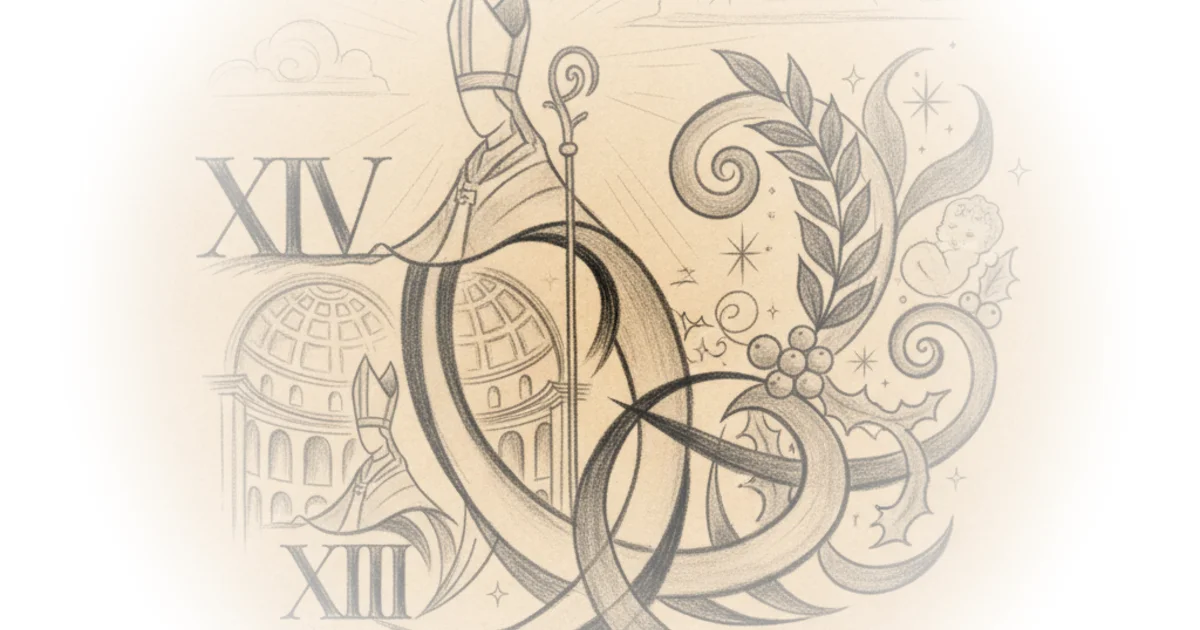
The argument gains weight by connecting the current pontiff's physical history to this legacy. The editors point out that the current pope "lived in the house that XIII built," suggesting a direct lineage of gratitude. "I suspect XIV's name is also personal: a 'thank you' to the man who helped save his brothers, more than a century ago," the piece concludes. This is a compelling narrative device, transforming a name from a political statement into a personal vow. It reminds readers that the machinery of the Vatican is often driven by the same human impulses—loyalty, memory, and gratitude—that drive the rest of us. A counterargument worth considering is whether this personal lens obscures the immense structural challenges the new pontiff faces, but the editors use it effectively to humanize an otherwise distant figure.
The heart is commonly reached, not through the reason, but through the imagination, by means of direct impressions, by the testimony of facts and events, by history, by description.
The Ancient Crossroads
Shifting from the papal name to the broader mission of the Church, the article draws a powerful parallel between the early Christian martyrs in Rome and the modern global landscape. The editors reflect on a recent pilgrimage, noting that while they expected to focus on the papacy, they found themselves "often in the path of the Church's earliest martyrs." This serendipity is used to challenge the modern Church's tendency toward introspection. "The call is not to allow ourselves to be caught in the naval-gazing of synodality, or in a project tinged with reminiscent sentimentality," the piece argues. This is a sharp critique of current ecclesiastical trends, urging a return to the urgency of the early Church.
The editors contrast the ancient Roman crossroads with today's global centers of gravity, asking, "Perhaps it's Jakarta, which just became the world's largest city, and where Christianity is a small minority." This comparison highlights the shifting demographics of faith, moving the center of gravity from the historical West to the Global South. The piece emphasizes that the early Christians "let themselves be distracted by theory, or nostalgia, or fear," and instead focused on "preaching Christ to those who would hear." This call to action is particularly resonant given the historical context of the Catacombs of Rome, where believers gathered in secret, or the story of Juan Diego, whose encounter with the Virgin Mary in 1531 sparked a massive evangelization effort in the Americas. The Pillar suggests that the modern Church must emulate that same fearless transmission of the Gospel rather than retreating into defensive postures.
Institutional Friction and Global Tensions
The commentary does not shy away from the complex institutional realities facing the new pontificate. The piece highlights the "still complicated implementation of the Vatican's accord with Beijing on the appointment of bishops," noting that the new administration has not yet addressed the bilateral agreement. This signals a potential shift in the delicate dance between the Holy See and the Chinese government. Simultaneously, the editors report on the rare public clash between Hungarian bishops and the Orbán administration over a bill allowing compensated foreign egg donation. "The situation has led to a rare public clash with the Orbán administration from the country's bishops," the piece notes, illustrating that the defense of doctrine often requires friction with political allies.
Furthermore, the article touches on the legal troubles of Cardinal Joseph Zen in Hong Kong, where an appeals court is reviewing his conviction for failing to register a charity. These stories collectively paint a picture of a Church navigating a world where its traditional alliances are fraying and its moral authority is constantly tested by state power. The Pillar's coverage here is notable for its lack of partisan cheerleading; it presents these conflicts as inevitable friction points in a globalized world where religious and state interests rarely align perfectly. Critics might argue that the piece glosses over the specific theological nuances of the Chinese accord, but its focus on the political reality of the situation provides a necessary grounding for readers trying to understand the stakes.
Bottom Line
The strongest element of this piece is its ability to weave a personal, almost biographical narrative about the new Pope into a broader, urgent call for the Church to abandon nostalgia and embrace the messy reality of global evangelization. Its biggest vulnerability lies in the speculative nature of the "personal" motivation behind the papal name, which, while charming, remains unconfirmed. Readers should watch for how the new administration navigates the tension between these personal loyalties and the hard geopolitical realities in China and Eastern Europe.
None of us can stare into catacombs and ossuaries, at the bones of people who gave their very lives to make known the name of Jesus, and imagine that the Lord will expect any less commitment from us.