Most explanations for radicalization focus on internet algorithms and viral content. Andrew Callaghan has a different theory: people don't fall into political extremism from what they consume online — they fall because something deeper has already collapsed in their lives.
Callaghan, a documentary filmmaker best known for his HBO series "This Place Rules," sat down with host Joshua Citerella to discuss his latest work. The conversation offers a framework for understanding how ordinary people become consumed by movements like QAnon and Trumpism — and why economic collapse and personal trauma almost always precede the political transformation.
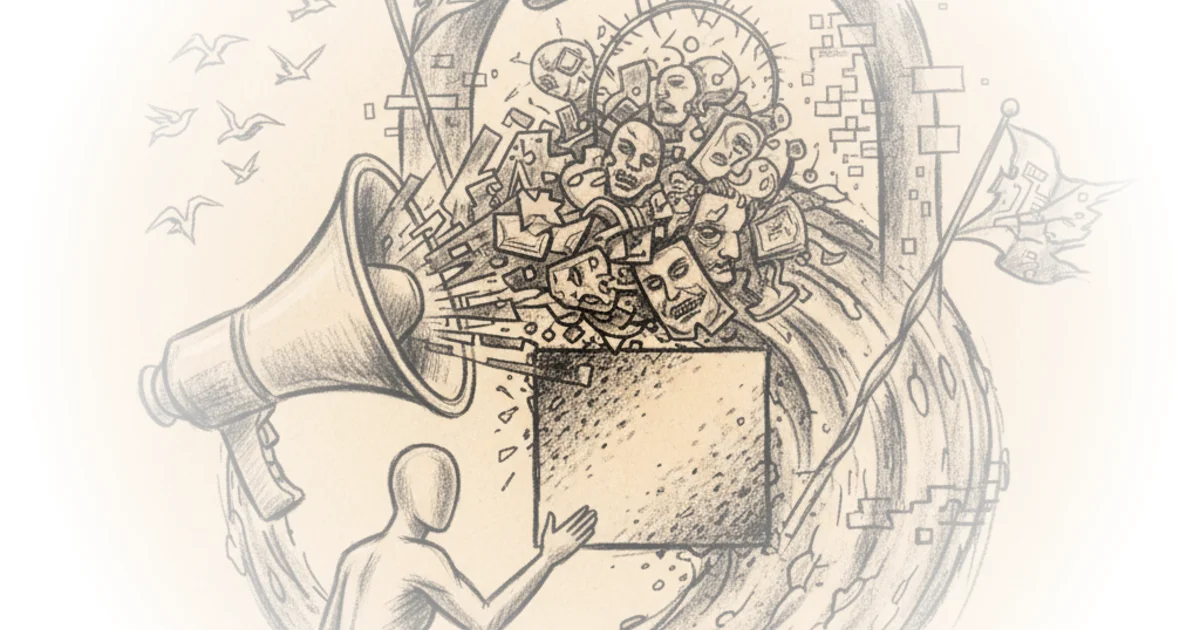
The Theory of Radicalization
Callaghan proposes that radicalization stems from three core human needs: security, significance, and connection. When all three collapse simultaneously, people become vulnerable to extremist narratives.
"Security" means having a roof over one's head — physical and emotional safety. "Significance" means feeling like one matters, whether through work, family, or community role. "Connection" is the hardest to replace: it can't be bought with money.
When people lose connection with their family and community, that's what causes radicalization.
The theory isn't entirely original. Psychologists note that Abraham Maslow proposed something nearly identical decades ago — a hierarchy of human needs. Callaghan jokes he didn't realize this when formulating his theory, but the overlap is striking.
The Case Study: Kelly's Fall
Callaghan illustrates the theory with his documentary subject: a man named Kelly who experienced cascading losses that preceded his descent into far-right politics.
Kelly lost his home shortly after the financial crisis. He had taken a loan from someone who seized the property when he couldn't repay $100,000. For three to four years, his life became a revenge quest against that lender — an unsuccessful one. Then Trump arrived and offered a framework of spiritual warfare: good versus evil. Kelly could blend his personal vendetta with a grander ideological cause.
Before this collapse, Kelly was socially and fiscally conservative — low taxes, small government. He wasn't anywhere near the level of January 6 participants. But after losing everything, he found something in the Trump movement that made sense of his suffering.
What Actually Drives Radical Politics
Callaghan argues mainstream media misses what actually drives people toward extremism:
"The downward mobility of most people in society is a direct contributor to their radical politics. It matters less what people are saying on the internet. It matters more that they are being driven to hear those messages and seek them out."
He believes around half the people at January 6 were like Kelly — ordinary people whose economic circumstances collapsed before their political views did. The organizers above them, though, tend toward libertarian capitalism: "Get it how you live. It doesn't matter what the product is you're selling."
Counterarguments
Critics might note that not everyone who experiences economic hardship becomes radicalized. Many people face setbacks without turning to extremist ideologies. The theory risks oversimplifying complex psychological pathways — and some psychologists argue that trauma alone doesn't determine political outcomes; individual resilience matters too.
Callaghan acknowledges the framework is incomplete but insists it's a useful lens for understanding movements like QAnon, where personal tragedy almost always precedes ideological transformation.
Bottom Line
This interview offers a compelling reframing of why people embrace extremist politics: not because algorithms radicalized them, but because they lost everything that gave their life meaning first. The strongest part of the argument is its emphasis on material conditions over digital influence — suggesting that economic collapse is the real pipeline to radicalization. Its vulnerability is the same as most single-cause theories: human beings are far more complicated than any framework suggests, and no one factor alone explains political radicalization.