Rohin Francis dismantles the comforting myths of modern cardiology in a raw, unscripted Q&A that exposes the terrifying gap between medical certainty and clinical reality. Far from a polished lecture, this piece reveals a specialty where the most dangerous lesions often look harmless, and where the very concept of "informed consent" may be a convenient fiction. For the busy professional navigating a healthcare system that promises clarity, Francis offers a sobering dose of necessary ambiguity.
The Illusion of Predictability
Francis immediately confronts the counter-intuitive nature of heart disease, challenging the layperson's assumption that a blocked pipe equals a heart attack. He explains that the visual severity of an artery narrowing is often a poor predictor of risk. "There is a fundamental mismatch or there's no correlation between the amount of narrowing in a coronary artery and the risk of developing a heart attack," Francis writes. He contrasts a 90% narrowed, stable, calcified artery that might cause pain but rarely kills, against a mild 50% narrowing that is unstable and prone to rupture. "If it's got a thin cap and it's unstable it ruptures that cap all that cholesterol-rich core comes out causes the blood to just completely have a panic attack and clot everywhere then that is obviously a much higher risk lesion."
This distinction is critical because it explains why current screening tools often fail to catch the next cardiac event. Francis notes that while high-tech scans can identify these "high-risk features," they remain largely confined to research facilities and have not yet filtered into general practice. The implication is stark: we are often treating the visible plumbing while missing the invisible structural weakness. Critics might argue that Francis is overstating the limitations of current diagnostics, as stress tests and calcium scoring have saved countless lives. However, his point stands that the technology to reliably predict the specific moment of rupture is not yet standard care.
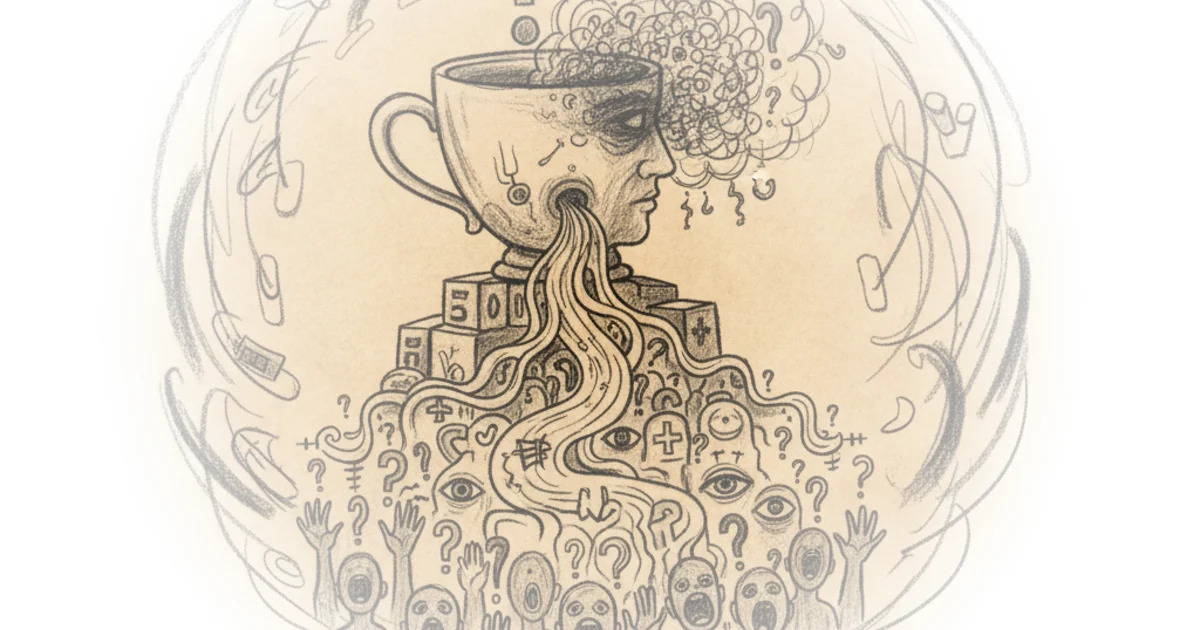
"The concept of informed consent... is a bit of a convenient fiction that we tell ourselves."
The Burden of Shared Decision Making
The commentary shifts to the ethical quagmire of patient autonomy. Francis tackles the modern mandate for "shared decision making," arguing that it often places an impossible burden on patients who lack the training to weigh complex risks. He points out that even specialists frequently do not understand the procedures performed by their peers in other sub-fields. "If cardiologists don't understand treatments other cardiologists are doing what expectation do we have that a general physician a doctor in another field will understand leave aside a member of the public who may not have medical training," he asks.
Francis suggests that the pendulum has swung too far from the paternalistic "doctor knows best" model to a point where patients are asked to make life-or-death choices without the necessary context. He highlights the discussion around resuscitation, noting that the public often holds a "very unrealistic view" of cardiac arrest outcomes based on television dramas. In reality, the most likely outcome of a resuscitation attempt is not a heroic recovery, but "a very unpleasant last few minutes of life or to survive the cardiac arrest but have a significant disability neurological deficit not be able to talk speak breathe." Consequently, patients often revert to asking the physician for a recommendation, effectively seeking the guidance they were told they didn't need. This framing is effective because it humanizes the confusion rather than blaming the patient for their lack of knowledge.
The Nightmares of the Procedure Room
Moving from theory to the visceral reality of the catheterization lab, Francis reveals the specific terrors that haunt cardiologists. While perforations and bleeding are obvious risks, he identifies a more insidious fear: the air embolus. He describes the scenario where a tiny bubble of air, injected into the pressurized system of the coronary arteries, can stop blood flow entirely. "Any engineers watching or plumbers you won't need me to explain that air in a pressurized hydraulic system is a disaster," Francis notes. He describes the bubble sitting in the coronary arteries, causing a catastrophic cardiac arrest that is "every cardiology fellows absolute nightmare to cause."
This section serves as a reminder that medicine is a high-stakes physical intervention, not just a theoretical exercise. The stakes are so high that a single moment of inattention with a syringe can be fatal. Francis also touches on the evolution of medical knowledge, debunking the myth that doctors only receive one hour of nutrition training. He argues that while curricula vary, postgraduate learning fills the gaps, and the understanding of diet has shifted from a simplistic "zero fat" approach to a more nuanced view of fat types and sugar content. "There are still plenty of things that were taught when i was at medical school which are still reasonable advice things like having complex carbohydrates rather than refined and managing your fat intake," he asserts.
Bottom Line
Francis's most compelling argument is that the medical profession is struggling to reconcile its own complexity with the public's demand for simple, binary answers. The strongest part of this coverage is its honest admission that "informed consent" is often a performance rather than a true meeting of minds. The piece's vulnerability lies in its reliance on the reader's trust in the physician's ultimate recommendation, which could be unsettling for those who prefer total autonomy. As healthcare becomes increasingly data-driven, the tension Francis describes between technical nuance and patient understanding will only intensify.