"Michael Macleod exposes a terrifying contradiction at the heart of London's education system: while farmers are legally mandated to stop moving cattle when temperatures hit 30C, schools remain officially open with no upper temperature limit for children. This is not merely a story about uncomfortable classrooms; it is a report on an institutional framework collapsing under unprecedented heat, forcing headteachers to choose between regulatory compliance and human safety."
The Policy Vacuum
Macleod's central thesis is that the current guidance is a form of "compliant muddling through" that has finally broken down. He argues that without clear political leadership from the Department for Education, school leaders are left to make unilateral, high-stakes decisions. The author highlights the absurdity of the situation by contrasting animal welfare laws with educational policy: "When temperatures top 30C, farmers are advised to stop transporting cattle and other livestock as part of their legal duty to protect animal welfare... there's no equivalent upper temperature limit on when you should stop putting children in classrooms."
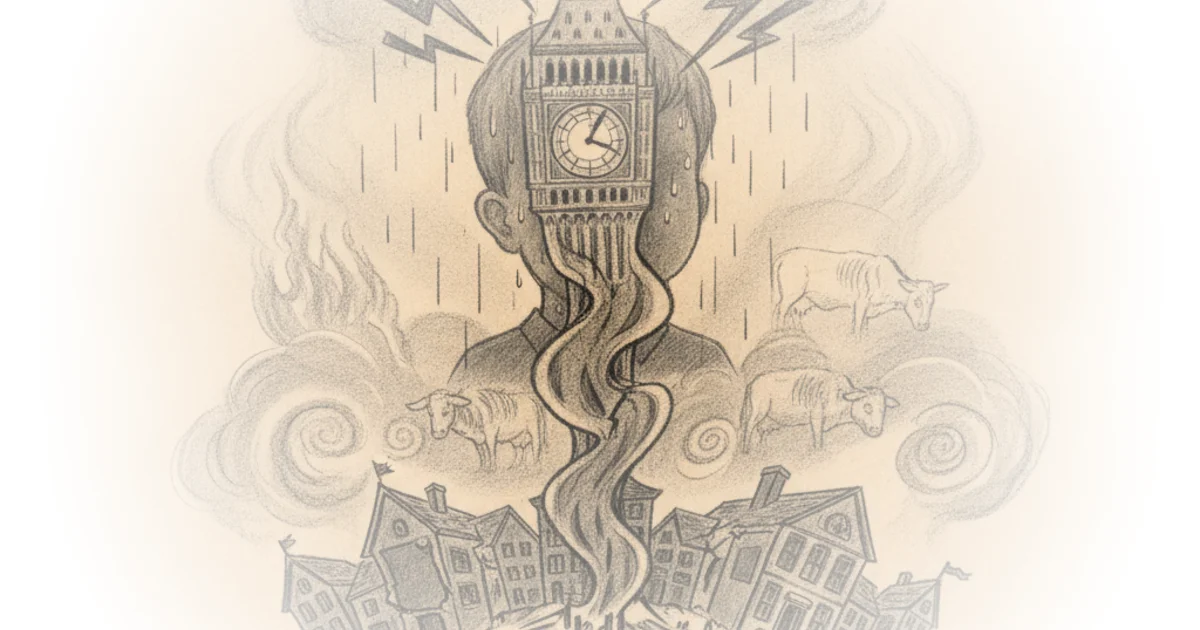
This framing is effective because it strips away the bureaucratic fog to reveal a stark ethical failure. The article notes that official guidance insists attendance is better than missing out, even as the reality on the ground renders learning impossible. Macleod writes, "Regardless of the exact solution, many of the capital's headteachers are conceding that effective teaching will be nearly impossible this week." The evidence he gathers from parents and teachers confirms that schools are devolving into "babysitting" operations, with one teacher noting they expect "loads of kids off."
The human cost of this policy gap is immediate. One parent told Macleod, "Offices have budget for air con; often schools do not," highlighting the class dimension where professional workers retreat to climate-controlled environments while students bake in unventilated buildings. Critics might argue that closing schools disrupts learning more than heat discomfort, but the data cited by Macleod suggests otherwise: sitting an exam on a 32C day carries around a 10% lower likelihood of passing than on a 22C day.
"We just heard our child's secondary school will close from Tuesday midday to Friday: 2.5 days of lost learning and impact on our ability as parents to work."
The Institutional Trap
The commentary deepens when Macleod explores the perverse incentives created by the regulator, Ofsted (the Office for Standards in Education). He points out a catch-22 where headteachers are penalized for keeping students safe. "One problem for headteachers is that if they send children home then it will impact attendance statistics, a key measure for regulator Ofsted," Macleod explains. This creates a scenario where schools might encourage attendance simply to maintain their ratings, even if the environment is dangerous.
The absurdity of trying to maintain "normalcy" in extreme conditions is captured vividly in the anecdote about students told to bring blazers but not wear them. Macleod uses this detail to illustrate the cognitive dissonance required to keep the system running: "Attempts to keep standards high and pretend everything is normal also result in strange outcomes."
Furthermore, the article touches on a critical equity issue regarding where children go when schools close. A parent of a child in a special school noted that while closing was the right decision for safety, home environments are often worse: "Some are in two bed flats with limited ventilation... [the government] definitely needs to focus on helping keep all children at school in a heatwave." This adds a layer of complexity; the solution isn't simply sending kids home, as many London homes lack the insulation or cooling infrastructure that schools might theoretically provide if funded.
Historical context strengthens Macleod's argument about the unprecedented nature of this crisis. He notes that the previous June high was 35.6C in Camden in 1957, a record expected to be smashed multiple times this week. This connects to broader climate trends, echoing findings from deep dives on livestock welfare and climate change effects: as temperatures rise, systems designed for a different era are failing. The British stereotype of freezing classrooms is being replaced by "brutally hot teaching environments," a shift that infrastructure has not kept pace with.
Infrastructure and Economic Ripple Effects
The scope of the failure extends beyond education into the wider city economy. Macleod observes that the heatwave is causing a "momentum heading towards more closures," which will impact London's life and economy as parents are forced to stop working. Even major institutions are faltering; the BBC suggested staff work from home, and the Young V&A museum closed its doors.
The article also draws attention to the irony that modern buildings fare no better than older ones. Macleod cites Kings Place in King's Cross, where the air conditioning system must be shut down above 35C, tormenting journalists inside. This detail underscores a systemic infrastructure failure: "Buildings built in the last couple of decades fare no better."
While the piece briefly touches on other London news—such as Andy Burnham's arrival or the TfL cyberattack—it uses these to reinforce the theme of a city struggling under pressure. The mention of the TfL hack, where data was stolen and chaos ensued, serves as a parallel to the heat crisis: both represent systemic vulnerabilities being exploited by external forces (hackers or climate), leaving the public exposed.
"The intensity of heat on Wednesday is definitely going to feel worse than 40C in 2022. Back then we had very low relative humidity and more of a breeze."
Bottom Line
Macleod's most compelling argument is that the current crisis is not an anomaly but a symptom of a policy vacuum where animal welfare standards exceed child safety protocols. The piece's greatest strength lies in its ability to humanize bureaucratic failure through specific, heartbreaking quotes from parents and teachers. However, it slightly underplays the long-term political will required to retrofit London's school infrastructure, focusing more on the immediate emergency than the decades of neglect that led here. As temperatures continue to break records, the "muddling through" strategy is no longer an option; the city must face the reality that its educational infrastructure is fundamentally unprepared for a warming world.