John Campbell delivers a chilling assessment of a preprint study from China that reports a coronavirus with a 100% fatality rate in mice, raising alarms about the safety protocols surrounding gain-of-function research. While the scientific community often treats preprints with skepticism, Campbell argues that the sheer lethality of the virus described—specifically its ability to cause fatal encephalitis—demands immediate attention from global health security experts. This is not merely a discussion of animal pathology; it is a warning about the potential for a lab-created pathogen to breach containment and target the human nervous system.
The Nature of the Threat
Campbell's central claim rests on the specific mechanism of death observed in the study. He notes that the virus, identified as GX_P2V, did not kill the subjects through the respiratory failure typical of SARS-CoV-2, but rather through a late-stage brain infection. "The death seemed to be caused by late-stage brain infection," Campbell observes, highlighting a shift from pulmonary to neurological devastation. This distinction is critical because it suggests a different, perhaps more insidious, mode of transmission or pathogenicity that could bypass standard respiratory defenses. The author emphasizes the severity of the outcome, stating, "Not a nice way to die at all," a blunt assessment that underscores the horror of a virus that causes encephalitis with total mortality.
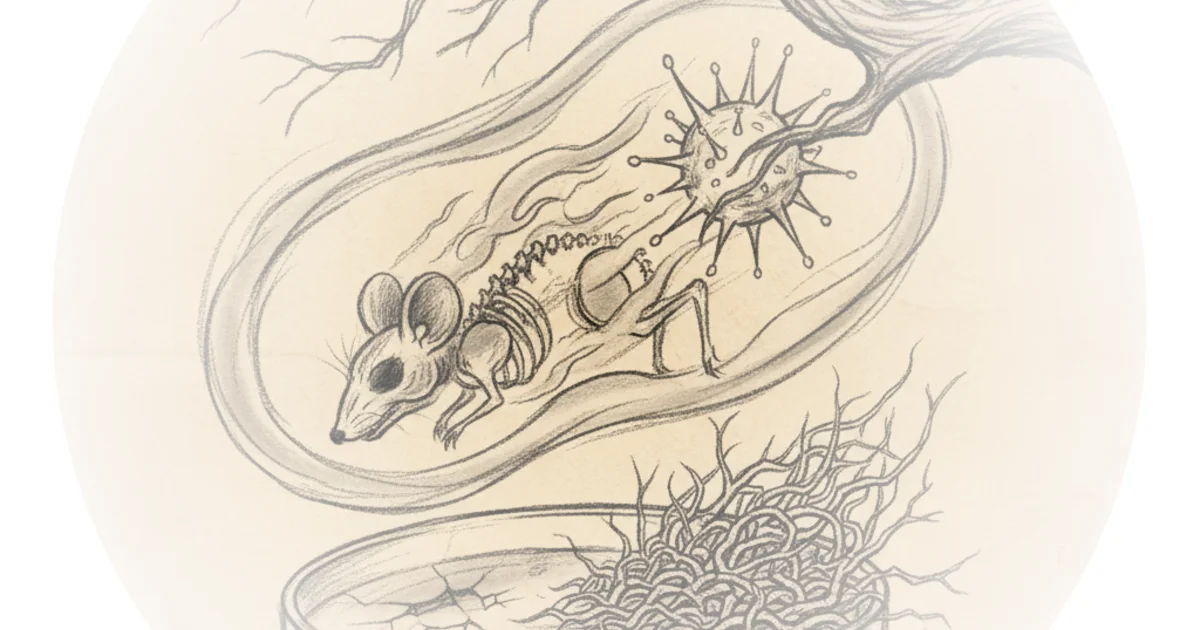
The study utilized transgenic mice engineered with the human ACE2 receptor, the very entry point SARS viruses use to infect human cells. Campbell points out the ethical and safety implications of this methodology: "They're mice that can be experimented on, but they've got human type receptors." By using these humanized models, the researchers effectively created a proxy for human susceptibility. The fact that every single mouse infected died within a week suggests that if this virus were to jump to humans, the consequences could be catastrophic. This aligns with historical concerns regarding genetically modified models; just as early research into genetically modified mice in the 1980s sparked debates about the ethics of creating chimeric organisms, this study revives fears about the unintended consequences of inserting human genes into animal subjects for high-risk virology.
"This is a mutant that had very high pathogenicity... and they thought oh let's make lots more copies of this because then we can study how dangerous is how likely is it to kill people."
The Laboratory Origin and the Arms Race
Perhaps the most provocative element of Campbell's commentary is his assertion that the virus in question is not a natural occurrence but a laboratory artifact. He explains that the virus was isolated from a cell culture where a mutant arose spontaneously, which the researchers then decided to clone and study further. "It is not a wild type virus," Campbell insists. "If you go and look in pangolins you won't find a virus like this." This distinction is vital because it shifts the narrative from natural spillover to laboratory creation. The author argues that the decision to clone a highly lethal mutant found in culture represents a dangerous escalation in virological research.
Campbell frames this within the broader context of a global biological arms race, suggesting that such research is not unique to China but is a widespread practice among major powers. "It's kind of a mutual arms race in a sense, isn't it?" he asks, noting that while most nations keep such work secret, this particular study slipped through the cracks of publication norms. He connects this to the geopolitical landscape, drawing a parallel to nuclear proliferation: "Today a war has been started to prevent Iran getting nuclear weapons. Um these weapons potentially made from viruses are just dangerous and yet this dangerous research is going on and no one really seems to say much about it." This comparison elevates the issue from a scientific curiosity to a matter of existential security.
Critics might argue that Campbell overstates the certainty of the virus's artificial origin, as spontaneous mutations in cell culture are a known phenomenon in virology and do not necessarily imply intent to create a weapon. However, the author's point remains that the decision to amplify and study such a lethal mutant, regardless of its origin, carries inherent risks that the current regulatory framework may not adequately address.
Biosafety and the Risk of Spillover
The commentary concludes with a sharp critique of the biosafety levels at which this research was conducted. Campbell cites concerns from experts like Justin Keaney, who noted that the paper failed to specify the biosafety level, raising the possibility that work on a potential pandemic pathogen was done in a facility with inadequate containment. "Corona virus research in China is often done at biosafety level two that is inadequate for working with potential pandemic pathogens that might be transmitted by air," Campbell reports. This oversight is particularly alarming given the virus's ability to infect the brain, a target that is difficult to treat once infection takes hold.
The author also touches on the specific anatomical vulnerability of the human brain, noting that ACE2 receptors are present in the brain stem, hypothalamus, and other critical areas. "So for sure these ACE receptors are found in the human brain so let's hope experiments haven't been done on people but it is a real risk," he warns. This connects to the broader history of encephalitis research, where the blood-brain barrier has long been a focal point for understanding viral neurotropism. The fact that this virus bypasses the respiratory system to attack the brain directly suggests a level of sophistication that could render current countermeasures ineffective.
"I'd rather not die than know about some obscure aspect of viral pathophysiology."
Bottom Line
John Campbell's analysis succeeds in reframing a technical preprint as a stark warning about the fragility of global biosecurity, effectively highlighting the dangers of amplifying lethal mutants in humanized animal models. While the argument relies heavily on the preprint status of the study and the lack of peer review, the core concern—that a virus with 100% lethality in a humanized model exists and is being studied in potentially under-secured facilities—is a vulnerability that demands rigorous scrutiny from international health agencies. The strongest takeaway is the urgent need to reassess the protocols governing gain-of-function research before a laboratory accident becomes a global catastrophe.