Devin Stone doesn't just debunk a political rumor; he exposes a potential constitutional and geopolitical catastrophe disguised as a real estate transaction. While most commentary focuses on the absurdity of the idea, Stone brings a unique, combat-tested perspective to the legal mechanics of why an American invasion of Greenland would instantly trigger a war with the entire Western world. This isn't just about a failed sales pitch; it is a forensic breakdown of how the United States could legally and militarily isolate itself from its own alliances.
The Anatomy of a Legal Faceplant
Stone opens by dismantling the premise that Greenland is a sovereign nation up for grabs. He clarifies that the island is an integrated territory of the Kingdom of Denmark, a NATO member with a sophisticated military. "Unlike Venezuela, Greenland is not a sovereign nation. It's a territory within the Kingdom of Denmark," Stone writes. This distinction is the foundation of his entire argument: attacking Greenland isn't an intervention; it is an attack on a fellow NATO ally. He leverages his own background to add weight to the threat, noting that Danish special forces are not merely ceremonial but are combat-proven partners he has served alongside in Iraq.
The author then dissects the administration's rhetoric, highlighting the dangerous ambiguity of the threats made. Stone quotes the administration's stance directly: "So, we're going to be doing something with Greenland, either the nice way or the more difficult." He interprets this not as diplomatic posturing but as a gangster-style ultimatum where the "hard way" implies military force and the "easy way" implies coercion under the threat of that force. This framing is effective because it strips away the diplomatic veneer to reveal the raw power dynamics at play. Critics might argue that political rhetoric is often hyperbolic and not a literal declaration of intent, but Stone counters this by pointing to the tangible escalation of threats, including tariff warnings and the deployment of "tripwire forces" by European allies.
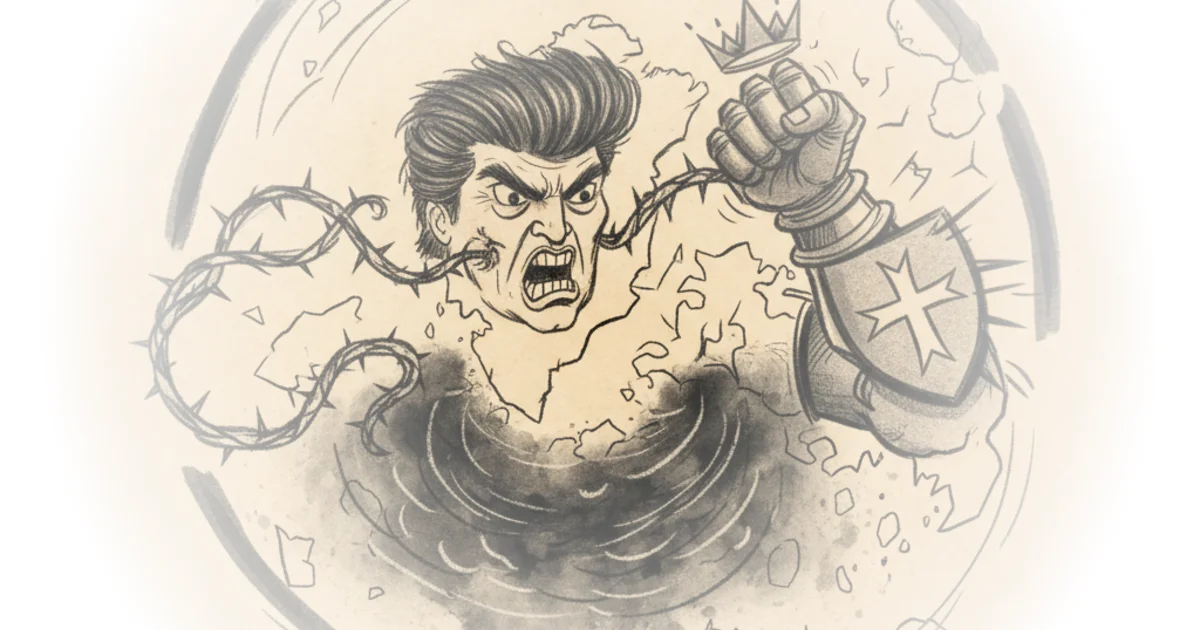
If this creates a mental picture of Uncle Sam repeatedly punching himself in the face, that's kind of right.
The Historical and Legal Reality Check
Stone pivots to the historical record to dismantle the administration's claim that ownership is up for debate because "boats landed there hundreds of years ago." He points out the existence of binding international agreements that explicitly recognize Danish sovereignty. He notes that the United States formally acknowledged Denmark's control in a 1916 declaration and reaffirmed it in the 1951 Defense of Greenland agreement. "Without prejudice to the sovereignty of the Kingdom of Denmark over such defense area, the government of the United States of America shall be entitled to a wide variety of military installations and activities," Stone quotes from the treaty. This is a devastating rebuttal to the idea that the US has any latent claim to the land. The US already has a military base there, but it does so with permission, not ownership.
The commentary also touches on the geopolitical stakes, noting that the melting Arctic ice makes Greenland strategically vital for access between the US, Russia, and China. However, Stone argues that the administration's justification of "national security" is a thin veil for resource capture and expansionism, drawing a parallel to historical precedents of aggression. He writes, "Claiming that you need a piece of territory because you need it has been tried before by Hitler. The term Liebensraum, literally translated to living space, was coined by German geographer Friedrich Ratzel in 1901." By invoking this comparison, Stone elevates the discussion from a policy dispute to a moral and historical warning about the dangers of territorial expansionism.
The Nuclear Option: Article 5 and Beyond
The most critical part of Stone's analysis is his explanation of the mutual defense clauses that would be triggered by an invasion. He details Article 5 of the North Atlantic Treaty, which states that an attack on one member is an attack on all. "If a country is attacked, not only can it legally defend itself, but that country's allies can also jump in to defend it," Stone explains. He goes further to highlight the Treaty on European Union's Article 42(7), which he argues is even stronger, obligating members to provide "aid and assistance by all means in their power." This section is the piece's intellectual heavy lifting, demonstrating that a US attack on Greenland would not be a bilateral conflict but a multilateral war against the United States.
Stone notes that European nations have already begun to prepare for this contingency by sending troops to Greenland for joint exercises, effectively creating a "tripwire force." "Suddenly, it's not just the Danes who have a legal rationale for armed conflict," he observes. This move transforms the theoretical legal obligation into a physical reality on the ground. While some might argue that the political will to fight the US is lacking, Stone's evidence of the EU's willingness to invoke these clauses suggests a level of resolve that the administration may have underestimated. The administration's retreat from the threat of force after the Davos meeting suggests they finally grasped the magnitude of the legal and military trap they had walked into.
Bottom Line
Devin Stone's strongest asset is his ability to translate dense international law into a clear, high-stakes narrative that exposes the self-destructive nature of the proposed invasion. His argument holds up under scrutiny because it relies on unassailable treaty text and historical precedent rather than speculation. The biggest vulnerability in the administration's position, as Stone reveals, is not just the moral outrage it would provoke, but the legal certainty that it would turn the United States' closest allies into its enemies. Readers should watch for how the administration pivots from military threats to economic coercion, as the legal barriers to invasion remain absolute.