Ray Carpenter doesn't just track college football transfers; he treats the transfer portal as a volatile financial market where human capital is traded with the precision of a hedge fund. This piece is notable because it moves beyond the usual "who went where" gossip to propose a rigorous, data-driven taxonomy of roster building, arguing that the era of organic talent development is being replaced by a transactional ecosystem where stability is the ultimate luxury.
The Data-Driven Market Shift
Carpenter frames the current landscape not as a sporting competition, but as an emerging "inter-scholastic 'market' with natural hierarchies across the nation, similar to how the transfer market in soccer works." This comparison is crucial. It suggests that the American college game is shedding its amateur roots to adopt the fluid, globalized labor dynamics of European football, where player movement is the primary engine of team construction.
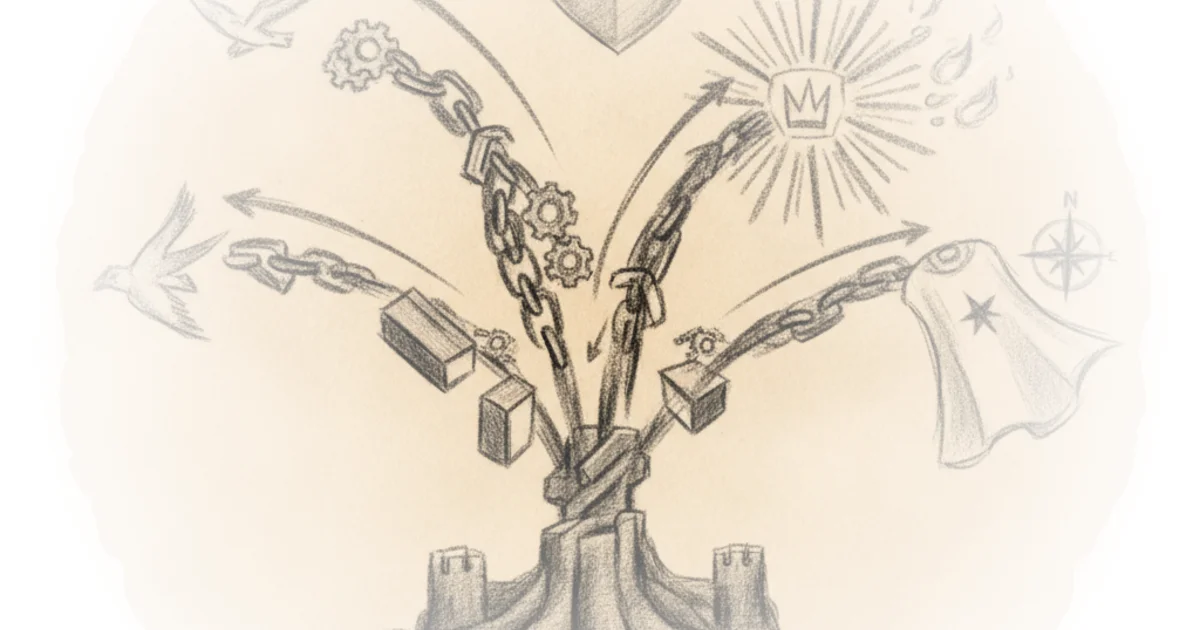
He backs this up with his own proprietary metrics, specifically the Transfer Vulnerability Score (TVS), which he claims "predicted which college football players would transfer with 84% accuracy across 5 seasons of data." By quantifying player movement so precisely, Carpenter implies that roster churn is no longer random noise but a predictable pattern driven by specific incentives. This is a powerful reframing: it turns the chaos of the spring transfer window into a calculable risk factor for athletic directors.
However, the author admits that the financial reality remains opaque. He notes, "I'll never know exactly how much money gets passed in the dark rooms of Chevrolet dealerships across the country to high school and college football players," yet he argues that "more transparency is on its way." This tension between the hidden cash economy and the push for standardized data is the central friction of the modern game. Critics might argue that no amount of data modeling can fully capture the human element of a player's decision, which often hinges on family or personal fit rather than pure market value.
The Four Archetypes of Roster Building
The core of Carpenter's analysis is his classification of teams into four distinct strategies, using real estate metaphors to make the abstract concrete. He identifies "The Movers" as coaches who bring their own personnel with them, citing examples like Matt Campbell moving from Iowa State to Penn State with 23 players. Carpenter writes, "It's a high risk, high reward situation," noting that this strategy is "entirely dependent on your head coaching abilities."
This categorization is effective because it highlights the growing power of the head coach as a franchise player. The coach is no longer just a tactician but a talent acquisition officer. Carpenter points out that "being a successful mover is entirely dependent on your head coaching abilities," suggesting that the gap between good and great programs is widening based on leadership stability.
In contrast, he describes "The Renovators"—traditional blue bloods like Ohio State and Georgia—as teams that "would still rather recruit their own players, but aren't afraid to dive into the transfer portal with deep booster wallets to round out a great roster." These programs occupy a unique position: "They are the only class of team given the privilege of being proactive in their player search."
This distinction is vital. It reveals a two-tier system where elite programs can afford to be selective, while others are forced to react. Carpenter's observation that "Renovators are in a luxury position" underscores a stark inequality in the sport. While the "Movers" gamble on a coach's vision, the "Renovators" leverage their brand equity to cherry-pick the best available talent, regardless of where they came from.
Everyone wants to be a renovator, but only the big names get the privilege of running their rosters like boutique firms.
Carpenter also identifies "The Flippers," teams with "short-term focused rosters" where both players and coaches are transient. He uses North Texas as a case study, noting they "replaced Morris with Neal Brown, and they've chosen to patch their roster holes with almost nothing but transfers." This strategy acknowledges a harsh reality: for some programs, the goal is immediate competitiveness, not long-term building.
Finally, he discusses "The Homesteaders," teams that "scorned at the new ways to build a college football roster" and focus on retention. Carpenter questions whether these are "a program that just hasn't embraced the new landscape yet, or one that believes they're outlasting it through astute decision making." This is the most speculative group, and it raises a critical question: Is the "Homesteader" strategy a principled stand or a denial of reality?
The Limits of Prediction and the Human Element
Despite the heavy reliance on algorithms, Carpenter is candid about the limitations of his models. He discusses the "Jake Butt Problem," where geographic proximity failed to predict a player's destination. He admits, "I thought that players from specific areas would be hesitant to attend specific universities based on where they grew up," but notes that "the hometown effect has been fading."
This admission is refreshing. It shows that while data can predict trends, it cannot fully account for individual agency. Carpenter's model struggles with the "entourage era," where players follow coaches rather than schools, a dynamic he claims to have helped identify a year ago. He writes, "I can confidently say that I was the beginning of the 'entourage era' discourse in college football," highlighting how the coaching staff has become the primary draw for talent.
The article also touches on the legal fragility of Name, Image, and Likeness (NIL) deals. Carpenter points out that "these contracts just aren't enforceable," citing the case of Darian Mensah, who "wiggled out of a 2 year deal at Duke after one season." This lack of enforceability creates a volatile market where loyalty is cheap and movement is cheap. It mirrors the instability seen in other professional leagues, though the stakes are different. For instance, the NFL's collective bargaining agreement has established a more rigid framework for player movement, whereas college football remains in a "wild west" phase where rules are constantly evolving.
The Future of the Game
Carpenter concludes by introducing the Portal Power Index (PPI), a metric designed to "rank each FBS program by transfer talent added." He notes that the top of the list is dominated by "renovators" and "movers," suggesting that the future belongs to those who can navigate the portal effectively. He observes that "the top 20 are spread across the four strategies for roster building," but the "renovators" hold the advantage of stability.
The piece ends with a focus on specific breakout stars, using his data to identify undervalued players like GianCarlo Rufo. Carpenter predicts Rufo will have a "triple digit tackle season," betting on the data over the conventional wisdom. This reinforces his central thesis: in a data-driven world, the best insights come from the numbers, not the headlines.
Critics might argue that this hyper-focus on the portal undermines the developmental aspect of college sports, turning it into a minor league system for the NFL. However, Carpenter's analysis suggests that this shift is inevitable. The "four ways to build a college football team" are not just options; they are the only viable paths forward in a landscape where the transfer portal has become the dominant force.
The future is bright in South Bend, even with their 15 departures to other schools.
Bottom Line
Carpenter's strongest argument is that the transfer portal has fundamentally altered the power dynamics of college football, creating a market where coaching stability and financial resources dictate success more than traditional recruiting. The piece's biggest vulnerability is its reliance on data that may not fully capture the emotional and personal factors driving player decisions, but it successfully frames the sport as a complex economic system rather than a simple athletic contest. Readers should watch how the "Renovator" strategy evolves as more programs attempt to mimic the blue bloods, and whether the "Homesteader" approach can survive in an increasingly transactional era.