Mona Mona challenges a fundamental assumption of modern life: that the misery of work is an inevitable personal failing rather than a political structure. By reframing labor through the lens of subjugation and subjectification, the author offers a rare, structural diagnosis for the exhaustion that plagues the global workforce. This is not just another complaint about burnout; it is a call to re-politicize the very nature of employment.
The Politics of Private Choice
Mona Mona begins by dismantling the idea that our relationship with labor is a matter of individual preference. "In previous parts of this series, we saw how work is depoliticized by being relegated to the private realm of individual choice," they write. This framing is crucial because it shifts the blame from the worker's resilience to the system's design. The author argues that treating work as a private contract obscures the power dynamics at play, much like early feminists had to fight to see the family as a political institution.
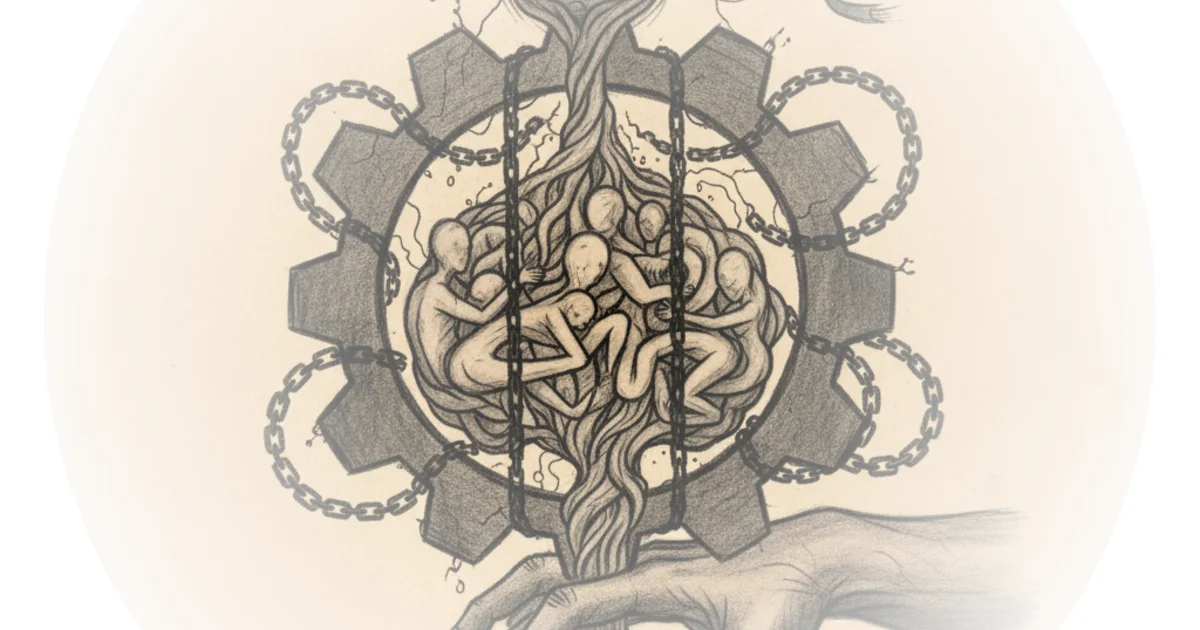
The core of the argument rests on the distinction between being forced to work and being made into a specific kind of subject. Mona Mona writes, "Working to re-politicize work, much like feminists politicized the family and marriage, gives us some purchase on work as well." This analogy is powerful; it suggests that just as domestic labor was once invisible to economic theory, the psychological toll of modern employment is being ignored by design. By making work a political question, we stop asking "Why can't I handle this?" and start asking "Why is this structured to break me?"
Critics might note that this structural approach risks overshadowing the genuine agency workers have in negotiating their careers. However, the author's point is that agency is often an illusion when the baseline conditions are so hostile. The piece effectively highlights how the narrative of "choice" serves to protect the status quo.
We begin to see the subjugation and domination in work arrangements, situations that are often masked by the language of opportunity.
From Subjugation to Subjectification
Moving deeper into the analysis, Mona Mona explores how work doesn't just extract labor; it shapes identity. The author distinguishes between simple subjugation—being forced to do things—and subjectification, where the worker internalizes the demands of the employer as their own desires. "We begin to see the subjugation and domination in work arrangements, situations," Mona Mona notes, implying that the most effective control is the one we enforce on ourselves.
This is where the argument becomes most distinct from standard labor commentary. It is not merely about wages or hours, but about the colonization of the self. The author suggests that modern management techniques are designed to blur the line between who we are and what we produce. "Much like feminists politicized the family and marriage, gives us some purchase on work as well," the text argues, emphasizing that reclaiming the political nature of work is the only way to reclaim the self from the employer's grasp.
The reasoning here is sound but demanding. It requires the reader to accept that their internal drive to "be good at their job" might actually be a form of domination. This is a heavy pill to swallow, but it explains why so many people feel exhausted even when they are not technically overworked. The system works best when we believe the grind is a reflection of our own values.
Critics might argue that this view is overly deterministic, ignoring the genuine fulfillment some find in meaningful work. Yet, Mona Mona's point is that even in "good" jobs, the structural pressure to conform remains. The piece forces us to question whether our satisfaction is authentic or manufactured by the very system that exploits us.
The Cost of Depoliticization
The final thrust of the commentary is the consequence of keeping work in the "private realm." When we fail to see the political nature of labor, we lose the ability to organize against its worst excesses. Mona Mona writes, "We begin to see the subjugation and domination in work arrangements," a phrase that serves as a warning: without political awareness, domination is inevitable.
The author's choice to use the term "subjectification" is particularly sharp. It moves the conversation beyond simple oppression to a more insidious form of control where the worker becomes the agent of their own subjugation. This is the hidden cost of the "hustle culture" narrative. By framing work as a personal project of self-actualization, the administration of labor becomes invisible, and the resistance to it becomes impossible.
The most effective domination is not the one that chains your hands, but the one that convinces your mind that the chains are wings.
This observation cuts to the heart of why current labor movements struggle. If workers believe their suffering is a personal failure or a necessary step toward self-improvement, they will not unite. Mona Mona's analysis suggests that the first step toward change is not a new policy, but a new story—one that admits work is a site of political conflict, not just economic exchange.
Bottom Line
Mona Mona's strongest move is reframing workplace exhaustion not as a mental health crisis, but as a political failure of depoliticization. The argument's biggest vulnerability is its abstract nature, which may feel distant to readers drowning in immediate survival needs. However, the piece successfully identifies the root cause of modern labor alienation: the refusal to see work as a collective, political struggle. Watch for how this framing influences the next generation of labor organizing, as it shifts the goal from better conditions to a fundamental redefinition of the worker's identity.