Matt Bell doesn't just recount a hiking trip; he constructs a rigorous argument for embodied research, asserting that the physical act of walking through a landscape is the only way to truly unlock the inner life of a novel. In an era where information is often consumed in fragmented, digital bursts, Bell offers a counter-intuitive case study: that radical deprivation of distraction is the most productive tool a writer can wield. This isn't a travelogue about scenic views; it is a field report on the mechanics of creativity under pressure.
The Architecture of Preparation
Bell's central thesis begins before the first step is taken. He argues that the value of travel is not in the novelty of the experience, but in the depth of the preparation that allows one to recognize the significance of what is seen. He writes, "Having grown up a studious, devoted Catholic—and having just refreshed myself on a good amount of early Christian history and art—I was often able to recognize the symbols or retell the stories embedded in the Christian sites, art, and architecture I came across." This is a crucial distinction for any creative professional: the field does not teach you what you don't already know how to look for.
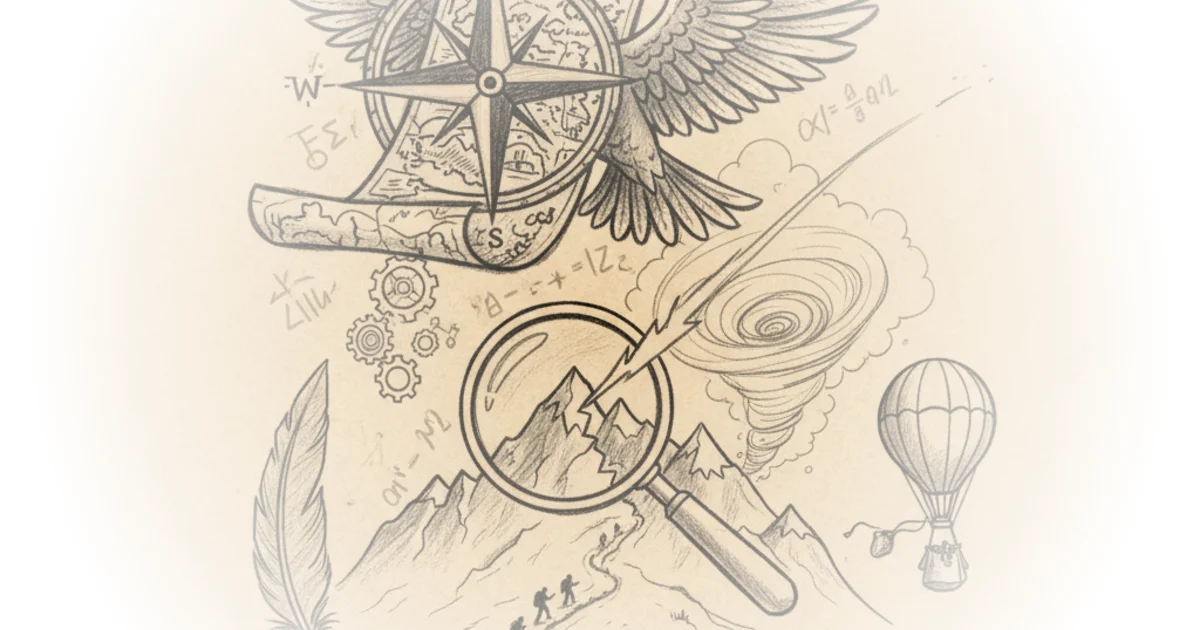
He details a pre-trip regimen that included reading the 12th-century Codex Calixtinus and modern memoirs, a strategy that transformed his walk from a simple hike into a layered dialogue with history. As Bell puts it, "The research had prepared me well to figure out who was who and to make educated guesses about the meaning of various arrangements." The effectiveness of this approach lies in its ability to turn passive observation into active interpretation. When he wandered the Cathedral de Lugo, he wasn't just seeing statues; he was "unpacking stories and symbols that I might not have been able to decipher even a month earlier."
Critics might argue that this level of preparation risks turning a journey into a mere verification of existing knowledge, potentially blinding the traveler to the unexpected. However, Bell suggests the opposite: that deep knowledge creates the cognitive space for the unexpected to land with greater impact.
"Much of what I saw was interesting enough on its own, offering some small intellectual or aesthetic reward for having done the work—but some of it was revelatory, directly feeding my new conception of the book I'm writing."
The Radical Surgery of Attention
Perhaps the most striking element of Bell's report is his description of the digital detox he undertook. He didn't just reduce screen time; he performed "radical surgery on my iPhone's long-settled home screen," deleting social media and streaming apps entirely. He writes, "During my 21 days of trekking, I never logged into social media or any of my other feeds; I read only the headlines of the NYT once a day... I listened to no music, no audiobooks, no podcasts, did not put my earbuds in while on the trail."
This section serves as a potent critique of the modern attention economy. Bell observes that without these digital crutches, his mind underwent a profound shift. "Without exaggeration, I can honestly say my generally busy brain had never before been so empty, at least since the advent of the internet and the cell phone." The argument here is that boredom and silence are not enemies of productivity, but its prerequisites. By removing the constant stream of external input, he created a vacuum that his own thoughts rushed to fill.
The result was a heightened state of awareness where the boundary between the writer and the work dissolved. "With nothing else to distract me, my book remained close, sometimes even seeming to look out from behind my eyes: it knew better than I what it wanted to see, what it needed to look at, and I did my best to carry it wherever it wanted to go." This suggests that the creative process is not always about forcing ideas out, but about clearing the channel to let them in.
The Alchemy of Place and Text
Bell extends his methodology to the books he read while on the trail, advocating for the practice of reading a story in the very location where it takes place. He describes reading James Salter's Solo Faces while standing in Chamonix, the setting of the novel. "A good book should probably be good wherever it's read. But there really is something great about reading a good tale in its own setting, with the same sights and sounds and smells surrounding you that surround the protagonist, bonding you together in the senses as well as story."
This sensory overlap creates a unique feedback loop. When he recognized the peak of the Dru from the book while looking at the actual mountain, he pulled up his ebook and read aloud to the landscape. The experience was not just literary; it was physical and immediate. "His ambitions had been ordinary, but after the Dru it was different. A great, an indestructible happiness filled him. He had found his life." By quoting Salter, Bell underscores the transformative power of aligning one's physical journey with a narrative arc.
However, this approach requires a level of discipline that many modern travelers lack. The temptation to document the experience for an audience rather than live it for oneself is a constant threat. Bell's success relied on his refusal to let the camera or the phone mediate the moment.
"I never assumed a good thing would come around again. After all, everything about the particular place and time that prompted it was already falling behind me, step by step, and who's to say if I'll ever pass that way again?"
The Discipline of Capture
The final pillar of Bell's argument concerns the logistics of memory. He acknowledges that the mind is fallible and that ideas are fleeting. "I did my best to get this journaling done every day, and to never hurry the task. I knew so much new stuff would happen every day that it would be impossible to remember it all without aid." He utilized a dual system: a physical journal for daily reflection and a digital notes app for immediate capture of novel ideas.
This practical advice bridges the gap between the romantic notion of the wandering writer and the hard work of the craft. He notes that "once written down they can be reread—and the reading can prompt new ideas. It's harder for two ideas to build on each other in the mind, or at least in my mind." The physical act of recording is presented not as a chore, but as the mechanism that allows the creative work to compound over time.
Bottom Line
Matt Bell's field report succeeds because it reframes travel not as an escape from work, but as the most intense form of work possible. His strongest argument is that true creativity requires the removal of the noise that usually drowns it out, a lesson that applies far beyond the pages of a novel. The piece's only vulnerability is its reliance on a specific, privileged capacity to disconnect from the world entirely—a luxury not every writer or professional can afford. Yet, the core insight remains undeniable: to see the world clearly, one must first stop looking at the screen.