Erik Hoel transforms the mundane into the mythic, arguing that parenthood forces a radical re-examination of reality's "lore," revealing that the most profound truths about class, time, and biology are hidden in plain sight within a Walmart aisle or a backyard swarm. This piece is not merely a parenting essay; it is a philosophical excavation that uses the lens of a new father to dismantle our assumptions about where humanity is most visible and how life itself operates as a brutal, mathematical calculation.
The Cathedral of the Lower Class
Hoel begins by confronting the shame often associated with big-box retail, flipping the script on class perception with startling clarity. He recalls his teenage self viewing Walmart as a compression of "all human misery," a place where he recoiled from the suffering of others in a wave of "self-righteous pity." This framing is powerful because it exposes the cruelty inherent in looking down on those struggling to survive. Hoel writes, "I would leave Walmart wondering: Why is everyone living their lives half-awake? Why am I the only one who wants something more?" He admits this was a "pity almost cruel," a realization that only comes with the humility of becoming a parent.
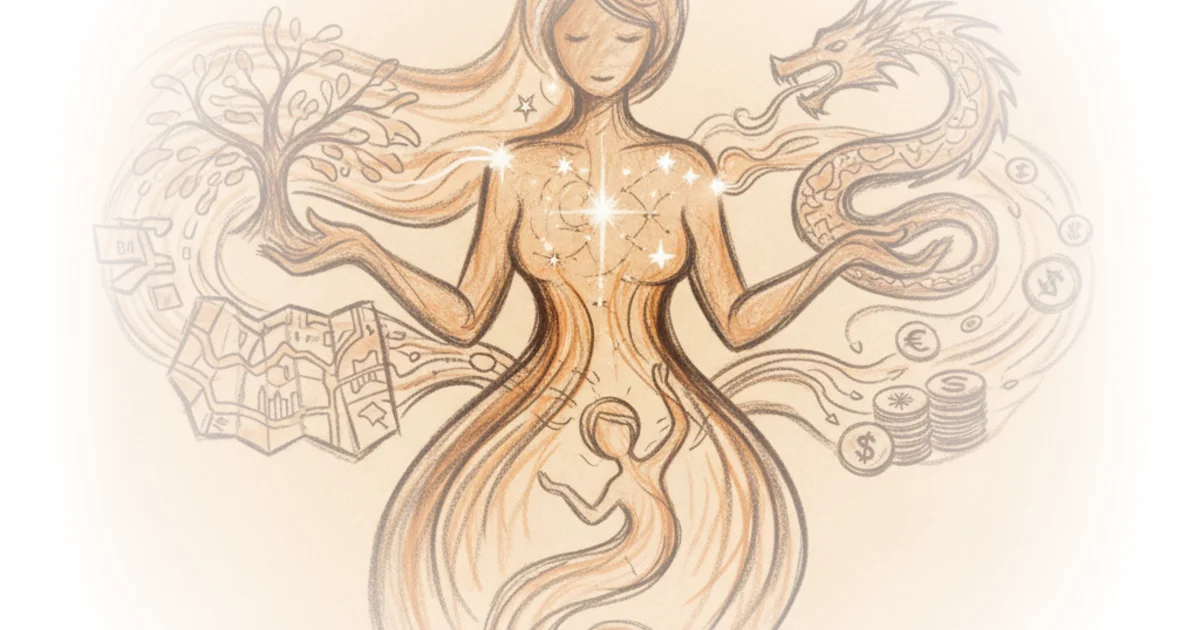
The author's central thesis here is that visibility is inversely proportional to wealth. In upscale environments, children become ghosts, ignored by the affluent. But in the aisles of Walmart, they are seen, greeted, and engaged with. As Erik Hoel puts it, "Your visibility, it appears, is inversely proportional to the price tags on the clothes worn around you. Which, by the logical force of modus ponens, means you are most visible at, your very existence most registered at, of all places, Walmart." This observation reframes the store from a symbol of failure to a "cathedral" of human connection. Critics might argue that this romanticizes the economic desperation that drives people to such stores, but Hoel's focus is on the social texture of the space, not its economic structure. He effectively argues that the "lower class" space is where the raw, unfiltered reality of human interaction still thrives.
"In comparison, I've noticed that at stores more canonically 'upper class,' you kids turn invisible. No one laughs at your antics. No one shouts hello."
The Mathematics of Survival
Shifting from the social to the biological, Hoel tackles the emergence of Cicada Brood XIV, describing them not just as insects, but as an "embodied temporal calculation." He details their seventeen-year cycle, noting that the number is prime to prevent predators from syncing their life cycles with the swarm. This is not random chaos; it is evolutionary strategy. Hoel describes the scene with visceral intensity: "The birds here are becoming comically fat, with potbellies; in their lucky bounty, they've developed into gourmands who only eat the heads." The imagery is grotesque yet fascinating, highlighting the sheer biomass of the event.
The author's most striking contribution is the concept of "bio-numeracy." He argues that while individual cicadas are "life removed from consciousness," the swarm acts as a collective mathematician. "Individual cicadas are too dumb to have developed such a smart tactic, so it is evolution who is the mathematician here," Hoel writes. This perspective shifts the focus from the individual organism to the systemic logic of nature. The piece suggests that evolution is a form of math that must be paid for in lives. "Unlike we humans, who can manipulate numbers abstractly, without mortal danger, evolution must always add, subtract, multiply, and divide, solely with lives." This is a sobering reminder that the elegance of nature often rests on a foundation of mass death.
The cicadas also serve as a terrifying clock for the family. The swarm forces a confrontation with the future, making the abstract concrete. Hoel notes the emotional toll this takes on his partner, who realizes that when the cicadas return, their children will be adults and the grandparents may be gone. The author writes, "Against our will the Bourbon Brood has scheduled something in our calendar, 17 years out, shifting the future from abstract to concrete." This is a profound observation on how nature imposes its own timeline on human life, indifferent to our plans. A counterargument might be that this view is overly deterministic, ignoring human agency in shaping the future, but the emotional weight of the cicada's return as a marker of mortality is undeniable.
"In this, the cicada may be, as far as we know, the most horrific way to do math in the entire universe."
The Biology of Will
The final section turns inward, examining the "stubbornness" of his child as a manifestation of the fundamental biological drive for selection. Hoel rejects the idea that this behavior is a result of lenient parenting, instead tracing it back to the very moment of conception. He describes the race of sperm as a "mortal race in all ways," where the female body acts as a gatekeeper, destroying the weak and selecting the fit. "First, from the perspective of the sperm, they are entered into a win-or-die race inside an acidic maze with three hundred million competitors," he explains.
This biological framing elevates the child's stubbornness from a behavioral quirk to an evolutionary imperative. The child's will to bend the world to their purpose is a continuation of the selection process that created them. Hoel writes, "Whatever human will is, you possess it in spades. You want the world to be a certain way, and you'll do everything in your power to make it so." He connects this to the immune system's "clonal selection" and the ovarian "tournament" of follicles, painting a picture of life as a constant, fierce struggle for existence. The argument is that this willfulness is not a flaw, but a feature of being alive. "I believe your willfulness comes from loving the world so much, and wanting to, like all creatures vital with life force, act in it, and so bend it to your purposes."
Critics might find the leap from cellular selection to human personality a bit of a stretch, potentially oversimplifying the complex interplay of genetics and environment. However, Hoel's metaphor serves to reframe the frustration of parenting as a recognition of the primal life force within the child. He suggests that the child's "stubbornness" is actually a sign of their vitality and their deep engagement with reality.
"You're stubborn in wanting the laws of physics to work the way you personally think they should."
Bottom Line
Erik Hoel's piece succeeds by weaving together the mundane, the biological, and the philosophical into a cohesive narrative about the nature of reality and our place within it. The strongest part of the argument is the reframing of "lower class" spaces as sites of genuine human visibility and the concept of evolution as a form of brutal mathematics. The biggest vulnerability lies in the occasional tendency to romanticize biological struggle, potentially glossing over the randomness and suffering inherent in nature. Readers should watch for how this perspective on selection and will might reshape their own understanding of human behavior and the passage of time.