In a cultural landscape where legal dramas often prioritize spectacle over substance, Devin Stone of LegalEagle dissects the absurdity of the "Chewbacca defense" not just as a pop culture meme, but as a mirror reflecting real-world failures in copyright litigation and courtroom procedure. Stone argues that while the South Park episode is a brilliant satire, its portrayal of a civil trial collapsing into nonsense reveals uncomfortable truths about how juries are swayed by confusion rather than evidence, a phenomenon that extends far beyond the animated screen.
The Mechanics of a Preemptive Strike
Stone begins by grounding the episode's premise in actual legal theory, explaining that the record company's decision to sue the songwriter, Chef, is not merely a cartoonish plot device but a plausible legal maneuver known as "declaratory relief." He notes, "there's something called declaratory relief that allows someone that once a controversy has occurred to then go to court... effectively the plaintiff really what they're doing is saying I'm worried that this other person is going to sue me." This reframing is crucial; it shifts the narrative from a simple case of theft to a complex strategic move where the accused becomes the defendant. Stone's analysis here is sharp, correctly identifying that the legal system often allows powerful entities to seize the initiative to define the terms of the dispute before the victim can even speak.
However, the commentary quickly pivots to the substantive issue of copyright infringement, where Stone expresses skepticism about recent real-world verdicts. He writes, "I actually don't think that that Alanis Morissette stinky britches song sounds like the one that chef sang earlier on in this episode of course we've seen in the news recently that there have been some major copyright infringement actions between songs that I don't think sound anything like each other." Stone draws a direct line between the cartoon's absurdity and the contentious "Blurred Lines" and "Dark Horse" lawsuits, suggesting that juries are increasingly penalizing defendants based on vague similarities rather than concrete copying. This is a bold stance that challenges the prevailing legal consensus, though critics might argue that copyright law protects the "feel" of a composition, not just the notes, making Stone's dismissal of those verdicts potentially too reductive.
If you had a very strong case and you really thought that the two songs sounded identical to each other there's no reason that your closing argument needs to be particularly fancy you could just play them back-to-back or next to each other and that might be very persuasive evidence.
The Theater of the OJ Simpson Trial
The core of Stone's critique targets the trial's procedural shortcuts and the introduction of the famous "Chewbacca defense." He points out the unrealistic timeline, noting, "there is no discovery this kind of trial would take conservatively two years to get to trial if it even got to trial." Stone effectively dismantles the episode's pacing, explaining that the vast majority of cases settle or are dismissed long before reaching a jury. By highlighting this, he underscores how South Park compresses the legal process to get to the punchline, inadvertently exposing how little the public actually understands about the grind of litigation.
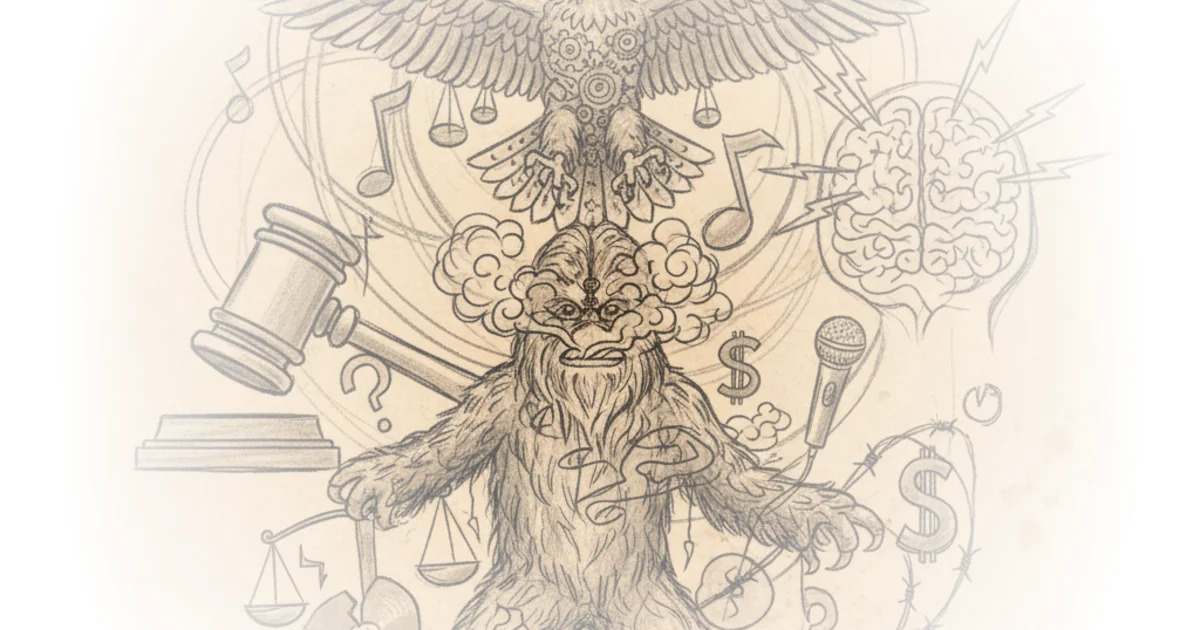
Stone then dissects the parody of Johnnie Cochran, linking the fictional lawyer's nonsensical argument about a Wookiee living on the wrong planet to the real-life "if it doesn't fit, you must acquit" mantra. He observes, "the defense made a huge deal out of this in the closing argument and people make fun of Johnnie Cochran for this childish saying... but the thing is it sticks with you even now 20 years later." Stone's insight here is that the power of such defenses lies not in their logic, but in their memorability and their ability to create doubt where none logically exists. He argues that the defense works by overwhelming the jury with confusion, a tactic that is as effective in fiction as it is in reality when the facts are murky.
The Absurdity of Civil Penalties
As the episode reaches its climax, Stone identifies the most egregious legal errors in the verdict itself. The judge in the cartoon sentences Chef to jail and orders a massive fine, a move Stone flags as legally impossible in a civil context. "You can't find someone guilty in a civil case," Stone writes, "you can't sentence someone to go to jail in a civil case." He further explains that even if a judgment were valid, the threat of an eight-million-year prison sentence is pure fiction, and the immediate seizure of property without a writ of attachment ignores the due process required to enforce a debt.
Stone's breakdown of these errors serves a dual purpose: it educates the audience on the difference between criminal and civil law, and it critiques the show's willingness to sacrifice accuracy for comedic effect. He notes, "if there was a judgment for two million dollars against some poor individual who's just a chef at a local school they're not gonna be able to pay that so they effectively be judgment proof and they just file for bankruptcy." This practical reality check grounds the satire, reminding readers that while the cartoon is funny, the real-world consequences of such legal overreach are often financial ruin rather than cartoonish imprisonment.
Bottom Line
Devin Stone's commentary succeeds by treating a comedic sketch with the seriousness of a law review article, revealing how South Park inadvertently highlights the fragility of the legal system when faced with confusion and spectacle. While his dismissal of certain copyright verdicts invites debate, his analysis of the "Chewbacca defense" as a tool of obfuscation rather than argument remains a powerful critique of modern litigation tactics. The strongest takeaway is that in both fiction and reality, the side that best controls the narrative—regardless of its logic—often wins the day.