Tim Mak does not merely report on a logistical failure in Ukraine; he exposes a profound cultural rupture forced by the sheer scale of death. While most coverage fixates on frontlines and artillery, this piece reveals a silent crisis where the very ground is running out, forcing a nation to rethink how it honors the dead. The most startling claim here is not the death toll, but the statistical inversion: a country where traditional burial was the norm has seen cremation rates jump from 8 percent to nearly 80 percent in just a few years.
The Arithmetic of Grief
Mak anchors this statistical shift in the visceral experience of Dmytro, a soldier whose brother, Yevhen, was killed in the 2022 evacuation of Mariupol. The author writes, "The hardest thing is to imagine that his body was there the whole time, in a refrigerator, alone. That's what I hate the most." This quote is devastating not for its volume, but for its quiet specificity; it captures the unique horror of modern attrition warfare where the dead are not immediately claimed but stored, decaying in limbo.
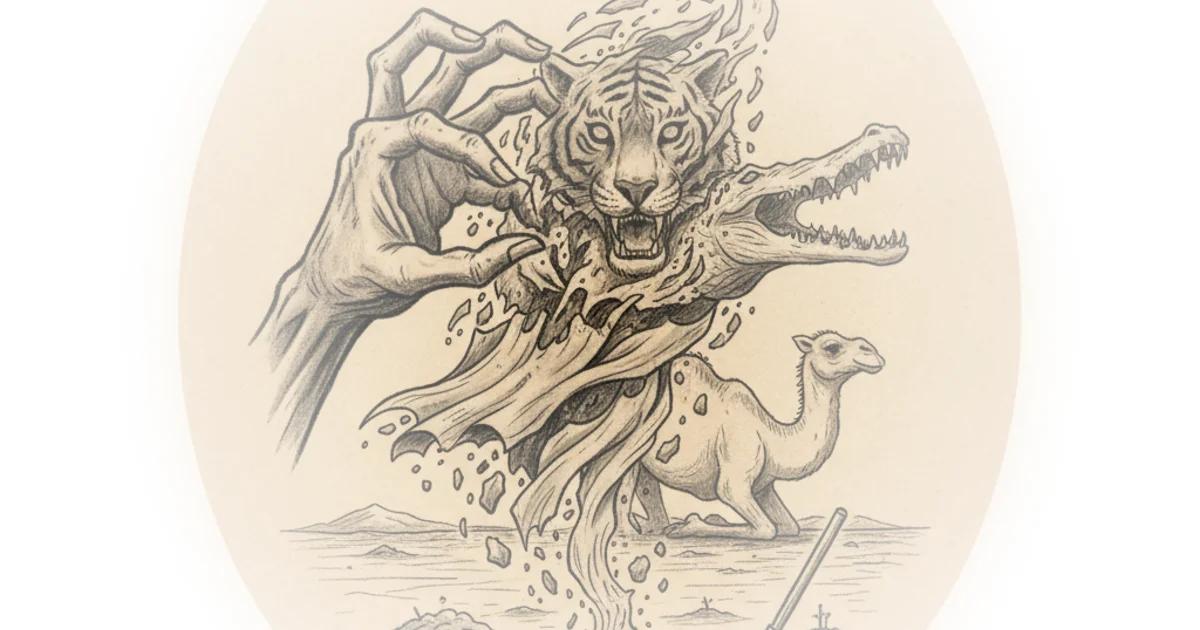
The narrative illustrates how the war has stripped families of the agency to choose. Dmytro's decision to cremate his brother was not a spiritual evolution but a necessity born of time and decay. "By the time I came to identify it, it wasn't really his body, it was more… a pile of nothing… a pile of dirt," Mak reports. This framing is effective because it removes the theological debate from the center of the story and places the physical reality of the morgue front and center. The war has made the traditional rites of earth burial impossible for many, turning a sacred choice into a grim calculation of logistics.
By the time I came to identify it, it wasn't really his body, it was more… a pile of nothing… a pile of dirt.
The author contrasts this with the historical weight of Ukrainian burial traditions, noting that space in cemeteries was already strained before the full-scale invasion. The situation has deteriorated to the point where Lviv's famous Lychakiv Military Cemetery, a site of deep historical resonance dating back to the 18th century, reportedly had only 20 plots left last month. In 2023, the cemetery was forced to exhume bodies from previous conflicts to make room for the new dead. Mak uses this historical context to show that the current crisis is not just a spike in numbers, but a systemic collapse of the infrastructure of memory.
The Economics of Ashes
Beyond the emotional toll, Mak highlights the stark economic disparity driving this shift. A traditional burial can cost up to $3,500, while cremation costs around $85. For families already devastated by loss, this financial reality is a decisive factor. The author notes that for some, the decision was also driven by the fear of occupation. "I wouldn't want my brother's body to be left again on the frontline or in occupied territory," Dmytro says, his voice growing heavy. "He's not at home...when you can be buried on your own territory… where your people are, there is no problem."
This argument underscores a terrifying reality: the safety of the grave is now as precarious as the safety of the living. The administration's recent legislation to fund the reburial of 500 identified soldiers is a necessary step, but Mak points out that the process is often too slow and expensive for frontline communities like Pokrovsk, where the threat of occupation looms large. Critics might note that focusing on cremation as a solution risks erasing the physical markers of sacrifice that have historically defined national memory. However, Mak's reporting suggests that in a war of this duration and brutality, the priority is simply ensuring the dead are not lost to the earth or the enemy.
A Nation in Transition
The piece also navigates the religious friction this shift causes. Priest Zaharii Zaliznyi of the Orthodox Church of Ukraine explains that while some fear cremation prevents resurrection, there is no official biblical ruling against it. Mak weaves in the personal story of Yevhen, who was interested in Scandinavian mythology and had tattoos of gods, to show how the war has already fractured traditional religious adherence among the fallen. The author writes, "Yevhen helped everybody, which is no small feat since he had a lot of friends," highlighting that the soldier's identity transcended the ritual of his death.
The infrastructure gap remains a critical vulnerability. Ukraine has only three functioning crematoriums, compared to 52 in Poland and 300 in the United Kingdom. "Without a local crematorium in Lviv, bodies have to be transported 600-900 kilometers to be cremated," says Maksym Putrya, Director of Lviv's Municipal Ceremonial Service. This logistical bottleneck means that even the shift to cremation is not a panacea, but a desperate adaptation to a failing system.
Bottom Line
Tim Mak's strongest contribution is his refusal to let the burial crisis remain a footnote to the military narrative; he proves that the war's endgame is being written in the morgues and columbariums of Kyiv and Lviv. The piece's greatest vulnerability is the sheer hopelessness of the situation it describes, offering no clear path forward other than the grim efficiency of ash. Readers should watch for how the Ukrainian government balances the urgent need for cremation capacity with the deep cultural and religious resistance to abandoning traditional burial, a tension that will define the nation's post-war identity.