In a landscape saturated with climate doom-scrolling and AI panic, Andreas Matthias offers a rare philosophical pivot: not whether we will go extinct, but whether we should. This piece dissects Todd May's provocative new book by asking the uncomfortable question of whether humanity's departure might be an act of ecological mercy rather than a tragedy. For the busy mind seeking substance over noise, this is a chance to confront the most radical ethical dilemma of our time without the usual political posturing.
The Case for a Quiet Exit
Matthias frames the discussion around Todd May's central thesis: that human existence carries a moral debt so heavy it might outweigh any potential future good. He writes, "Humans are the only species that can both cause and contemplate their own extinction," highlighting our unique position as both architects of destruction and philosophers of its necessity. The author notes that while natural catastrophes like comets or pandemics remain threats, the focus here is on self-imposed demise—specifically, scenarios where we vanish without taking the rest of the biosphere down with us.
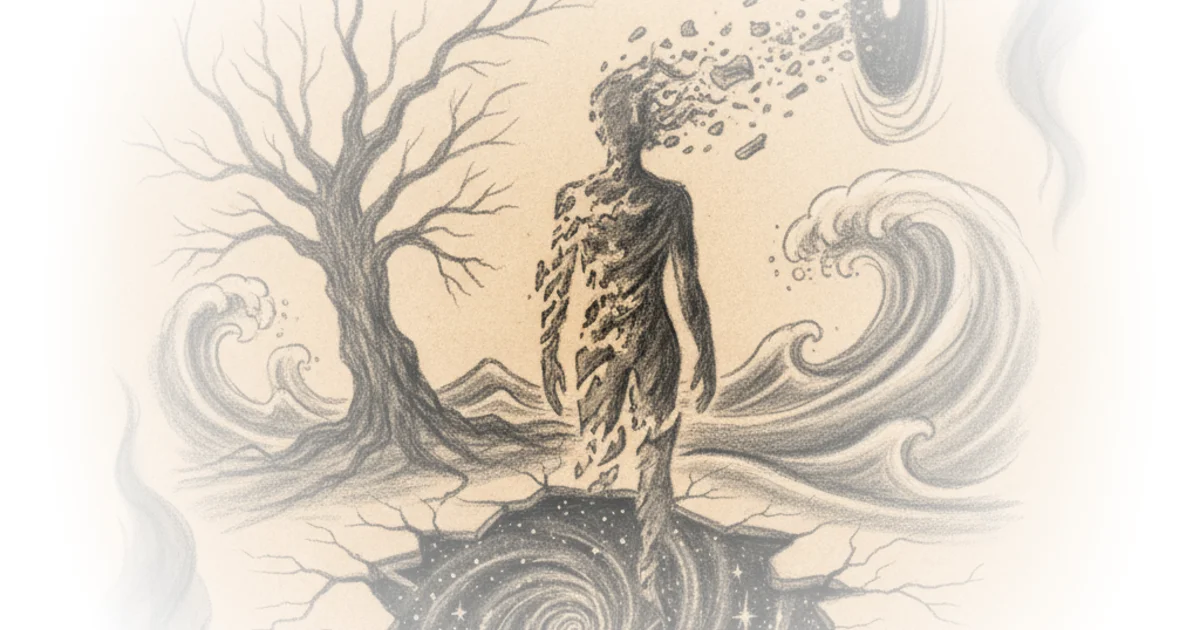
The commentary effectively strips away the usual apocalyptic fanfare to focus on the logistics of a clean exit. Matthias points out that nuclear warfare is immediately ruled out due to "too much collateral damage," leaving only quieter, more tragic possibilities like a pandemic fatal solely to humans or a sudden loss of fertility akin to the scenario in P.D. James's novel Children of Men. This reframing is crucial; it moves the conversation from survivalism to a grim calculus of net value.
"A world without us, as many animal ethicists argue, is a better world for the billions and billions of creatures we hunt, kill, mutilate, and displace."
Matthias acknowledges that some might view extinction as a form of cosmic justice, or what J.M. Coetzee termed our "crimes of stupefying proportions." However, he also introduces a counterweight: the idea that sticking around to repair the damage is a moral imperative, even if our history suggests we are better at causing harm than fixing it. Critics might note that this assumes humanity has the capacity for redemption that history often denies, yet Matthias remains open to the tension between our destructive habits and our potential for good.
The Value of Human Experience
The piece shifts gears in its analysis of Chapter 2, where May defends the intrinsic worth of human life against anti-natalist arguments. Matthias explains that while David Benatar famously argued it is "better never to have been," May contends that human consciousness brings irreplaceable value to the universe. He writes, "If we are the only beings that can appreciate art and science and find a way to recognize truth... it would be a real loss if we went extinct." This defense rests on the Platonic triad of happiness, truth, and reflection.
Matthias finds this argument compelling but acknowledges its fragility. He notes, "The world would be 'impoverished in an important way if there were no longer beings' capable of experiencing beauty, truth, and a good life." This sentiment resonates with the longtermist perspective, which argues that future generations hold immense potential value—a concept explored in depth in related discussions on existential risk. If humanity vanishes, that potential is extinguished forever.
"Beautiful experiences, deep truths, and moral achievement will disappear from the world if humans are not around to have and discover them."
Yet, Matthias does not let this idealism stand unchallenged. He points out the stark contrast between the "haziness" of these positive claims and the "horrible definiteness" of human suffering inflicted on animals and nature. The argument here is that while our capacity for beauty is unique, our capacity for cruelty is systematic and industrialized.
The Misanthropic Verdict
Moving into the darker chapters of May's work, Matthias explores the concept of philosophical misanthropy—not as a hatred of individuals, but as a critical verdict on the collective moral condition of our species. He writes, "In its philosophical sense, misanthropy is a critical verdict on the collective moral condition and performance of humankind." This distinction is vital; it separates personal cynicism from a structural critique of how we organize society.
The commentary highlights May's graphic descriptions of factory farming as evidence for this verdict. Matthias observes that practices like "debeaking and unanaesthetised castration" are not anomalies but integral parts of our economic system. He suggests that the "charge lists" of human failings—greed, arrogance, exploitativeness—are inseparable from what we have become.
"The condemnation of humankind sketched by May could be seen as a distillation of the more comprehensive case developed by David E. Cooper in his book Animals and Misanthropy."
Matthias draws a parallel to ancient wisdom, noting that Zhuangzi criticized these tendencies two millennia ago, suggesting this is not a new problem but an enduring one. The author also touches on the geopolitical dimension, observing that while the Global North drives much of this destruction, it represents "the terminus toward which other countries are moving." This universalizes the critique, preventing it from becoming merely a complaint about Western excess.
"The world would become a bit hollowed out. It would lose some of its richness."
While Matthias sympathizes with the idea that extinction ends both human goodness and evil, he leaves the reader with an unresolved tension: is the loss of our capacity for beauty worth the cessation of our capacity for cruelty? The piece does not offer a definitive answer but invites the reader to sit with the weight of the question.
Bottom Line
Matthias's commentary succeeds in elevating Todd May's book from a niche philosophical exercise to a vital ethical inquiry, balancing the grim reality of human-caused suffering against the unique value of human consciousness. Its greatest strength is the refusal to offer easy optimism or nihilistic despair, instead presenting misanthropy as a clear-eyed moral assessment rather than an emotional outburst. The biggest vulnerability lies in its reliance on abstract philosophical frameworks that may struggle to account for the chaotic, unpredictable resilience of life itself.