Wayfare launches a new cultural column, "Waypoints," with a bold premise: that pop culture is not merely entertainment, but a vital vessel for spiritual inquiry and moral reckoning. The editors argue that the most profound questions of the soul are often best answered not in a pulpit, but in the quiet aftermath of a film or the turning of a page. This approach reframes the consumption of art from passive distraction to active theological engagement, suggesting that the "joy" found in stories is actually a form of truth-seeking.
The Theology of the Trojan Horse
The centerpiece of this launch is an essay by Shayla Frandsen on Christopher Nolan's The Odyssey, a film that reimagines the ancient epic through a lens of profound guilt and divine law. Frandsen posits that the movie shifts the focus from traditional heroism to the concept of "godliness" as a burden rather than a badge of honor. Wayfare reports, "In a gritty world that prizes physical and elemental power... it is the intangible Zeus's law that remains paramount to Christopher Nolan's huge new film The Odyssey." This framing is striking because it treats the ancient code of hospitality not as a quaint custom, but as the "one safe guarantee in a world where the handle of death's dagger swings far too easily."
The piece argues that the film subverts the expectation of the Trojan Horse as a triumph of cunning, presenting it instead as a source of deep, lingering shame. Frandsen writes, "When he pulled off one of the niftiest bits of battle trickery the world had ever seen, it was not glory that lingered in the aftermath, but shame." This interpretation aligns with the mythological concept of peripeteia—a sudden reversal of fortune—where the hero's greatest victory becomes his moral undoing. The commentary suggests that Nolan's Odysseus is haunted not by monsters, but by his own violation of sacred trust. "Breaching Zeus's law transcends error: It is sin," the article asserts, grounding the film's emotional core in a specific theological framework that elevates the stakes beyond mere survival.
Breaching Zeus's law transcends error: It is sin. It is treating men like they are gods, and in doing so, displaying godliness oneself.
The analysis of the film's ending further complicates the definition of a hero. Rather than a triumphant return, Odysseus chooses exile, a decision the piece frames as a move toward genuine humanity. "In choosing humanity, he is closer to the gods than ever," Frandsen observes, noting that the character sheds his hubris to accept the consequences of his actions. This mirrors the mythological figure of Calypso, who offered immortality in exchange for forgetting his past; by rejecting her offer, Odysseus accepts the weight of his mortality. The argument is compelling because it challenges the modern appetite for unblemished heroes, suggesting that true redemption lies in the willingness to face the wreckage one has created.
The Liminal Space of Culture
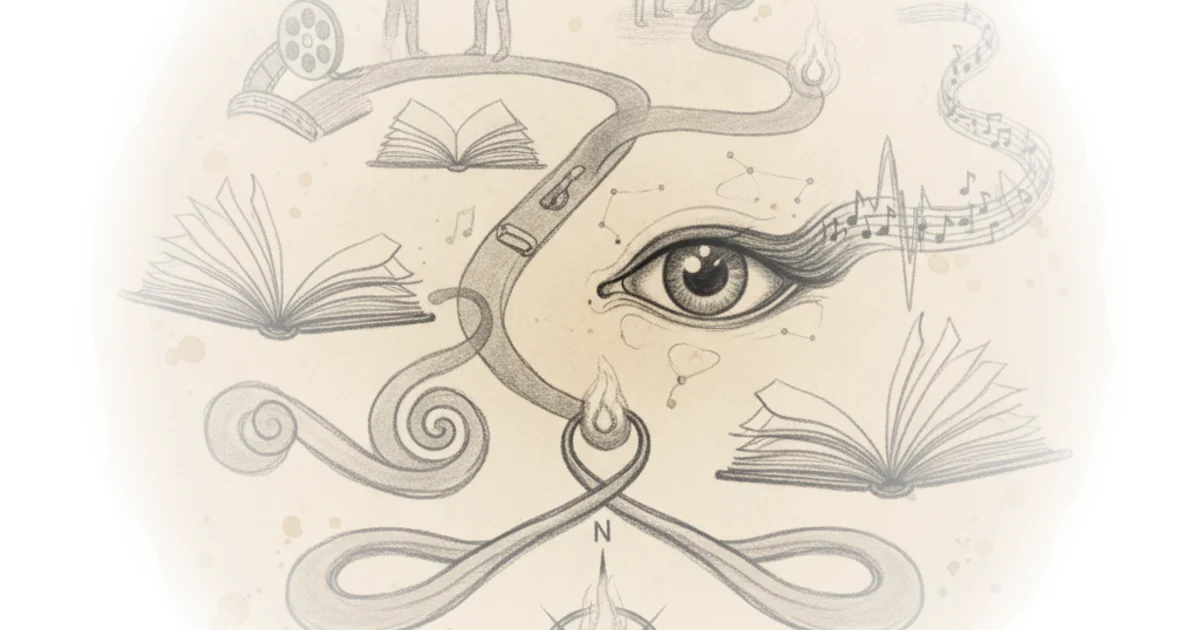
Beyond the specific film analysis, the "Waypoints" introduction by editor Conor Hilton lays out a broader mission: to treat cultural consumption as a "lifelong pursuit of seeking wisdom." The editors note that the column was born from a simple question about repentance and forgiveness raised during a family discussion about Star Wars. "My dad's question began my lifelong pursuit of seeking wisdom out of the best books, films, music, and every other artistic and cultural expression," Hilton writes. This origin story grounds the column's high-minded goals in a relatable, domestic reality.
The piece suggests that art provides a "liminal" space—a threshold between the mundane and the divine—where difficult conversations can happen safely. This connects to the concept of liminality in mythology, where characters exist in a state of transition, neither here nor there, but open to transformation. Wayfare argues that "paying careful attention to works of art and culture reveals truth and helps us understand and interpret previously revealed truths." This is a robust defense of the humanities, positioning them not as a luxury, but as a necessary tool for interpreting the human condition.
Critics might note that this approach risks imposing a moral framework on works of art that were never intended to be read as theological treatises. Not every story about a war hero is a parable about divine law, and forcing such a reading could flatten the complexity of the source material. However, the piece seems aware of this tension, acknowledging that "heroism is a type of godliness" but also that it "stands on shaky ground." By admitting the ambiguity, the column avoids the trap of didacticism.
Bottom Line
Wayfare's "Waypoints" successfully carves out a unique niche by treating pop culture as a serious site for spiritual and ethical exploration, moving beyond standard reviews to ask what these stories say about our relationship with the divine and the moral cost of our actions. The strongest element is the reframing of the Odyssey as a story of guilt and exile rather than triumph, a perspective that resonates deeply in a modern context wary of unexamined heroism. The column's biggest vulnerability lies in its potential to over-interpret secular narratives, but its commitment to "joyful conversation" suggests a willingness to navigate these complexities with nuance rather than dogma.