Forget everything you've been taught about winning arguments. Wes Cecil’s radical reframing—that Renaissance giants like Michelangelo didn’t chase correctness but fabulousness—exposes how our obsession with 'rightness' traps us in exhausting power struggles. In a culture where being wrong feels like moral failure, this isn’t just refreshing—it’s urgent liberation.
The Fabulous Alternative to Rightness
Wes Cecil writes, "the Renaissance artists, Renaissance cultural figures, thinkers and writers seem to get up in the morning and ask themselves not how can I be right, but how can I be fabulous." He argues they saw output as a reflection of integrated personal excellence—whether sculpting David or drafting diplomatic treaties. When Cecil notes that in 1508, Michelangelo prioritized terribilità (awe-inspiring grandeur) over doctrinal precision in the Sistine Chapel, he reveals a worldview where beauty trumped binary judgments. This wasn’t about ego; it was about "an incredibly different approach to how you understand the world." The core insight lands because it dissolves the false choice between conformity and rebellion—we’re freed to pursue meaning, not validation.
Rightness as a Power Trap
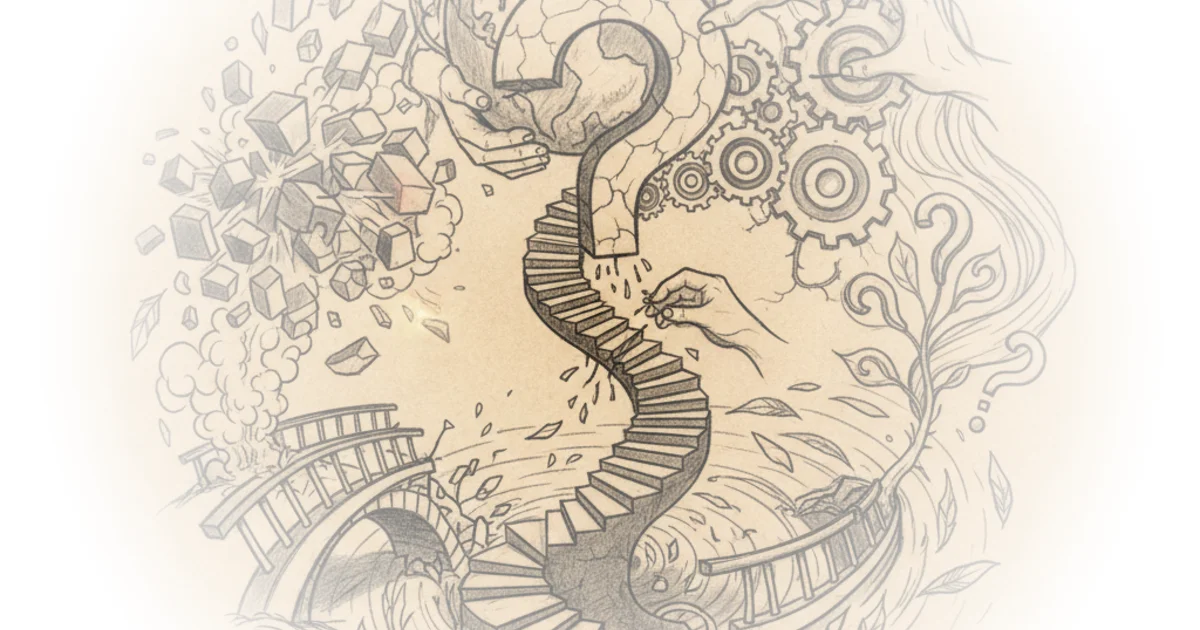
Cecil dissects how "rightness" operates as a tool of control: "it comes in two forms... one is when people are trying to be right... this is about imposing power. It’s a power struggle." He’s equally sharp on the flip side—how we outsource judgment to systems that reward guessing what authorities want, not truth-seeking. As he puts it, "I’m asking myself over and over again what is it that they want me to say... so that they’ll tell me I’m right." This resonates painfully in our age of algorithmic validation, where social media turns every opinion into a contest for external approval. Cecil’s genius is framing this not as personal weakness but as a rigged game we’ve all been forced to play.
"If I’m talking to somebody and they can show me that I’m wrong about something, this makes me really happy because I’m learning."
The Quiet Rebellion of Wrongness
The most actionable insight? "Seek out opportunities to just be wrong." Cecil’s anecdotes—writing surreal test answers, admitting his 1,000-square-foot house was "bigger" to end a pointless argument with his sister—show how trivial acts of surrender dismantle the tyranny of rightness. He observes that "when you can do that... it begins this process of liberation because now you’re like, 'Oh, it made classes that I found boring... a little ray of sunshine.'" Critics might note this risks trivializing high-stakes domains like medicine, but Cecil’s point shines where power dynamics dominate: social media spats, office politics, family dinners. His chess analogy clinches it—"a move that was perfectly fine... turns out to be a wrong move. But the move has not changed"—proving context, not absolutes, defines value.
Bottom Line
Cecil’s strongest contribution is reframing wrongness as joyful curiosity—not failure. His vulnerability? Underestimating how systemic power (like workplace hierarchies) punishes those who reject the "rightness" game. Still, this is the antidote to our brittle, polarized moment: what if we stopped keeping score and started building beauty instead?