This review dismantles the Western caricature of North Korea not by denying its brutality, but by tracing a startling spiritual lineage that most observers miss: the regime's cult of personality is built on the bones of a once-thriving Christian movement. Kaiser Kuo argues that Jonathan Cheng’s book reveals how a society deeply steeped in faith was systematically hollowed out and repurposed into a political religion, offering a far more disturbing explanation for the state's durability than simple totalitarianism.
The Jerusalem of the East
Kuo begins by challenging the reader's preconceptions. He notes that while visiting Pyongyang during May Day, he saw "thousands perform, holding coloured cards perfectly synced to depict vivid scenes of national lore," yet his personal interactions revealed a society "deeply steeped in national history." Cheng’s work bridges this gap, exposing how the country evolved from a conservative Confucian state into what was once hailed as the "Jerusalem of the East."
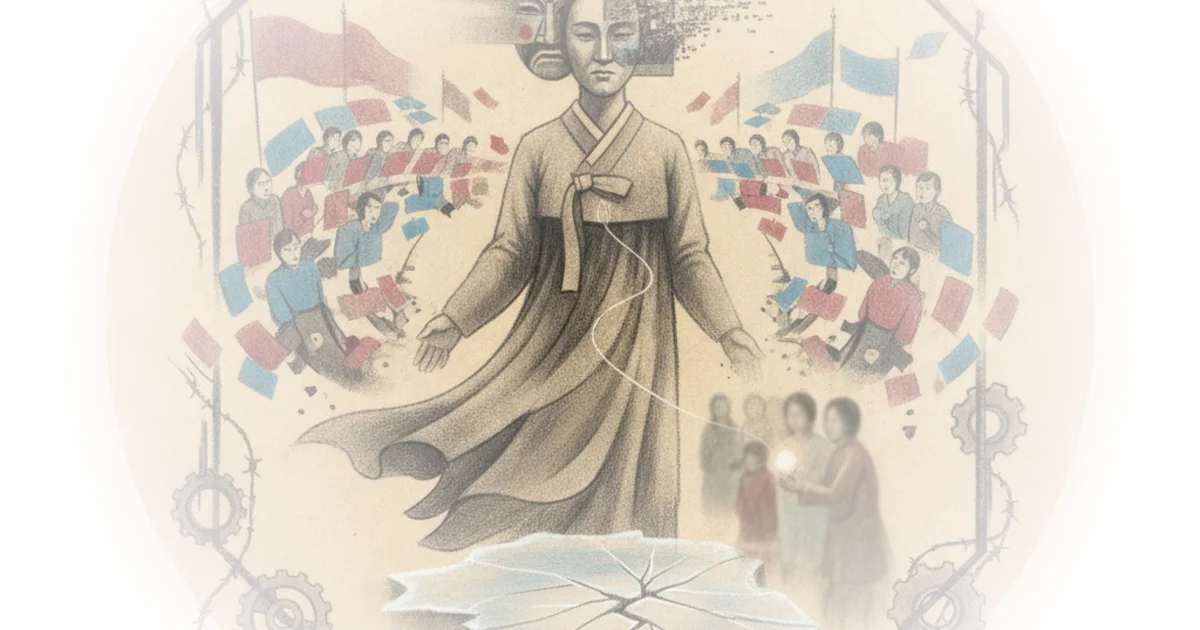
The review highlights a critical historical pivot: the arrival of American missionaries like Samuel Austin Moffett in the late 1800s. Kuo writes that these figures arrived to "set up the cross of Christ" and faced genuine risks, but found their opening only after the destruction of Pyongyang in the 1894 Sino-Japanese War. The reconstruction efforts following this devastation allowed Christianity to spread with such fervor that within a decade, the city earned its biblical nickname.
"Christianity itself is pulled in every direction: first embraced as an antidote to Korean backwardness, then adopted as a defining mark of national identity, and many decades later, replaced by an even more enduring state religion revolving around one man."
This framing is powerful because it contextualizes the current regime not as an alien imposition, but as a twisted evolution of local history. It connects directly to the broader historical trauma of the Battle of Pyongyang in 1894, where the physical ruin of the city created the vacuum that foreign faiths filled. Kuo suggests this wasn't just religious conversion; it was a desperate search for national identity amidst colonial subjugation.
Critics might argue that focusing on religious origins risks softening the image of a regime responsible for mass atrocities, but Kuo anticipates this by emphasizing the "profound national tragedy" that birthed these movements. The argument holds weight because it explains why the population clung to such extreme loyalty—it was a survival mechanism forged in fire.
The Captain History Underestimated
The narrative then shifts to Kim Il-Sung, whose background is often obscured by state mythology. Kuo points out that Cheng reveals Kim was born into a Christian family and raised by a Methodist minister who served as his surrogate father. Despite his later claims of being a legendary guerrilla leader from childhood, the historical record suggests he was "on the sidelines of history" before Soviet backing propelled him to power.
Kuo describes how official hagiographers quickly embellished Kim's past, painting a ten-year-old crossing mountains alone and an eighteen-year-old conceiving the Juche ideology. The review notes that these fabrications were necessary to erase his Christian roots and replace them with a new mythos. As Kuo puts it, "history and mythology merge, and the audacity of the project at first rivals, then surpasses, that of fellow Communist giants Stalin and Mao."
The most chilling aspect of this section is how the state co-opted religious structures to enforce loyalty. Kuo explains that Kim Il-Sung-ism drew on familiar Christian imagery: a preordained savior, a holy trinity of the leader's family, and study halls that mirrored confessionals. This was not merely propaganda; it was a spiritual replacement strategy designed to fill the void left by the suppression of actual faith.
"In this way, history and mythology merge, and the audacity of the project at first rivals, then surpasses, that of fellow Communist giants Stalin and Mao."
Kuo’s analysis here is particularly sharp because it identifies the specific mechanisms of control. By mirroring church structures, the regime made its ideology feel familiar and sacred to a population that had just lost its actual religion. This explains the "unquestioning devotion" seen in modern North Korea better than any theory of pure fear.
The Tragedy of Faith and Power
The review delves into the human cost of this ideological shift, focusing on individuals caught between their faith and the state. Kuo recounts the story of Kang Yang-uk, a religious leader who became Kim's right-hand man only to have his home bombed by assassins, killing his children. In a scene described as having "Learian registers of tragedy," Kim consoles the broken man, urging him to turn his "sorrow into contempt" and handing him a pistol.
"Now, let’s take revenge."
This moment encapsulates the book's central thesis: the transmutation of Christian zeal into state-sponsored fanaticism. Kuo writes that Kang's life was shattered, but he rose with a "fanatic rage at North Korea’s enemies, among them the Christians who dared challenge the State." The review also mentions Rev. Kim Ik-du, who was co-opted to bring Christians into the fold only to be killed as a traitor.
These stories serve as a grim reminder that the regime's stability came at the price of immense human suffering. Kuo notes that while some benefitted from this system, many did not, and the "deep yearning" for a heroic narrative was exploited by a leader who offered no real salvation.
The Autumn of the Great Leader
Towards the end of Cheng's book, Kuo explores Kim Il-Sung's later years, where he reportedly reflected on his Christian heritage with "an unmistakable sense of wistfulness." In his 1992 memoirs, Kim expressed regret over the treatment of Christians, admitting they were "indiscriminately prejudiced against… in spite of my repeated warning against it."
This admission led to a brief thaw: state-sanctioned congregations were permitted, foreign delegations invited, and even evangelist Billy Graham was welcomed. Kuo notes that this period hinted at lost potential, especially after Jimmy Carter's visit defused a nuclear crisis just weeks before Kim's death in 1994.
"Cheng hints at lost potential; weeks earlier, Jimmy Carter’s visit had defused the nuclear weapons crisis and sown the seeds for a first-ever inter-Korean summit, but Kim passed before the summit, leaving his coming-to-terms project somehow unfinished."
The tragedy here is palpable. The review suggests that if Kim's "coming-to-Jesus" moment had been sustained, the trajectory of the peninsula might have been different. Instead, the regime reverted to its isolationist path, and the détente eventually dissolved into renewed animosity.
Bottom Line
Kaiser Kuo’s review of Jonathan Cheng's Korean Messiah succeeds in reframing North Korea not as an inexplicable anomaly, but as a tragic case study in how religious fervor can be hijacked by political power. The strongest part of the argument is its detailed tracing of the spiritual lineage that underpins the current cult of personality, offering a profound explanation for the regime's resilience. However, the piece leaves the reader with a lingering question: whether understanding the human and historical roots of this system makes it easier to dismantle, or simply deepens the sense of despair at how easily faith can be weaponized.
"Behind North Korea’s impenetrable wall... were and have always been real people — living, breathing, imperfect human beings grappling with history and meaning."
Ultimately, this is a meditation on national trauma and the human capacity for resilience, even when that resilience is directed toward a destructive end. As Kuo concludes, Cheng has written a "remarkable, timely and breathtaking masterwork" that demands to be read by anyone seeking to understand the true nature of the North Korean state.