In the fevered atmosphere of the early Cold War, paranoia didn't just target spies or politicians; it reached into the most innocent corners of American life, even the Girl Scouts. Kings and Generals exposes how a routine handbook for pre-teens became the centerpiece of a national conspiracy theory, revealing a terrifying moment when global friendship was rebranded as treason. This isn't just a quirky historical footnote; it is a stark warning about how quickly institutional norms can be weaponized when fear overrides reason.
The Atmosphere of Suspicion
Kings and Generals sets the stage by describing a nation where "proof wasn't necessary, just suspicions." The authors correctly identify that anti-communism had evolved from a foreign policy stance into a totalizing worldview where any deviation from isolationism was suspect. As they put it, "The definition of subversion kept expanding. It wasn't just about those who had actually joined the Communist Party. It grew to include those who criticized the FBI, supporting desegregation, backed the United Nations, or even taught kids that America wasn't perfect." This framing is crucial because it explains why a badge for "world friendship" could be interpreted as a threat to national sovereignty. The coverage effectively illustrates how the climate of the era fused segregationist fears with isolationist paranoia, creating a perfect storm where internationalism and racial equality were read as communist plots.
"In the optimistic years right after the Second World War, that fit neatly with official rhetoric about peace building and teaching kids to be citizens of the world. But by the early 1950s, the mood had shifted. The same language about world citizenship that sounded wholesome in 1947 could sound ominously like one world government in 1953."
The authors argue that the Girl Scouts were simply victims of a shifting political lens rather than a change in their own values. They note that the organization had always been global, but the context had turned hostile. While the narrative is compelling, it perhaps underplays the genuine anxiety many Americans felt regarding the Soviet Union's rapid expansion and the real presence of Soviet spies, which made the public more receptive to these wilder theories.
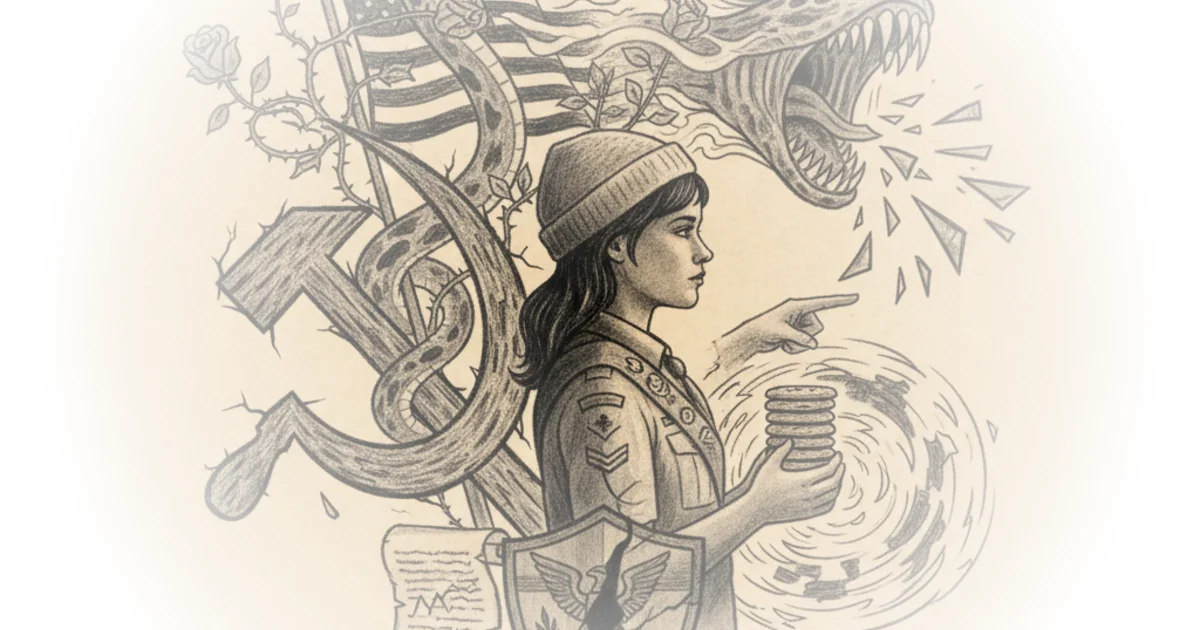
The Handbook as Evidence
The core of the controversy centered on the 1953 Intermediate Program Handbook, a guide for girls aged 10 to 14. Kings and Generals details how critics fixated on specific elements, such as the "One World" badge and book recommendations by authors like Langston Hughes. The authors write, "In the fevered imagination of the Red Scare, however, they could be interpreted as fellow travelers." This observation highlights the absurdity of the era: a simple suggestion to read a poet became evidence of a subversive agenda.
The commentary effectively breaks down how the phrase "one world" transformed from a hopeful ideal into a code word for a socialist world government. As Kings and Generals notes, "Isolationists and conspiracy theorists spun it as a code for a socialist world government that would abolish national sovereignty." The piece also touches on the racial dimension, explaining that "anti-racist language that in another era might have been seen as simple Christian ethics... could now be framed as race mixing propaganda." This connection between anti-communism and the defense of segregation is a vital piece of context that many modern retellings miss.
"So when certain eyes landed on the 1953 handbook, they didn't see girls learning to build campfires and be kind. They saw a document that in their view put world citizenship above American citizenship, praised government programs, and pushed a universalist color-blind ideal that they equated with left-wing politics."
The Crusader and the Confession
The narrative introduces Robert Lefever, a radio personality whose personal grievance sparked the national firestorm. Kings and Generals describes him as a "small-time media figure with big ambitions" who was offended when a local Girl Scout council asked him to avoid politics. The authors argue that Lefever's reaction was telling: "In his mind, any organization that wasn't loudly echoing his ideology was suspect." This character study is effective in showing how individual ego can amplify systemic paranoia.
Lefever's pamphlet, titled Even the Girl Scouts, claimed the handbook ignored the Constitution in favor of the United Nations. Kings and Generals points out the irony that the Girl Scouts were already planning revisions to the handbook for administrative clarity, not because of the accusations. "By early 1954, before anyone in the building had heard of Robert Lefever, the National Board had already approved of a set of revisions for the next printing." However, when critics discovered these planned changes, they interpreted them as a forced confession. The authors write, "As soon as critics discovered that the Girl Scouts were issuing a long list of corrections, they assumed their pressure had forced this. Lever and his allies bragged that they had compelled the organization to clean up its unamerican content."
"To those encountering the story in the conservative press, it genuinely seemed like cause and effect. Accusation."
This section of the coverage is particularly sharp in demonstrating how the feedback loop of the "analog social media" of the 1950s—newsletters, church bulletins, and veterans' posts—could validate false narratives without fact-checking. A counterargument worth considering is whether the Girl Scouts' initial lack of transparency about their internal revision process inadvertently fueled the fire, though the authors rightly place the blame on the accusers' refusal to see nuance.
Bottom Line
Kings and Generals delivers a masterful dissection of how fear can distort reality, turning a guide for camping and kindness into a symbol of treason. The strongest part of the argument is its clear linkage between anti-communist hysteria and the defense of segregation, showing that the attack on the Girl Scouts was never really about the organization itself. The piece's biggest vulnerability is a slight underestimation of how deeply the fear of nuclear annihilation had penetrated the American psyche, which made even the most outlandish claims feel plausible to a terrified public. This history serves as a timeless reminder that when patriotism is defined by exclusion, no institution is safe.