The Digital vs. Analog Divide
The core decision every guitarist faces comes down to this: bright, surgical repeats or warm, organic ones?
Digital delays are brighter and chirpier. They give back exactly what you put in — precise, clean repetitions that stay consistent no matter how many times you repeat the signal. They're ideal for technical players who need exact subdivisions, like dotted eighth patterns that stay locked in time.
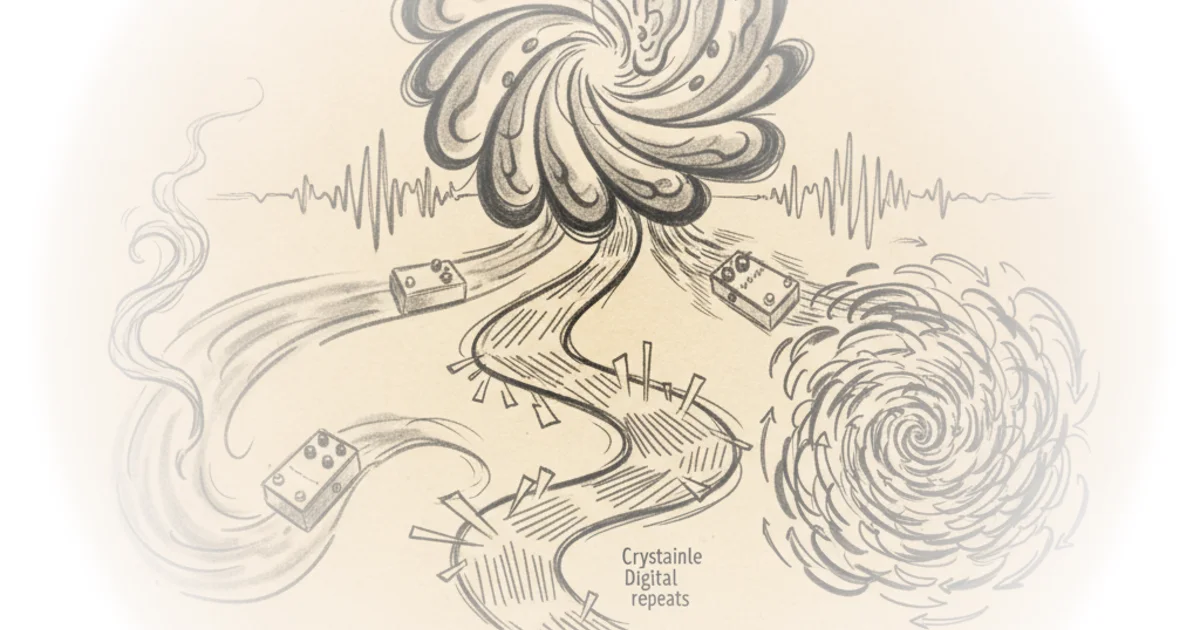
Analog delays work completely differently. The repeats degrade over time, getting darker as they cascade. They fill more space in your mix because those warm repeats carry more low frequencies, creating ambient tones that feel natural and organic — like playing in a larger room. There's a reason many players prefer analog for slapback settings: it simply sounds more human.
One feature worth testing on any delay pedal before buying: the time ramp sound (sometimes called the sweep test). When you twist the time knob all the way up, does the delay glide smoothly from short to long? In digital mode, this feels precise and satisfying. Analog mode is arguably even better — but both are strong options depending on your preference.
Tape Delay: Vintage Warmth in a Box
The Three Series Tape Delay models what happened to actual tape machines over time. Older machines with more miles on them developed something called "low-end degradation" — the more times a recording passed through a tape head, the more low frequencies it lost, creating a naturally crusty, worn character.
This pedal gives you 15 milliseconds up to 950 milliseconds of delay. The sweet spot isn't just the time range: older machines introduced modulation into the repeats because the tape would physically lag, introducing subtle pitch shifts. JHS built this in with their "flutter switch," which recreates that worn-tape effect and adds genuine movement to your trails.
The result is deeply satisfying for players who want longer delays where modulation actually absorbs into the sound rather than standing out as a separate effect. Crank it up and listen to how crunchier those repeats get — it's almost like hearing actual old tape machines age in real time.
The Milkman: Slap Echo for Confident Players
The Milkman is a completely different beast. It's for someone very specific: players who are confident, know exactly what they want, and refuse to compromise on having a small but powerful rig. They probably wear cowboy hats and button-up shirts they've worn their whole lives.
With the slap knob turned all the way down, it's almost zero milliseconds — basically no delay at all. But crank it up just slightly and you get this doubling effect that feels like standing in a real room. Push the repeats and EQ to around 11 on the dial and you get a genuinely warm, roomy sound.
The maximum setting goes up to 250 milliseconds, but one thing makes this pedal special: if you liked the tape sound from before, you can recreate it by cranking up the EQ all the way. That's unusual flexibility for such a focused design.
A unique feature is the Boost function — dial in a subtle slap sound and push your amp into just a bit of break-up, not quite clean. The result is pure Americana in a box.
Critics might note this pedal isn't for everyone. It's deeply personal — either you need that specific slap echo character or you don't. Some players will hate it; others will find it's the only delay they ever needed.
Oil Can Delay: Modulation Baked In
The original oil can units were genuinely weird — a contraption with oil inside, rotating tube of grease that made modulation on the delay trails work in ways nobody could recreate. They never quite worked right when you found them, but they're very cool.
JHS built this into the Oil Can Delay with two key positions: less modulation (switch down) and more modulation (switch up). The time range is 100 milliseconds cranked all the way to 330 milliseconds — not the longest in their lineup, but what makes it special is the modulation baked directly into the repeats.
There's a secret feature worth knowing: crank both knobs all the way down, flip the switch down, and the pedal starts blinking. Flip it back up and you've entered a pattern delay mode — like a secret setting most players never discover. The runaway test (cranking feedback) doesn't oscillate wildly, but you get usable crunch as it goes on.
Flight Delay: Maximum Versatility
The Flight Delay covers three modes: analog warm, digital bright and pristine, and reverse. It gives you 50 milliseconds up to one second — a massive range that covers both subtle slapback and full echo experimentation.
One underrated feature is the EQ knob. In analog mode, crank it and you get into tape-ish territory — not exact tape replication but much brighter than typical analog delay. Turn it all the way down gets very dark, entering reverb-like territory. Digital repeats can go extremely bright or extremely dark depending on your setting.
Reverse mode is arguably the coolest delay effect in their lineup — it's very slurpy, like listening to a record played backwards while also hearing your guitar.
For players who want maximum flexibility without multiple pedals: analog and digital modes both work well. The reverse isn't quite as wild as dedicated reverse delays but it does the job in a mix. Add chorus and reverb trails you can mix to taste, tap tempo subdivisions, and you've got one of the most tweakable delays available at this price point.
Bottom Line
The strongest argument for JHS's delay lineup is specificity: each pedal serves a very clear purpose rather than trying to do everything. The Tape Delay and Oil Can Delay stand on their own as unique sounds you can't easily replicate elsewhere. The Flight Delay offers the most versatility if you're someone who needs options — analog warmth, digital precision, reverse chaos, chorus and verb mixed in — all in one pedal at $249.
The biggest vulnerability: none of these pedals are cheap entry-level tools. You're committing to a specific sound profile when you buy. But if you've heard demos and know what you want, JHS has likely already built exactly that pedal for you.