In a media landscape saturated with apocalyptic rhetoric about the Middle East, this piece from Stark Realities offers a jarring, necessary correction: the claim that Iran is plotting a new Holocaust against its own Jewish citizens collapses under the weight of historical fact and on-the-ground reality. While Western headlines frequently amplify warnings of imminent genocide, the article presents a paradox that demands attention—how can a state accused of planning mass extermination simultaneously host the Middle East's second-largest Jewish population, complete with synagogues, schools, and a seat in parliament? For the busy reader trying to cut through the noise of geopolitical fear-mongering, this is a vital intervention that forces a distinction between the Iranian government's hostility toward the Israeli state and its treatment of Iranian Jews.
The Living Paradox
The core of the argument rests on a simple, undeniable demographic fact that is often ignored in favor of political soundbites. Stark Realities reports, "Western journalists are quick to quote these claims [of genocide], yet slow to publicize contradictory evidence — such as the fact that Iran is home to the Middle East's second-largest population of Jews, who freely practice their faith, peacefully coexist within the Islamic republic and even have a seat in the legislature." This observation is not merely a statistical footnote; it is a fundamental challenge to the prevailing narrative of existential threat. The piece effectively uses the concept of dhimmi status—a historical Islamic legal category granting protected, albeit second-class, status to "People of the Book"—to contextualize the current reality. Unlike the European experience where Jewish communities were often erased, the Iranian Jewish presence dates back nearly 3,000 years, creating a cultural continuity that survives even the most turbulent political shifts.
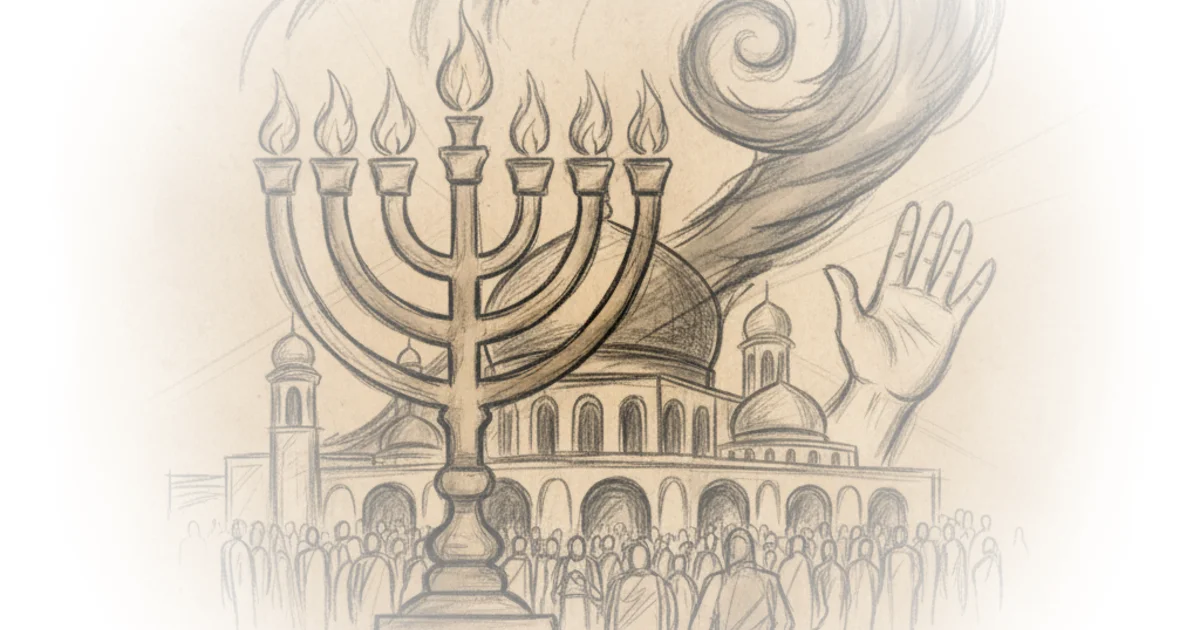
The article does not shy away from the complexities of this coexistence. It acknowledges the 1979 execution of Habib Elghanian, a prominent Jewish industrialist, as a traumatic turning point that initially terrified the community. However, it argues that this event precipitated a crucial diplomatic intervention. The piece notes that after Elghanian's death, Jewish leaders met with Ayatollah Khomeini, who "drew a sharp distinction between the Israeli government and Iran's Jews, declaring: 'Moses would have nothing to do with these pharaoh-like Zionists who run Israel. And our Jews, the descendants of Moses, have nothing to do with them either.'" This distinction is the linchpin of the entire argument. It suggests that the Iranian state's enmity is directed at a political entity, not a religious or ethnic group.
Critics might argue that this distinction is merely rhetorical, designed to mask deeper systemic oppression. And indeed, the piece admits that Iranian Jews face significant legal barriers, such as being barred from senior government posts or serving as military officers. Yet, the editorial stance is that these limitations, while real, are inconsistent with the definition of genocide. The evidence of daily life supports this: "Jews openly display their identity and practice their faith. Iranian Jews wear yarmulkes and prayer shawls in public. Muslims pass by without giving a second glance." The existence of 13 synagogues in Tehran without security guards or locked doors serves as a stark visual counter-narrative to the idea of a population living in fear of annihilation.
"The identity of Iranian Jews is not tradable for any amount of money."
The Rhetoric of Regime vs. People
The most compelling section of the piece tackles the often-misquoted language used by Iranian leaders. The article systematically dismantles the interpretation that calls for the "destruction of Israel" are synonymous with calls for the massacre of Jewish people. It highlights the linguistic and cultural context of phrases like "Death to America" or "Death to Israel," explaining that in Persian culture, such slogans often target a government or a system rather than a population. Stark Realities illustrates this with an anecdote from travel writer Rick Steves, whose driver exclaimed, "Death to traffic!" when stuck in a jam, clarifying that "Here in Iran, when something frustrates us and is out of our control, we say 'death' to that."
This cultural nuance is critical for understanding the gap between Western perception and Iranian reality. The piece argues that when leaders speak of eliminating the "Zionist regime," they are referring to a governing structure, not a biological population. It cites Ayatollah Khamenei's 2014 clarification: "The only means of bringing Israeli crimes to an end is the elimination of this regime. And of course the elimination of Israel does not mean the massacre of the Jewish people in this region." The article further notes that Khamenei's proposed solution involves a referendum for the original people of Palestine, explicitly excluding the right of Jewish immigrants to vote, but stopping short of advocating for their physical removal or death. This is a hostile political vision, certainly, but it is not a blueprint for genocide.
The piece also points out the irony of wealthy Jewish expatriates offering cash rewards to entice Iranian Jews to emigrate to Israel, only to be met with resistance. The Society of Iranian Jews rejected the offer, stating, "the identity of Iranian Jews is not tradable for any amount of money." This refusal underscores a deep-rooted sense of belonging that contradicts the narrative of a community desperate to flee. The Anti-Defamation League's 2014 data, which found Iranians to be the least antisemitic population in the Middle East, further bolsters the claim that the threat is political, not racial.
A Nuanced Reality
The argument is not without its vulnerabilities. The piece acknowledges that Iranian Jews are not fully equal citizens; they cannot inherit property from Muslims unless they convert, and their political stance is often aligned with the government, as seen when the Tehran Jewish Committee condemned the 2022 anti-regime protests. One could argue that this alignment is a survival mechanism born of fear, rather than genuine consent. The article touches on this, noting that outsiders wonder if Jews feel compelled to take such stances, but it rightly points out that the administration offers no evidence of active coercion to force these specific public displays of loyalty.
Furthermore, while the distinction between the state and the people is clear in theory, the reality of arming militias and the potential for regional conflict always carries the risk of civilian spillover. The piece admits that the Iranian government's agenda includes "a call for revolutionary violence" and the potential for mass expulsion of Jews who migrated to Israel. This is a significant caveat that prevents the article from being a naive defense of the Iranian regime. It is a defense of a specific, factual reality: that the Jewish community in Iran is not currently being targeted for extinction, despite the vitriol directed at the state of Israel.
Bottom Line
This piece succeeds by forcing a necessary separation between the Iranian government's geopolitical hostility toward Israel and the lived reality of Iranian Jews, a distinction that is frequently blurred in Western discourse. Its strongest asset is the use of direct evidence—from the lack of security at synagogues to the specific wording of religious decrees—to dismantle the genocidal narrative. However, the argument's biggest vulnerability lies in its reliance on the current status quo, which could be fragile in the event of a full-scale regional war. Readers should watch for whether the Iranian state's ability to maintain this delicate balance of protection and political hostility holds as tensions in the region escalate.
"The existence of Iran's unmolested Jewish population belies claims that their government is bent on eliminating Jews."
The article ultimately serves as a reminder that in the fog of war and propaganda, the most dangerous assumption is often the one that equates a government's political enemies with its own citizens. While the rhetoric from Tehran is undeniably hostile, the evidence suggests that the Jewish community remains a protected, albeit second-class, part of the Iranian social fabric—a reality that complicates the simplistic narratives of inevitable destruction.