The conversation around artificial intelligence has swung wildly over the past three years—from dismissive skepticism to hype-fueled panic about mass layoffs and imminent singularities. Now, the narrative has flipped again: talk of an AI bubble in company valuations is being conflated with assertions that model progress has plateaued. But a deeper look reveals something more interesting happening beneath the headlines.
The author argues this is another counternarrative worth examining—not built on hope for specific upcoming releases like Gemini 3, but on what current language models are actually missing. The gap between what people expect from AI and what the technology currently delivers is immense.
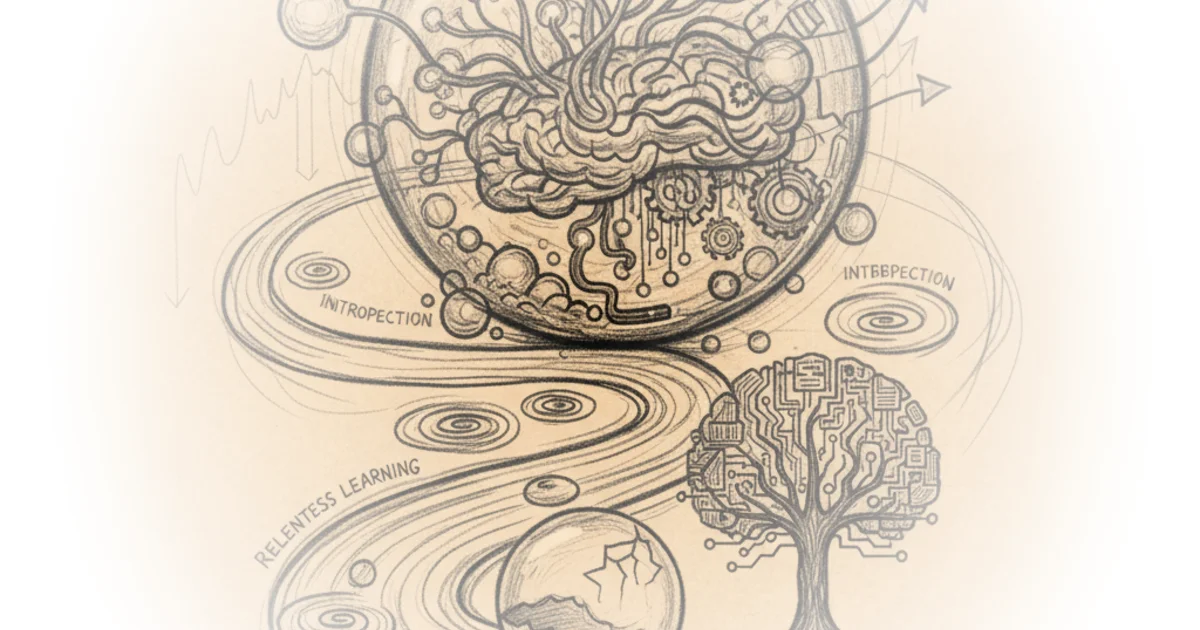
The Missing Piece: Continual Learning
What do users imagine when they picture AI? Most people point to two fundamental gaps: language models don't learn on the fly in a meaningful way, and there's no real introspection happening—just regurgitation of training data. These limitations feel significant because they seem to separate current AI from the adaptive, self-aware systems science fiction promised.
But researchers at Google have published work addressing exactly this problem. Their paper demonstrates viable approaches for allowing models to learn continuously while retaining discernment about what to learn and what to preserve. In practical terms, a chatbot could learn new facts or coding skills by storing them in updatable memory layers without corrupting its core knowledge base.
The architecture focuses on detecting novelty and surprise—measuring when the model made its biggest prediction error and flagging persistently surprising information as important enough to store deeper. This approach allows enduring learning signals within millions of user conversations to be extracted from noise and stored dynamically, something large language models famously cannot do unaided.
Nested Learning: Self-Improvement at Scale
The research extends beyond simple memory updates. The nested learning approach is less focused on stacking more layers hoping something sticks—which describes current large language model development—instead preferring a Russian doll methodology where outer layers of the model specialize in how inner layers are learning. The system gets progressively better at learning.
This doesn't automatically solve hallucinations. Even with nested and continual learning, systems would still be geared toward predicting the next human-written word, which remains inherently limiting. However, adding reinforcement learning and safety mechanisms could create the next phase of language model evolution.
A practical example: models with high-frequency memory blocks could update rapidly as users provide code and corrections. Add per-project or per-codebase memory packs, and you get a model optimized specifically for your codebase.
Critics might note that this architecture assumes persistently correct data exists on given topics—a questionable assumption when misinformation remains rampant online.
The Introspection Surprise
Perhaps the most surprising development involves models' ability to self-monitor internally before speaking. Researchers have isolated concepts within language models—like the notion of the Golden Gate Bridge—and activated them without revealing what was activated. When asked about injected thoughts, models could detect something was wrong before even beginning to speak about the concept.
The models know when to turn on self-monitoring. They possess a circuit identifying situations where introspection is called for and then executing it. This occurs only some of the time with the most advanced models like Claude Opus 4.1, but it's enough to suggest we are far from understanding what current language models can do.
The Progress Reality
The domains in which language models are optimized continue growing more complex—advanced software engineering, mathematics, complex reasoning. Average people might struggle to perceive this progress because the benchmarks require sophisticated testing. Yet even without continual learning, the rate of improvement surprises those who track it closely.
Chinese image generation models have also improved dramatically. Cream 4.0 and similar models produce high-resolution outputs that rival or exceed Western competitors—possibly the first time someone asking "what is the best image gen model" might point to a non-Western option.
The evidence suggests AI progress continues relentlessly. It's not just about valuations or investor enthusiasm—it's about scaling parameters, data, research approaches, and modalities. By next year, there may be 100 times more people working on AI research than three years ago. The developments include nested learning, continual learning, and new image generation capabilities.
"The gap between how most people are using AI and what AI is presently capable of is immense."
Bottom Line
The strongest argument here is that fundamental limitations in current AI—particularly around continual learning and introspection—are actively being solved by major researchers. The biggest vulnerability: it's easy to conflate valuation bubbles with technological progress, but the underlying technology keeps advancing regardless of market sentiment. Readers should watch for whether these architectural improvements actually deploy in consumer products within the next year—that will be the real test.