Ruth Reichl transforms a simple food review into a profound meditation on how culinary courage mirrors creative bravery. While the piece begins with the visceral shock of eating a cooked codhead, it quickly pivots to a deeper examination of the writer's life, arguing that the willingness to taste the unfamiliar is the same muscle required to write the unspoken. This is not merely a travelogue; it is an analysis of how specific cultural artifacts—from Icelandic cuisine to the work of literary giants—challenge our comfort zones.
The Courage of the Codhead
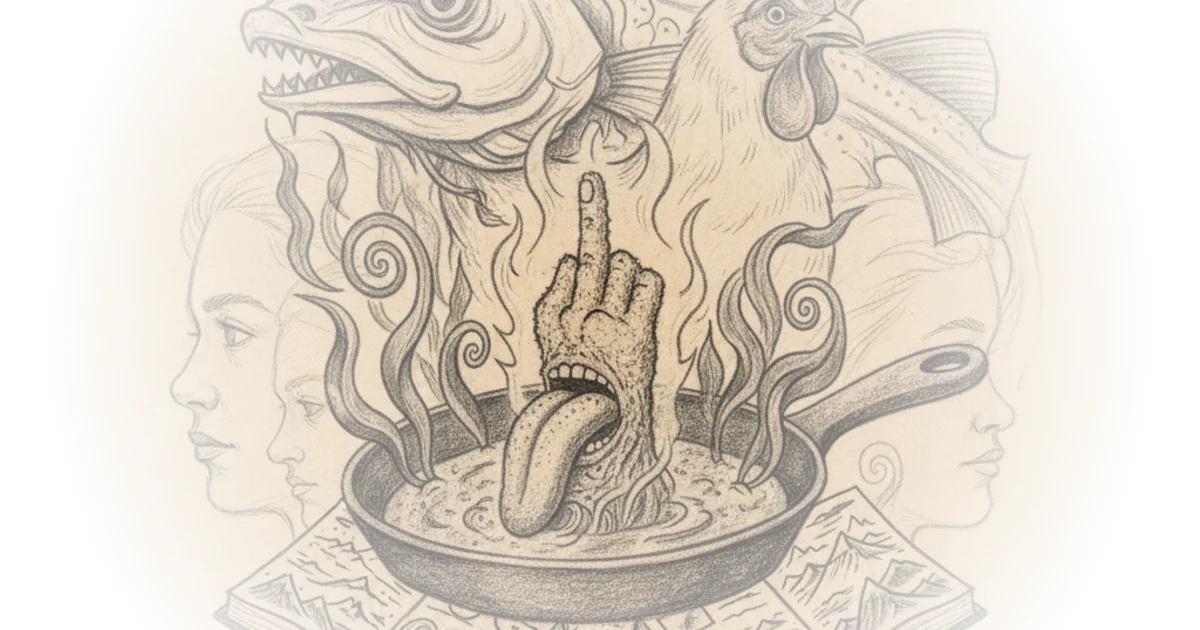
Reichl opens with a sensory assault that serves as a metaphor for the entire essay. She describes a dish that defies standard dining etiquette: "This, my friends, is Iceland on a plate. The giant codhead is cooked in chicken broth and sugar kelp while the soft, tender tongue is breaded and sauteed before being replaced and put on a plate to do rude things." The framing here is deliberate; she uses the grotesque beauty of the food to set the stage for a discussion about emotional risk. The codhead is not just a meal; it is a test of character.
She connects this culinary experience to her time at the Iceland Writer's Retreat in 2015, noting that the environment demanded a similar vulnerability. "I'm sorry to say I probably learned more from the students I worked with - they were all so emotionally brave - than they did from me." This admission flips the traditional hierarchy of the mentor-student relationship, suggesting that true teaching happens when the instructor is willing to be a learner. The argument holds weight because it grounds the abstract concept of "writing bravery" in the tangible reality of the students' willingness to expose their work.
The students emerged from each workshop buzzing with energy, having learned that the act of creation requires a surrender to the unknown.
Critics might argue that this romanticization of the retreat environment overlooks the commercial realities of the publishing industry, where such vulnerability is often punished rather than rewarded. However, Reichl's focus remains on the internal process of the artist, not the external market forces.
The Architecture of a Writer's Community
The piece shifts from the personal to the communal as Reichl profiles the diverse faculty she encountered. She paints a portrait of a community defined not by celebrity, but by a shared commitment to craft. She describes Barbara Kingsolver as a figure of immense integrity: "This woman knows exactly who she is." This observation is crucial; it suggests that the most effective writers are those who have resolved their internal conflicts before putting pen to paper.
Reichl contrasts this with Adam Gopnik, whose public persona is often overshadowed by his rigorous intellect. "He is effortlessly - and constantly - humorous. Also, I think, the most innately polite person I've ever met." By highlighting Gopnik's politeness, she subtly critiques the often abrasive nature of literary circles, suggesting that kindness is a form of intellectual discipline. This parallels the historical context of the Iceland retreat, which has long served as a sanctuary for writers seeking refuge from the noise of the literary marketplace, much like the gatherings of Joyce Carol Oates and Henri Cole at the Skidmore Institute, where the focus remains on the work rather than the ego.
The inclusion of Linn Ullman brings a necessary dose of realism to the romanticized view of the writer's life. When others mystified the creative process, Ullman insisted, "You know, it's a job. All great writing does not come from inspiration. Sometimes it just comes from work." This quote is the anchor of the piece's second half. It demystifies the artist, replacing the myth of the "genius" with the reality of labor. Reichl notes that this perspective is fitting for the daughter of Ingmar Bergman, who would naturally view "genius" with skepticism. The argument here is that the most sustainable creative lives are built on routine, not epiphany.
You don't get very far in Iceland without eating lamb - and I never met a dish I didn't like. But this - with gorgeous carrots and some beautifully cooked potatoes - was remarkable for its simple honesty.
Reichl extends this philosophy of "simple honesty" to the food itself, describing a cod liver pate that defies her expectations. "If you've ever had Japanese ankimo - monkfish liver - you'll instantly recognize the taste. Those berries were a wonderful foil for the fish flavor; think of the sea washing into the forest." The description is precise, avoiding hyperbole to let the flavors speak for themselves. This mirrors her approach to the writers: she does not inflate their reputations but lets their actual contributions define them.
The Texture of Memory and Loss
The essay concludes by weaving together threads of memory, loss, and anticipation. Reichl honors the late Steve Wallace, a mentor to the Los Angeles wine scene, by sharing a menu from his 75th birthday. This gesture grounds the high-concept discussion of writing and food in the reality of human mortality. "Steve was an important part of the Los Angeles food scene and a mentor to dozens of wine people." The inclusion of this tribute serves as a reminder that the communities we build are temporary, making the act of sharing a meal or a story even more urgent.
She transitions to the arrival of fresh corn, a seasonal marker that signals hope. "But I'm so eager for corn that I'm turning today's ears into corn pudding; it's a reminder of all the good things that are yet to come." This final image ties the entire piece together: the willingness to taste the strange (the codhead), the discipline to do the work (Ullman's advice), and the faith in the future (the corn pudding). The recipe provided is not just a set of instructions but a ritual of continuity.
Reichl's framing of the Iceland retreat as a place where "the workshops never larger than 15, and all the writers are pretty much around, and available, for the entire week" highlights the value of intimacy in an age of digital isolation. The argument is that true connection requires physical presence and sustained attention, a luxury that is increasingly rare.
Bottom Line
Reichl's strongest move is her refusal to separate the act of eating from the act of writing, treating both as disciplines that require courage, humility, and a willingness to confront the unfamiliar. The piece's vulnerability lies in its reliance on the idealized setting of the retreat, which may not be accessible to all writers, yet the core message—that creativity is a practice of honest labor and shared vulnerability—remains universally applicable. Readers should watch for how this philosophy of "simple honesty" translates into the next generation of literature emerging from these communities.