Jeannine Ouellette does not merely list the milestones of a life approaching sixty; she reframes the creative process as a survival mechanism that functions most effectively when the world feels most broken. In a genre often obsessed with the mechanics of plot, Ouellette argues that the true craft lies in the radical act of paying attention to pain, fear, and the mundane details of a hospital waiting room. This is not a standard memoir reflection; it is a manifesto on how to remain human when anxiety threatens to become a "signal-blocking static."
The Architecture of Attention
Ouellette anchors her argument in the belief that writing is not a separate activity from living, but the very method by which one navigates living. She writes, "Writing saved your life, so you teach it like it might save others." This assertion is not presented as a metaphor but as a tested hypothesis, one she validates through the tangible success of her community members. She recounts how a student, Jocelyn, credited the author's workshops for teaching her "how to write hot and cold" and how to "ask and receive kind feedback," leading to a publication in a major magazine. The evidence here is compelling because it moves beyond abstract inspiration to concrete outcomes: a student's work was "impressed" enough by editors to be fast-tracked for publication.
The author's approach to community building mirrors the historical depth of the flash fiction tradition, where brevity forces a precision that Ouellette clearly values. Much like the micro-narratives championed by writers such as Victoria Hemingson, Ouellette suggests that the smallest details—the towels chosen by a host, the specific weight of a Kindle in tired hands—carry the heaviest emotional load. She notes that after losing the ability to read physical books due to the stress of recent political upheavals and her husband's health crises, a simple switch to a Kindle with larger print allowed her to finish books again. "The larger print, the light weight in your tired hands... now, you finish books again and cry about this privately," she observes. This admission is powerful because it strips away the romanticism of the writer's life, revealing the physical and logistical barriers that often silence artists.
Critics might argue that focusing on personal resilience in the face of systemic anxiety risks privatizing political trauma. However, Ouellette counters this by refusing to separate the two. She explicitly links her inability to read to the "second Trump onslaught and all it unleashed," including job insecurity and ICE actions, yet she refuses to let that static win. Instead, she transforms the anxiety into a different kind of observation. "Fear and joy do not take turns," she writes. "They sit down together and eat everything on the table." This refusal to compartmentalize is the piece's intellectual core.
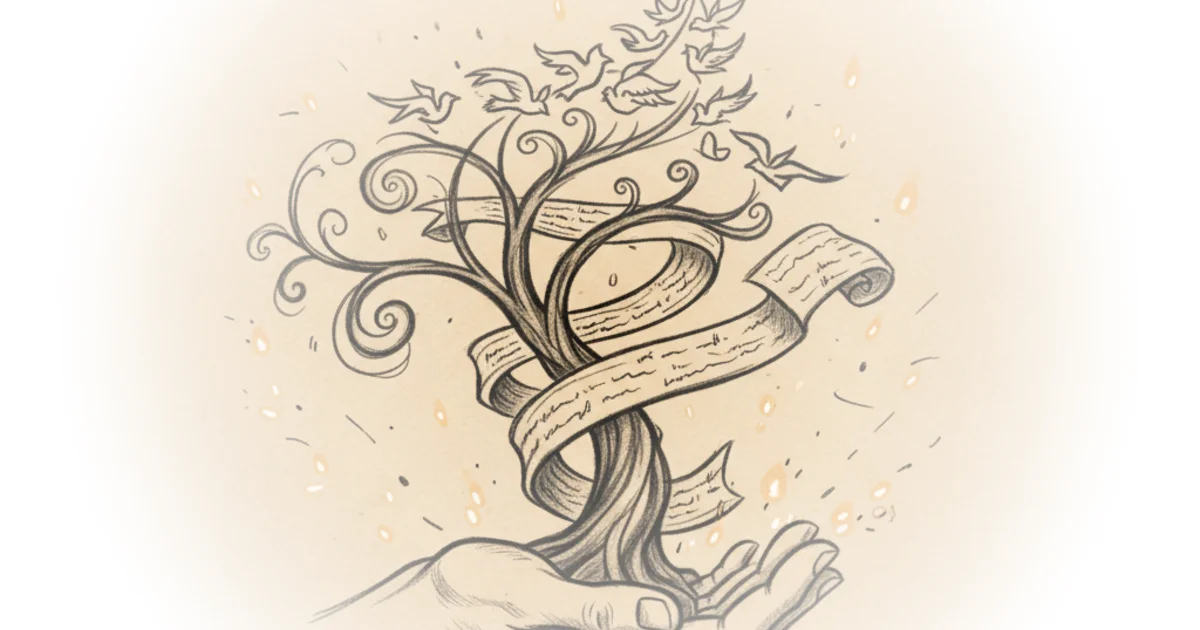
The creative life is not its own special room—it's the way you move through every room: the emergency waiting room and the surgical hallway and the Sedona mesa and the casita and the waterpark with the grandchildren.
The Practice of Receiving
A significant portion of Ouellette's commentary is dedicated to the counter-intuitive idea that the creative life requires the ability to receive, not just to produce. She draws a parallel between her own journey and the work of Dorothy Allison, whose support for Ouellette's book during a lonely pandemic launch served as a crucial anchor. Ouellette reflects on the isolation of that period, noting that the "lonely pandemic launch was a perfect antidote to the loneliness you wrote in those pages, because it was the first time you've ever felt so loved in isolation." This connection to Allison, a writer known for her unflinching exploration of class and trauma, adds a layer of historical weight to Ouellette's personal narrative, suggesting a lineage of women writers supporting one another through difficult times.
The author expands this theme to her family life, describing the profound shift of becoming a grandmother and watching her son marry. She describes the "imperfect best attempt" of parenting and grandparenting as an underrated form of love. "It means you showed up. It means you tried. It means you love someone more than you fear not being enough," she writes. This sentiment challenges the perfectionism that often paralyzes writers. Just as she learned to substitute ingredients to make veggie curry from a turkey recipe, she argues that creativity requires the "willingness to both follow instructions and ignore them." This metaphor extends to the broader creative philosophy: the ability to adapt and survive is more valuable than rigid adherence to a plan.
Ouellette also touches on the physical reality of aging, noting that after decades of feeling misread or diminished, she finally found jeans that fit. "The body wants to be comfortable in its container. You are its container," she states. This is a stark reminder that the writer's instrument is biological, not just intellectual. She urges herself to make doctor's appointments, asserting that "your body is not a tool for making things. It is the thing itself." This is a crucial correction to the romanticized image of the suffering artist who neglects their health for the sake of the work.
The Fog of the Future
The piece concludes by invoking the wisdom of E.L. Doctorow, whose quote about driving at night in the fog serves as the ultimate metaphor for the author's career. Ouellette writes, "You have been driving in the dark for fifty-seven years with your headlights on, toward a destination you can't fully see, writing everything down." This framing is effective because it acknowledges the uncertainty of the future without succumbing to despair. It suggests that the act of writing itself is the navigation tool, the only way to move forward when the path is obscured.
She ties this back to the words of Toni Morrison: "we do language. That may be the measure of our lives." Ouellette has built her entire philosophy around this concept, creating a community of eighteen thousand people who believe in the transformative power of language. She notes that in teaching in France and gathering writers at Camp Wandawega, she is witnessing a shared belief that "the world can be made new by the careful work of attention and language." This is a bold claim, yet the evidence of her community's growth and the tangible success of her students lends it credibility.
Critics might suggest that such optimism is a luxury not available to everyone, particularly in the current political climate. Yet, Ouellette's argument is not that the world is easy, but that the act of paying attention is a form of resistance. She acknowledges the "alien stillness of Joshua Tree" and the "honest wildness of the Boundary Waters" as places where this attention is sharpened, but she insists that this work must happen in the "harsh fluorescent light of hurting and healing" as well.
Bottom Line
Ouellette's piece succeeds because it refuses to separate the art from the artist's mortality, grounding high-minded theories of creativity in the gritty reality of hospital waiting rooms and aging bodies. Its greatest strength is the seamless integration of personal vulnerability with professional insight, proving that the most effective writing instruction often comes from the hardest lived experiences. The reader is left with a clear directive: to keep writing in the dark, not because the destination is visible, but because the headlights are the only way to move forward.