This piece from The Pillar does something rare in modern political coverage: it treats a presidential outburst not as a personality clash, but as a calculated strategy to fracture a specific voting bloc. While the headlines focus on insults traded between the White House and the Vatican, the article argues the real story is an administration attempting to force the first American pope into a political box to shore up domestic support for a controversial foreign war. The analysis suggests that by labeling the pontiff "weak," the executive branch is trying to redefine the moral authority of the Church to fit a nationalist agenda.
The Strategy of Personalization
The core of the argument rests on the idea that the attack was not a spontaneous reaction to diplomatic friction, but a premeditated political maneuver. The Pillar notes that the immediate context was the pope's repeated criticisms of the war in Iran, where he called on the faithful to help "break the demonic cycle of evil" and reject a "Kingdom in which there is no sword, no drone, no vengeance." Instead of engaging with these moral claims, the administration dismissed them by claiming the pope thinks it is "OK for Iran to have nuclear weapons" and that he is "terrible at Foreign Policy."
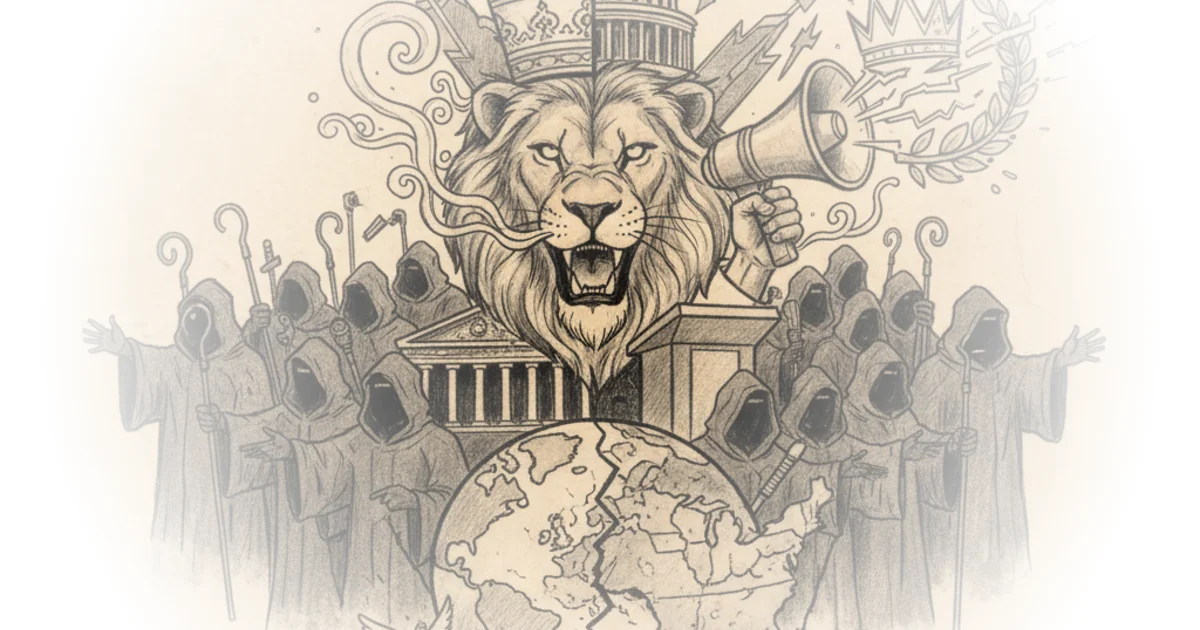
This reframing is significant because it shifts the debate from the ethics of war to the competence of the leader. The piece argues that the president has a history of engaging in personal attacks to "crystalize a range of policy issues into a personal binary." By attacking the pope's character, the administration attempts to bypass the substance of the peace appeals. The article suggests this is a deliberate tactic to create a binary choice for voters: support the administration's military actions or side with a "weak" religious leader.
"Ahead of a mid-term election later this year, and in the absence of a clear national political opponent to campaign against, it is possible Trump has determined that the first American pope is the only figure of sufficient stature to define himself against."
This observation lands hard because it highlights a vacuum in the political landscape. Without a unified opposition party, the administration turns its fire on the only institution with the moral weight to challenge its narrative. The article points out that the pope has remained unfazed, chuckling at the comments and stating, "I'm not a politician... I'm not going to enter into a debate with him." This refusal to play the game exposes the administration's strategy for what it is: a demand for a political performance that the pope refuses to give.
The Fracture in the Catholic Bloc
The commentary then pivots to the domestic implications, noting that the American Catholic hierarchy has been unusually unified in its opposition to specific administration policies, from refugee resettlement cancellations to immigration enforcement. The piece highlights a lawsuit where the U.S. Conference of Catholic Bishops was forced to sue the administration over the cancellation of refugee contracts, leaving the church "millions of dollars out of pocket." Furthermore, the administration's support for IVF and mail-order abortion drugs has caused "institutional pro-life support bleed away."
In this environment, the attack on the pope serves a specific purpose: to drive a wedge between populist Catholic voters and the Church hierarchy. The article suggests the administration hopes to paint the bishops as partisan obstacles rather than moral guides. This is where the historical context of "Americanism" becomes relevant; just as the late 19th-century Church warned against adapting Catholic doctrine to American political pragmatism, this conflict tests whether the U.S. Church can maintain its independence from the state.
The piece details how Bishop Robert Barron attempted to navigate this divide, calling the president's statements "entirely inappropriate and disrespectful" while simultaneously praising the administration's record on religious liberty. The Pillar observes that Barron's statement appeared to "pivot sharply to praising Trump's record," creating a distinction between the president's "regrettable" rhetoric and his policy achievements. Critics might note that this nuance risks diluting the moral force of the Church's critique, effectively validating the administration's claim that the conflict is merely a "performative public clash of personalities."
"If that narrative could be successfully advanced, it could serve to blunt the force of the Church's urgent moral concerns... and turn the pope into a usual political strawman for the midterm elections."
This is the most chilling part of the analysis. The article warns that by framing the conflict as a battle of egos, the administration can dismiss the humanitarian costs of the war in Iran and Lebanon as mere political posturing. The human cost of the conflict—civilian casualties, displacement, and the "trivialization of evil" mentioned by the pope—is rendered invisible when the debate is reduced to who is "weak" and who is "strong."
The Limits of the Strategy
The piece also touches on the administration's escalation, noting the posting and subsequent deletion of an AI image depicting the president as Jesus. This move, described as an attempt to "up the stakes," alienated many Catholics while rallying a specific base of Evangelical supporters who are "reflexively hostile to both the Catholic Church." The article suggests this is a high-risk strategy that could backfire by alienating the very Catholic voters the administration hopes to court.
The analysis draws a parallel to the 1903 conclave, where political maneuvering heavily influenced the election of a pope, reminding readers that the intersection of church and state has always been fraught with tension. However, the current dynamic is unique because the head of state is actively trying to delegitimize the head of the Church. The Pillar concludes that the hierarchy's ability to "anticipate all of this, and avoid being turned into a political foil to the White House, remains to be seen."
"It could be that Donald Trump has decided that is what he needs the pope to be."
This sentence encapsulates the entire argument: the administration does not care about the pope's actual role; it needs a caricature to fight against. The strategy relies on the assumption that the public will forget the substance of the pope's peace appeals in favor of the drama of the insult.
Bottom Line
The strongest part of this argument is its identification of the attack as a calculated political tool to neutralize moral opposition to a foreign war, rather than a mere lapse in diplomatic protocol. Its biggest vulnerability is the assumption that the Catholic hierarchy will remain unified; the emergence of figures like Bishop Barron suggests the Church may fracture under pressure. The reader should watch for whether the administration successfully reframes the conflict as a personality dispute, thereby obscuring the humanitarian realities of the ongoing military strikes.