Wayfare delivers a searing, intimate diagnosis of a crisis that has long simmered beneath the surface of a specific religious culture: the systematic erosion of female identity through the conflation of virtue with self-erasure. This is not a theological debate about doctrine, but a psychological autopsy of what happens when "good desires" are trained out of women before they can even name them. For the busy reader seeking to understand the hidden costs of rigid gender scripts, this piece offers a rare, unvarnished look at the human toll of obedience."
The Architecture of Silence
The piece anchors its argument in the story of "Rachel," a composite figure whose life trajectory illustrates the dangerous feedback loop between cultural expectation and internalized doubt. Wayfare reports, "Rachel deeply wanted to be good... Her inclination to accommodate others became second nature." This opening establishes the central thesis: the pursuit of righteousness, when defined solely by external validation, becomes a mechanism for silencing the self.
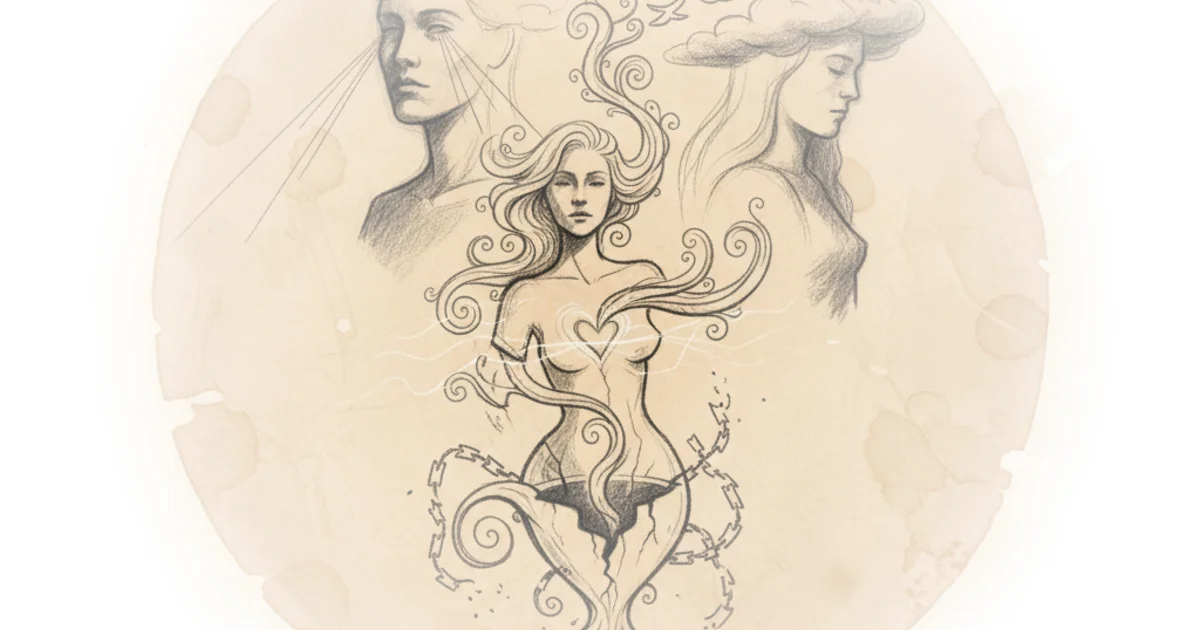
The article traces how this silence is cultivated early. In the Young Women program, the narrative suggests, messages of sacrifice are inextricably linked to sexual purity, creating a framework where a woman's value is contingent on her "moral cleanliness" rather than her agency. The piece argues that "to be 'morally clean'—untouched by sexual sin—was not just a virtue but an important measure of desirability." This reframing of purity as a commodity for male approval is a critical insight, shifting the focus from spiritual discipline to social performance.
"It wasn't the decision to stay home or have children that left Rachel in a vulnerable position—many women choose this path out of their own desires and sense of agency. The issue was that for Rachel it wasn't really a choice."
This distinction is the article's most powerful contribution. It avoids the trap of judging the choice itself—staying home is valid—and instead critiques the lack of alternatives presented to young women. The text notes that Rachel cut short her training as a dental hygienist because she believed a career was "incompatible with the higher callings of wife and mother." This reflects a broader institutional dynamic where the priesthood structure, which confers authority exclusively upon men, positions women to "preside" only in the domestic sphere, effectively narrowing the horizon of possibility.
Critics might argue that the piece places too much weight on individual psychology and not enough on the structural necessity of distinct roles within the faith. However, the article counters this by highlighting the fragility of such arrangements, noting that when a woman's entire identity is tethered to her husband's spiritual leadership, any failure in that leadership becomes a catastrophic personal crisis.
The Cost of Unchecked Authority
The narrative deepens as it explores the marital dynamics that result from these early lessons. Wayfare describes a relationship where the husband, Dan, is "very opinionated and even condescending," while Rachel is "prone to second-guessing herself." The piece posits that this is not merely a personality clash but a systemic outcome: "He had no vision of a collaborative marriage — no real understanding of how a couple might contribute their differing perspectives and gifts as equals towards a shared goal."
The article brings in a specific historical reference to ground this dynamic in the church's recent past. It cites a conference talk by Elder James E. Faust, a prominent leader in the Latter-day Saint tradition, who praised women's sacrifices by concluding, "You do all of these things willingly, because you are a woman." The editors note that while this was intended as validation, it functioned as a declaration of immutable nature. "Audrey took comfort in this talk... But she also understood that talks like these weren't merely acknowledgments of women's contributions—they were also declarations about who women should be."
This historical context is vital. It connects the personal struggles of Rachel and "Audrey" (another client profile) to a specific era of leadership rhetoric that emphasized the "divine nature" of female submission. The piece argues that such messaging creates a dangerous dependency: "Lacking confidence in her own judgment, Audrey placed her hope in obedience—trusting it would bring her security and belonging." When that security is breached by infidelity, as in Audrey's case, the fallout is compounded by the realization that she had "betrayed herself, her own intuition and judgment, through her full surrender to others to guide her life."
"If you bring forth what is within you, what is within you will save you. If you do not bring forth what is within you, what you do not bring forth will destroy you."
Quoting the Gospel of Thomas, the article pivots to a spiritual imperative for self-actualization. It suggests that the highest moral value is not rigid adherence to a script, but the "deep spiritual work of becoming whole." This challenges the notion that obedience is the ultimate metric of faith, proposing instead that suppressing one's distinct gifts is a form of spiritual self-harm.
The Intimacy Deficit
Perhaps the most uncomfortable section of the piece addresses the sexual consequences of this dynamic. Wayfare reports that for many women in this culture, sex becomes a "marital duty" rather than an expression of desire. "Rachel knew she mattered to Dan... but it wasn't clear that he genuinely liked her for herself." The article suggests that when a woman is valued only for her function—as a mother, a supporter, a caretaker—she cannot feel truly desired as a person.
The text describes a chilling rationalization: "Have sex when he asks and take care of his needs." This approach, the piece argues, "made sex less intimate. By approaching sex as a marital duty, Rachel could avoid exposing her eroticism and even her heart." This is a profound observation on how the fear of vulnerability, instilled by a culture of self-denial, can lead to a transactional view of intimacy that leaves both partners unfulfilled. The husband, too, is trapped, unable to connect with a partner who has been taught to disappear.
The article concludes by broadening the scope, noting that while church messages have evolved, "many LDS women still find themselves shaped by a culture that emphasizes obedience to prescribed gender roles over the deeper spiritual work of becoming whole." It warns that "inherited ideas about gender and sexuality... can just as easily hinder our ability to know ourselves, make authentic choices, and create truly intimate marriages."
"When self-denial is framed as the measure of feminine virtue—the defining trait of a righteous woman—it leaves little room for variation."
This final point serves as a warning against the rigidity of any system that equates holiness with the suppression of the self. The piece implies that the path to a healthier community lies not in discarding tradition, but in expanding the definition of what it means to be a "virtuous woman" to include the full spectrum of human potential.
Bottom Line
Wayfare's strongest argument is its ability to distinguish between the validity of a life choice and the coercion of the environment that shapes it, exposing how the pressure to be "good" can paradoxically lead to spiritual and emotional destruction. Its biggest vulnerability is its reliance on anecdotal evidence, which, while powerful, may not capture the experiences of women who find genuine agency within these traditional structures. The reader should watch for how this cultural reckoning influences future leadership rhetoric and whether the institution can evolve to support the "bringing forth" of women's distinct gifts without dismantling its foundational hierarchy.