Heather Cox Richardson delivers a chilling diagnosis of a constitutional crisis unfolding in real time, arguing that the Supreme Court's recent dismantling of the Voting Rights Act is not merely a legal shift but a deliberate return to a century-old strategy of disenfranchisement. She posits that we are witnessing the rapid creation of a one-party state in the American South, driven by a judicial ruling that has emboldened governors and legislatures to erase Black political power before the next election cycle even begins.
The Legal Trigger and Immediate Chaos
Richardson anchors her analysis in the Supreme Court's decision in Louisiana v. Callais, a ruling that effectively gutted Section 2 of the Voting Rights Act of 1965. She explains that while the right to vote is fundamental, the Court has historically acknowledged that voting rights can be diluted; states previously created majority-minority districts to ensure Black voters could elect candidates of their choice. Richardson writes, "In the past, the court saw the creation of majority-minority districts as a way to comply with the Voting Rights Act, guaranteeing that Black voters can elect the lawmakers they prefer." This historical context is crucial, as it highlights the magnitude of the reversal: the Court has now declared such districts unconstitutional racial gerrymanders.
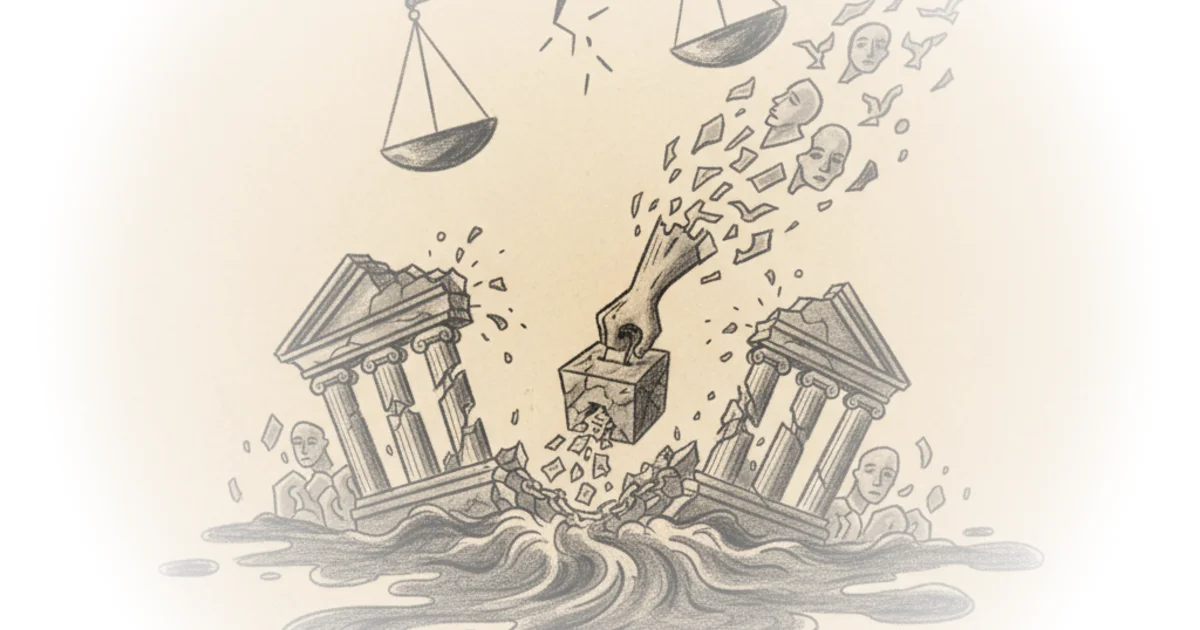
The immediate fallout, as Richardson details, has been administrative chaos. Following the April 29 decision, Louisiana Governor Jeff Landry declared a state of emergency, halting a primary election and invalidating 45,000 already-cast ballots. Richardson notes the absurdity of the situation: "His declaration has thrown the election into chaos as 45,000 ballots already cast won't be counted, and the ballots already sent out will still include the race that Landry has now postponed." This move sets a dangerous precedent where the executive branch can unilaterally suspend democratic processes to accommodate a new, restrictive map.
Critics might argue that states have always had the right to adjust district lines, but Richardson's point is that the speed and coordination of these actions suggest a premeditated strategy rather than routine redistricting. The argument holds weight given the simultaneous emergency sessions called across multiple states.
The Southern Strategy Reborn
The piece shifts to a broader regional pattern, documenting how Republican-led states are rushing to exploit the Callais decision. Richardson describes how Tennessee Governor Bill Lee convened a special session to "crack" Memphis, a city that is sixty percent Black, into three districts to dilute its voting power. She quotes Republican State Senator John Stevens, who bluntly admitted the intent: "This is about allowing Tennessee to maximize its partisan advantage." Richardson connects this modern maneuvering to the historical concept of "cracking" discussed in deep dives on Shaw v. Reno, noting that the goal is to ensure that even if a minority group is large enough to influence an election, they are spread so thin they cannot win.
"We are watching, in real time, the creation of a one-party state in the American South."
Richardson's framing is particularly effective here because she refuses to treat these events as isolated political games. Instead, she links the stripping of committee assignments from Black legislators in Tennessee to a broader effort to silence opposition. When Tennessee House Speaker Cameron Sexton removed all Democrats from standing committees, Richardson points out that this decree "removed every Black elected official in the state legislature from any committee we served on." This is not just partisan maneuvering; it is a structural removal of representation for nearly two million Tennesseans.
Echoes of the Past
To understand the gravity of the current moment, Richardson takes the reader back to the Reconstruction era, drawing a direct line from the 1870s to 2026. She reminds us that the Voting Rights Act was originally designed to enforce the Fifteenth Amendment, which was ratified after the Civil War to protect Black men's right to vote. Richardson writes, "In 1870, after Georgia legislators expelled their newly seated Black colleagues, Americans defended the right of Black men to vote by recognizing that right in the Constitution." She details how white supremacists, unable to stop Black voting through legal means alone, turned to violence and fraud, culminating in the 1898 Wilmington coup where a coalition government was overthrown by armed mobs.
The parallel she draws is stark. Just as white Democrats in the 19th century used the excuse of "Black rule" to justify disenfranchisement, modern politicians are using the guise of "maximizing partisan advantage" to achieve the same result. Richardson observes, "Although the parties have switched sides, the story is the same. Now, as then, a minority is disfranchising voters because it knows its ideas are unpopular and it cannot win on the merits of its policies." This historical lens transforms the news from a dry legal update into a narrative of recurring democratic failure.
A counterargument worth considering is whether the Supreme Court's decision was strictly about race or if it was a legitimate interpretation of the Constitution's colorblindness clause. However, Richardson's evidence of the coordinated, immediate reaction by state legislatures to eliminate majority-Black districts suggests the intent is indeed to suppress a specific demographic's political influence.
The Economic Cost of Disenfranchisement
Richardson concludes by highlighting the economic implications of this political purge, quoting Georgia Senate Minority Leader Harold Jones II. Jones argues that the constant redrawing of maps is a symptom of a party that cannot win through policy. Richardson writes, "If Republicans ever used their power to help Georgians, they wouldn't have to waste time and money redrawing the maps every few years to keep their majorities." The ultimate consequence, as Jones and Richardson articulate, is that stripping Black political power strips the power of the entire working class.
"When Republicans strip Black people's political power away, it doesn't just strip one community of power. It strips political power from every single middle and working class person and hands it over to billionaires and big corporations."
This final point elevates the commentary from a discussion of voting rights to a critique of the economic system. By focusing on the concentration of wealth and power, Richardson makes the case that the Callais decision is a tool for economic consolidation as much as political control.
Bottom Line
Richardson's strongest asset is her ability to weave the immediate legal chaos of 2026 with the deep historical currents of Reconstruction, making it impossible to view the current redistricting crisis as a mere political dispute. The piece's greatest vulnerability lies in its reliance on the assumption that these gerrymanders will hold up in the courts, yet the speed of the executive actions suggests the political will to enforce them regardless of legal challenges. Readers should watch closely to see if the federal courts, now stripped of their previous precedents, will allow these maps to stand or if a new coalition will form to defend the integrity of the ballot box.