Robert Reich delivers a devastating diagnosis of the American economy, arguing that the current crisis is not a political anomaly but a systemic feature designed to enrich a narrow oligarchy. He strips away the distraction of personality politics to reveal a machinery of wealth extraction that predates the current administration and will outlast it. For the busy listener, the urgency lies in Reich's central thesis: unless the rules of the game are rewritten, the degradation of American life is inevitable.
The Oligarchy's Core Contradiction
Reich begins by dismantling the popular narrative that a single leader is the root cause of America's decline. "Trump is not the cause of the enshittification of America. He is a consequence," Reich writes. This framing is crucial because it shifts the focus from electoral theater to the structural rot of the financial and political systems. He identifies a small group of billionaires, including figures like Jamie Dimon of JPMorgan Chase, as the true architects of the current order. These leaders, he argues, are not patriots first; they are CEOs first.
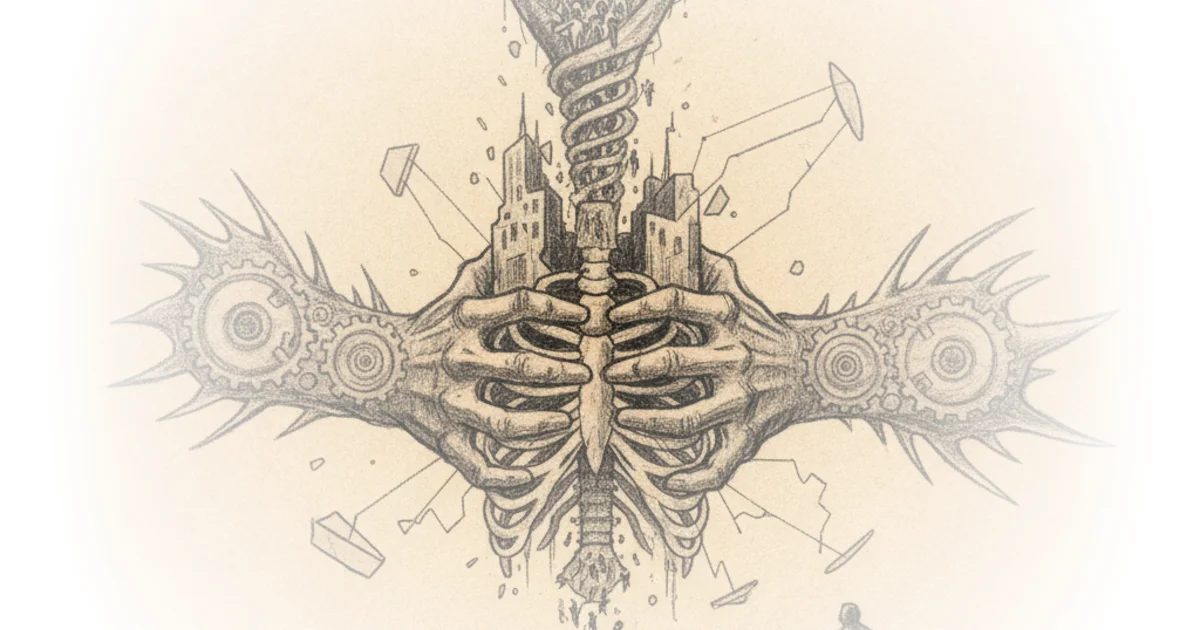
The core of the argument rests on a stark contradiction: the same corporate entities that dominate American politics have no allegiance to the nation's well-being. "The oligarchy is not interested in serving America, yet it dominates American politics and essentially runs the American system," Reich asserts. This is a powerful reframing that challenges the assumption that corporate success naturally translates to national prosperity. Instead, Reich points out that the oligarchy's strategy is simple and ruthless: suppress wages, dismantle unions, and secure tax cuts while externalizing costs onto the public.
The oligarchy cannot fulfill both roles: It cannot advocate for its giant banks or monopolistic corporations and simultaneously lead the nation.
This observation hits hard because it exposes the futility of expecting corporate benevolence. The system is not broken; it is functioning exactly as designed for the few at the expense of the many. Critics might argue that corporate growth does eventually trickle down, but Reich's evidence suggests that the mechanism of "trickle-down" has been severed, replaced by a direct siphon of resources upward.
The Myth of the "Free Market"
Reich then turns his critique toward the most sacred cow of American economics: the idea of a neutral, natural "free market." He argues that this concept is a dangerous fiction used to justify inequality. "The 'free market' is nothing but a set of laws and rules about: What can be owned and traded... On what terms... Under what conditions," he explains. This is perhaps the most intellectually liberating part of the piece, as it demystifies economic outcomes. It suggests that when workers are underpaid or prices are high, it is not the result of invisible hand forces, but of explicit legal choices made by those with power.
He contrasts the American experience with that of other wealthy nations, noting that the U.S. is an outlier in its lack of social safety nets. "The United States is the only wealthy nation that does not guarantee paid family leave," Reich notes, highlighting that European nations provide months of paid leave and vacation time that Americans can only dream of. The difference, he argues, is not cultural or genetic, but political. In other nations, labor unions are stronger, and governments engage in tripartite bargains that bind corporations to their workforces. In the U.S., only 6 percent of private-sector workers are unionized, a statistic that Reich links directly to the quashing of labor power.
The central issue is not more or less government. It's who is government for?
This question cuts to the heart of the democratic deficit. Reich details how financial laws, antitrust regulations, and bankruptcy codes have been rewritten over the last forty years to favor the wealthy. He points out that while the Great Depression-era regulations were abandoned for Wall Street, they were never replaced with protections for homeowners or students. This selective application of the law reveals a system where the rules are not neutral but are weaponized to concentrate wealth. A counterargument worth considering is that deregulation was intended to spur innovation and growth; however, Reich's data on stagnating wages and rising inequality suggests that the primary beneficiary has been capital, not the broader economy.
The Corporate Purpose and the Human Cost
The final pillar of Reich's argument attacks the ideological shift that redefined the purpose of the corporation. He traces this back to economist Milton Friedman and Harvard professor Michael Jensen, who championed the idea that a business's only responsibility is to maximize shareholder returns. "The academic conceit that workers are simply 'resources' that will move to 'higher valued uses' has proven to be crushingly and cruelly naive," Reich writes. This is a profound moral critique of modern capitalism, reminding listeners that human beings are not interchangeable parts in a machine.
Reich connects this ideological shift to the erosion of the middle class and the rise of monopolies. He references the work of Judge Robert Bork, who argued that large corporate size was beneficial if it lowered prices for consumers, effectively dismissing the issue of power. "This was exactly the message that America's emerging corporate oligarchy wanted to hear," Reich observes. The result has been a massive transfer of wealth from the bottom 90 percent to the top, fueled by stock buybacks and hostile takeovers that leave communities in ruins.
When 'efficiency' gains go to a comparatively few people at the top, while the costs and burdens are borne by many others, the common good is not improved. It is cast to the winds.
This framing resonates deeply when viewed through the lens of history. Reich implicitly draws a parallel to the Gilded Age, a period of similar unchecked corporate power and extreme inequality that eventually led to the Sherman Antitrust Act. Just as the late 19th century required a massive institutional correction to curb the power of the oligarchs of that era, Reich suggests that today's system requires a similar fundamental change. The anger and frustration driving current political movements are not irrational; they are the natural response to a system that has abandoned the common good.
Bottom Line
Robert Reich's most compelling contribution is his refusal to treat the current crisis as a temporary glitch or the fault of a single leader; instead, he identifies a systemic "enshittification" driven by an oligarchy that has captured the levers of government. The argument's greatest strength is its historical grounding, linking today's corporate dominance to the dismantling of antitrust and labor protections, yet it leaves the reader with the daunting challenge of how to reverse a system that is so deeply entrenched. The verdict is clear: without a fundamental restructuring of who the government serves, the degradation of American life will continue regardless of who sits in the White House.