Matt Yglesias cuts through the geopolitical noise to reveal a troubling paradox: a deal designed to correct a historic injustice may end up perpetuating it while simultaneously weakening a critical security asset. Most coverage fixates on the binary choice between British sovereignty and Mauritian control, but Yglesias identifies a third, often ignored stakeholder—the displaced Chagossians—who are being sidelined in a negotiation meant to serve them. This is not just a story about imperial legacy; it is a case study in how well-intentioned policy can fail when it ignores the very people it claims to help.
The Human Cost of Geopolitics
Yglesias anchors the piece in the brutal reality of the 1960s, when the United States and United Kingdom agreed to build a military base on the Chagos Islands. To make the site viable, the British government forcibly removed the entire indigenous population. The author does not shy away from the horror of this event, quoting an islander who described the expulsion as "the day the world went dark." This visceral detail transforms the Chagos Archipelago from a strategic chess piece into a site of profound human trauma.
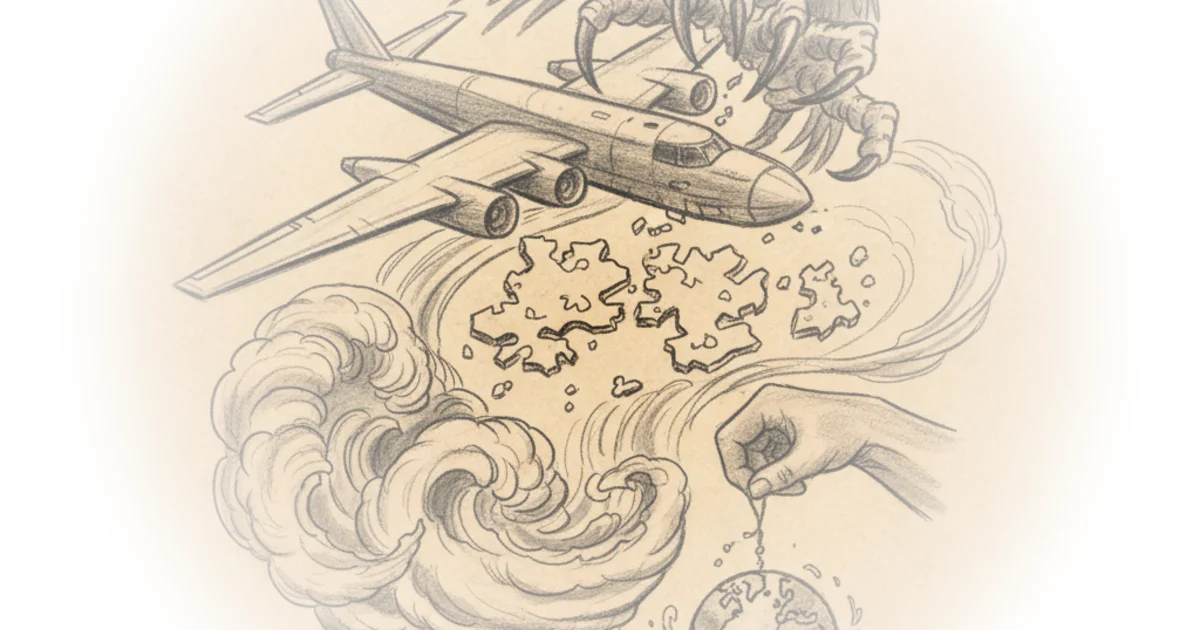
The core of Yglesias's argument is that the current proposal to transfer sovereignty to Mauritius, while legally sound under international law, fails to address the specific grievances of the Chagossian people. He notes that while the International Court of Justice supports Mauritius's claim, the reality on the ground is far more complex. Many Chagossians who were exiled to Mauritius faced discrimination and felt like "second-class citizens" in their supposed new home. As Yglesias writes, "For many Chagossians, there is also deep concern that the transfer of sovereignty could feel like moving from one form of colonial rule to another."
This framing is crucial because it exposes a flaw in the standard diplomatic narrative. The deal assumes that restoring the islands to Mauritius is the ultimate act of decolonization. However, Yglesias points out that the Chagossians view themselves as a distinct community whose political future has been decided repeatedly by outside powers. The House of Lords committee admitted that the UK government "did not consult the Chagossian community about the terms of the U.K./Mauritius agreement," a fact that undermines the moral legitimacy of the entire undertaking.
"The deal that is now before the British government is intended to resolve the legacy of the Chagossians' expulsion. But for many of the people who were expelled, the proposed solution looks less like justice than another decision about their homeland made somewhere else."
Critics might argue that the Chagossians are a small, dispersed population with little political leverage, and that the broader legal imperative to decolonize must take precedence. Yet, Yglesias suggests that ignoring the community's right to self-determination risks creating a settlement that satisfies neither the law nor the people it was meant to serve.
The Strategic Gamble
Beyond the human rights dimension, Yglesias tackles the hard-nosed security implications that often dominate Washington and London discourse. The Diego Garcia base is a linchpin for US power projection in the Indian Ocean, allowing long-range aircraft to reach the Middle East without aerial refueling. The concern is not that the US would immediately lose access, but that the terms of that access could erode over time.
Yglesias cites Bryan Clark of the Hudson Institute, who warns that a host government can reinterpret agreements or impose new conditions. "In the same way European or Gulf nations often restrict the kinds of operations U.S. forces can conduct from their bases," Clark notes, "the Mauritian government could impose restrictions on the actions forces can conduct from Chagos." This is a sobering reminder that the "special relationship" between the US and UK offers a level of trust that simply does not exist with Mauritius.
The geopolitical context adds another layer of risk. Mauritius has increasingly aligned itself with China, a rival to Western powers, and has received significant economic support from Beijing. Yglesias highlights that the Mauritian government has already confirmed that the base would be prohibited from storing nuclear weapons if sovereignty is transferred. This is not a hypothetical scenario; it is a concrete shift in the rules of engagement. As the author puts it, "The trust that exists between the U.S. and the U.K. cannot be compared to the U.S.-Mauritius relationship."
Some legal experts, like Marko Milanovic, argue that critics overstate the danger, suggesting that the base would remain under British operational control regardless of sovereignty. However, Yglesias counters that the practical reality of enforcing such an arrangement is difficult when the host nation has a different set of geopolitical priorities. With only a limited military presence on the islands, the US and UK would be unable to "unilaterally assert control over Diego Garcia."
A Missed Opportunity
The article concludes by exploring alternative paths that were never taken. Yglesias suggests that the UK could have engaged the Chagossian community as partners from the start, potentially crafting a solution that addressed both historical justice and national security. The Maldives, for instance, has raised objections and offers a potentially more stable strategic partner, though this too is not without its complexities. The author emphasizes that the current deal feels like a "missed opportunity" because it prioritizes diplomatic optics over the agency of the displaced people.
Yglesias writes, "If the U.K. had engaged the Chagossian community as partners from the beginning, it is plausible that together they could have come up with an approach that would accomplish all three goals." The three goals being: improving Britain's reputation, righting the injustice to the Chagossians, and ensuring national security. By failing to consult the community, the UK has risked solving none of them effectively.
"A settlement that fails to secure the support of the people most directly affected — while introducing new uncertainty around one of America's most strategically valuable military bases — risks solving neither problem particularly well."
The piece ends on a note of cautious hope, noting that the agreement has not yet been ratified in the House of Lords. There is still time to push for a process that ensures the Chagossians have a meaningful role in shaping their homeland's future. As Peter Lamb, a Labour MP, pledged, the government must "continue to use all avenues available" to ensure the community's interests are genuinely addressed.
Bottom Line
Yglesias's strongest contribution is his refusal to let the Chagossians remain invisible in a debate dominated by great power politics; he demonstrates that ignoring their agency undermines both the moral and strategic case for the deal. The argument's biggest vulnerability lies in the difficulty of implementing a third option that satisfies international law, Chagossian demands, and US security needs simultaneously. Readers should watch to see if the UK government can pivot before ratification to include the displaced community in the final terms.